 뒤로
뒤로Themes and Concepts in Biology: Evolution, Scientific Inquiry, and the Unity of Life
스터디 가이드 - 스마트 노트
 자료에 맞춘 맞춤형 노트, 핵심 정의, 예시, 맥락을 확장해 제공합니다.
Concept 1.1: The Study of Life Reveals Unifying Themes
Introduction to Biology
Biology is the scientific study of life, encompassing a vast scope from molecules to the entire biosphere. Life is recognized by the unique activities and characteristics of living organisms. The study of biology is organized around several unifying themes that help us understand the complexity and diversity of life.
Organization: Life is structured in a hierarchy from molecules to the biosphere.
Information: Genetic information is stored and transmitted within and between generations.
Energy and Matter: Life requires the transfer and transformation of energy and matter.
Interactions: Living systems interact at all levels of organization.
Evolution: The process that accounts for the unity and diversity of life.
Levels of Biological Organization
Life can be studied at different levels, from molecules to the entire planet. This hierarchy includes atoms, molecules, organelles, cells, tissues, organs, organisms, populations, communities, ecosystems, and the biosphere. Reductionism is an approach that breaks down complex systems into simpler components, while systems biology analyzes interactions among parts of a system to understand emergent properties.
Emergent Properties
Emergent properties arise from the arrangement and interaction of parts within a system. These properties are not present in the individual components but emerge only when the components function together.
Example: A functioning bicycle only emerges when all parts are correctly assembled.
Structure and Function
There is a close relationship between structure and function at every level of biological organization. Understanding the structure of a biological component provides insight into its function, and vice versa.
The Cell: Basic Unit of Life
The cell is the smallest unit capable of performing all activities required for life. According to the cell theory, all living organisms are composed of cells. Cells are classified as either prokaryotic (lacking a nucleus and membrane-bound organelles; e.g., bacteria and archaea) or eukaryotic (having a nucleus and membrane-bound organelles; e.g., plants, animals, fungi, protists).
Genetic Information and Gene Expression
Within cells, chromosomes contain DNA, the hereditary material. Genes, segments of DNA, encode instructions for building proteins and other molecules essential for life. The process of gene expression involves transcription of DNA into RNA and translation of RNA into protein.
DNA Structure: Double helix composed of four nucleotides: A, T, C, G.
Gene Expression: $\text{DNA} \xrightarrow{\text{transcription}} \text{RNA} \xrightarrow{\text{translation}} \text{Protein}$
Genomics and Proteomics
Genomics is the study of whole sets of genes, while proteomics is the study of all proteins expressed by a cell or organism. Advances in high-throughput technology and bioinformatics have enabled large-scale analysis of biological data.
Energy and Matter in Living Systems
Life depends on the transfer and transformation of energy and matter. Producers (e.g., plants) convert solar energy into chemical energy, which is then transferred to consumers (e.g., animals). Energy flows through ecosystems, entering as light and exiting as heat, while chemicals are recycled.
Interactions in Biological Systems
Interactions among components at all levels are essential for the functioning of biological systems. Feedback regulation is a common mechanism, with negative feedback reducing the initial stimulus and positive feedback amplifying it.
Example: Regulation of blood glucose levels by insulin (negative feedback).
Organism and Ecosystem Interactions
Organisms interact with each other and with their physical environment. These interactions can be beneficial, harmful, or neutral, and they shape the structure and dynamics of ecosystems. Human activities, such as burning fossil fuels, have significant impacts on global climate and biodiversity.
Concept 1.2: Evolution Accounts for the Unity and Diversity of Life
Introduction to Evolution
Evolution is the central theme of biology, explaining both the unity and diversity of life. All living organisms are modified descendants of common ancestors, and the process of evolution is supported by extensive evidence from multiple scientific disciplines.
Classification of Life
Approximately 1.8 million species have been identified, each given a two-part scientific name (genus and species; e.g., Homo sapiens). Life is classified into three domains: Bacteria, Archaea, and Eukarya. Eukarya includes plants, fungi, animals, and protists.
Unity and Diversity
Despite the diversity of life, there is remarkable unity at the molecular and structural levels, such as the universal genetic code (DNA) and similar anatomical features among related organisms. Fossil records and comparative anatomy provide evidence for common ancestry.
Charles Darwin and Natural Selection
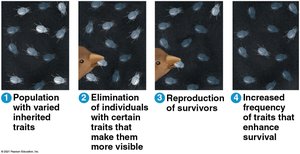
Charles Darwin proposed that species evolve through the process of natural selection. Key observations include:
Individuals in a population vary in their traits, many of which are heritable.
More offspring are produced than can survive, leading to competition.
Individuals with advantageous traits are more likely to survive and reproduce.
Over generations, beneficial traits become more common in the population, leading to adaptation.
Adaptation
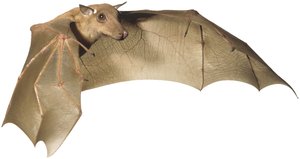
Adaptations are inherited traits that enhance an organism's ability to survive and reproduce in a particular environment. For example, the structure of bat wings is an adaptation for flight.
The Tree of Life
Evolutionary relationships among species are often depicted as a tree, with branches representing the divergence of species from common ancestors. This tree-like pattern reflects the history of life on Earth.
Concept 1.3: Scientific Inquiry and Hypothesis Testing
The Process of Science
Science is a way of knowing about the natural world through observation, inquiry, and experimentation. The scientific method involves making observations, forming hypotheses, and testing them through experiments.
Data Collection and Analysis
Data are recorded observations. Qualitative data are descriptive, while quantitative data are numerical and often organized into tables or graphs.
Reasoning in Science
Inductive reasoning: Deriving general principles from specific observations.
Deductive reasoning: Making specific predictions based on general premises.
Hypotheses and Experiments
A hypothesis is a testable explanation for an observation. Experiments are designed to test hypotheses under controlled conditions. Variables in experiments include:
Independent variable: Manipulated by the researcher.
Dependent variable: Predicted to change in response to the independent variable.
Controlled experiments compare an experimental group with a control group to isolate the effect of the variable being tested.
Theories in Science
A scientific theory is broader in scope than a hypothesis, generates new hypotheses, and is supported by a large body of evidence.
Concept 1.4: Science as a Cooperative and Diverse Endeavor
Collaboration and Communication
Science advances through collaboration, communication, and peer review. Scientists work in teams, share data, and build on each other's work. Peer review ensures the reliability and credibility of published research.
Model Organisms
Model organisms, such as the fruit fly (Drosophila melanogaster), are widely used in research to study biological processes that are conserved across species.
Science, Technology, and Society
Science seeks to understand natural phenomena, while technology applies scientific knowledge for practical purposes. Advances in science and technology can have profound effects on society, raising ethical, political, and cultural issues.
Diversity in Science
Diverse backgrounds and viewpoints among scientists enhance creativity and innovation. The inclusion of multiple perspectives leads to more robust and productive scientific inquiry.
