 뒤로
뒤로Unifying Themes and Foundations of General Biology
스터디 가이드 - 스마트 노트
 자료에 맞춘 맞춤형 노트, 핵심 정의, 예시, 맥락을 확장해 제공합니다.
Introduction to Biology
What Makes Something Alive?
Biologists use several criteria to determine if something is alive. These include the ability to grow, reproduce, respond to stimuli, maintain homeostasis, and evolve over generations. Viruses, for example, challenge these definitions because they can evolve and carry genetic material but lack independent metabolism and cellular structure.
Unifying Themes in Biology
Organization: Life is structured in a hierarchy from molecules to the biosphere.
Information: Genetic information is stored and transmitted via DNA.
Energy and Matter: Life requires the transfer and transformation of energy and matter.
Interactions: Living systems interact at all levels, from molecules to ecosystems.
Evolution: Evolution explains both the unity and diversity of life.
Theme 1: Organization and Emergent Properties
Levels of Biological Organization
Biological systems are organized into a hierarchy, with each level exhibiting emergent properties not present at lower levels. These properties arise from the arrangement and interaction of parts within a system.
Atoms → Molecules → Cells → Tissues → Organs → Organ Systems → Organism
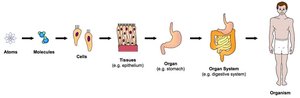
Structure and Function: There is a correlation between structure and function at all levels of biological organization. Analyzing structure provides clues about function, and vice versa.
Theme 2: The Cell Theory
Cells: The Basic Unit of Life
All living organisms are composed of cells, which are the smallest units capable of performing all activities required for life. The cell theory states that all living things are made of cells, and all cells arise from pre-existing cells. Each cell is enclosed by a membrane that regulates the passage of materials.
Two main types of cells: Prokaryotic and Eukaryotic
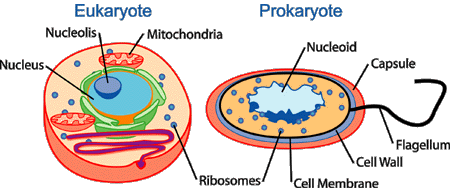
Prokaryotic cells lack a nucleus and membrane-bound organelles, while eukaryotic cells have both.
Theme 3: Information Transfer and Genetic Material
DNA: The Genetic Material
Within cells, chromosomes contain genetic material in the form of DNA (deoxyribonucleic acid). DNA encodes the instructions for building and maintaining an organism. Each chromosome contains one long DNA molecule with many genes, which are units of inheritance.
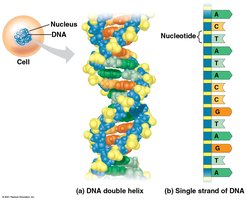
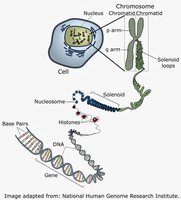
The molecular structure of DNA—a double helix composed of four types of nucleotides (A, T, C, G)—enables it to store and transmit genetic information.
Gene Expression: From Genes to Proteins
Gene expression is the process by which information from a gene is used to synthesize a functional gene product, usually a protein. This involves two main steps: transcription (DNA to RNA) and translation (RNA to protein).
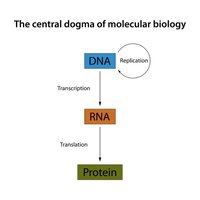
Transcription: DNA is transcribed into messenger RNA (mRNA).
Translation: mRNA is translated into a protein at the ribosome.
Central Dogma of Molecular Biology:
Theme 4: Energy and Matter
Transfer and Transformation of Energy and Matter
Life depends on the input of energy, primarily from the sun, and the transformation of energy from one form to another. Plants (producers) convert solar energy into chemical energy, which is then transferred to consumers. Energy flows through ecosystems, while chemicals are recycled.
Energy enters as light and exits as heat.
Chemicals cycle within ecosystems.
Theme 5: Interactions and Regulation
Feedback Mechanisms
Biological systems use feedback to regulate processes. Negative feedback reduces the initial stimulus, maintaining homeostasis, while positive feedback amplifies responses.
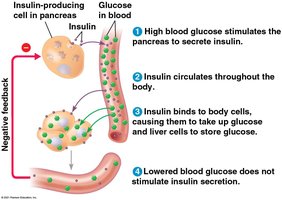
Negative feedback: Example—regulation of blood glucose by insulin.
Positive feedback: Less common; amplifies changes.
Theme 6: Evolution—The Core Theme of Biology
Evolution: Unity and Diversity of Life
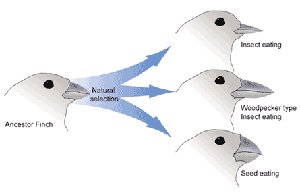
Evolution is the process by which living organisms are modified descendants of common ancestors. It explains both the similarities (unity) and differences (diversity) among organisms. Charles Darwin's theory of natural selection is the primary mechanism of evolution.
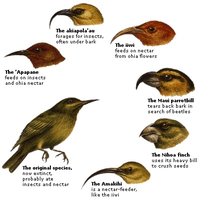
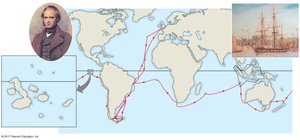
Darwin’s Observations and Natural Selection
Darwin observed that individuals in a population vary in their traits, many of which are heritable. More offspring are produced than can survive, leading to competition. Individuals with advantageous traits are more likely to survive and reproduce, increasing the frequency of those traits in the population over generations.
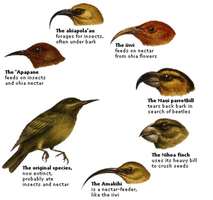
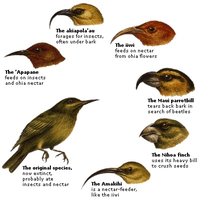
Natural selection: The process by which the environment "selects" for beneficial traits.
Descent with modification: Species change over time, giving rise to new species.
Forms of Natural Selection
Natural selection can act on variation in different ways:
Type | Description | Example/Image |
|---|---|---|
Stabilizing Selection | Favors average individuals; selects against extremes. |
|
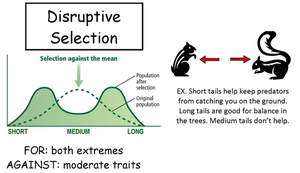
Disruptive Selection | Favors individuals at both extremes; selects against the mean. |
|
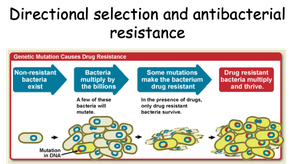
Directional Selection | Favors individuals at one extreme, shifting the population mean. |
|

Genetic Variation and Mutation
Mutations are changes in the DNA sequence that can introduce new genetic variation. Natural selection acts on this variation, but does not cause mutations.
Evidence for Evolution
The Fossil Record
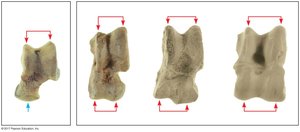
The fossil record provides evidence for the extinction of species, the origin of new groups, and changes within groups over time. Radiometric dating (e.g., carbon or uranium dating) is used to determine the age of fossils.
Comparative Anatomy
Comparing the physical structures of different species reveals evolutionary relationships. Homologous structures are inherited from a common ancestor, while analogous structures evolved independently for similar functions.
Type | Description | Example/Image |
|---|---|---|
Homologous Structures | Similar structure, different function; inherited from a common ancestor. | |
Analogous Structures | Different structure, similar function; evolved independently. | Wings of birds, bats, and insects |
Vestigial structures are remnants of features that served important functions in ancestors.
Molecular Evidence
Genes shared among organisms provide evidence for common ancestry. Comparative genomics and protein structure analysis further support evolutionary relationships.
Conclusion
Biology is unified by several core themes, including organization, information flow, energy and matter, interactions, and evolution. Understanding these principles provides a foundation for studying the diversity and complexity of life on Earth.
