 뒤로
뒤로Unifying Themes in Biology: The Study of Life
스터디 가이드 - 스마트 노트
 자료에 맞춘 맞춤형 노트, 핵심 정의, 예시, 맥락을 확장해 제공합니다.
Concept 1.1: The Study of Life Reveals Unifying Themes
Introduction to Biology and Its Scope
Biology is the scientific study of life, encompassing a vast range of topics from the molecular mechanisms within cells to the interactions of organisms within ecosystems. To organize this complexity, biologists focus on several unifying themes that provide a framework for understanding life’s diversity and underlying unity.
Unifying Themes of Biology
Organization: Levels of Biological Organization
Life is structured in a hierarchical manner, with each level exhibiting emergent properties not present at lower levels. This organization ranges from molecules to the entire biosphere.
Biosphere: All life on Earth and the places where life exists.
Ecosystem: All living things in a particular area, plus nonliving components like soil, water, and light.
Community: All organisms in an ecosystem.
Population: All individuals of a species in a specific area.
Organism: An individual living entity.
Organ/Organ System: Body parts with specific functions (e.g., leaves, stems, roots in plants).
Tissue: Groups of cells with a common function.
Cell: The fundamental unit of life.
Organelle: Functional components within cells (e.g., chloroplasts).
Molecule: Chemical structures consisting of atoms.
Emergent Properties and Reductionism
Emergent Properties: New characteristics that arise at each level due to the arrangement and interactions of parts. For example, photosynthesis occurs in an intact chloroplast but not in a mixture of its components.
Reductionism: Studying complex systems by breaking them into simpler components. While useful, it does not capture all properties of living systems.
Systems Biology: Analyzing interactions among parts of a biological system to understand the whole.
Structure and Function
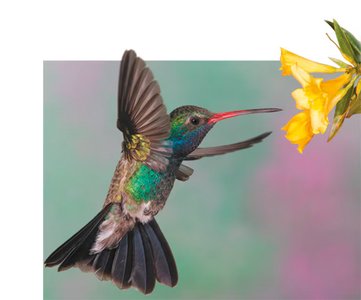
There is a close relationship between the structure of biological components and their function. For example, the broad shape of a leaf maximizes sunlight capture for photosynthesis, and the anatomy of a hummingbird enables unique flight abilities.
The Cell: The Basic Unit of Life
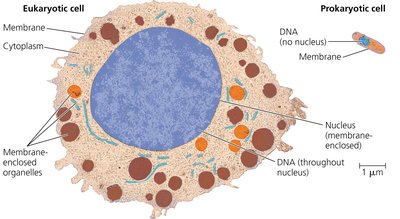
Cells are the smallest units capable of performing all activities required for life. All organisms are composed of cells, which can be classified as prokaryotic or eukaryotic.
Prokaryotic Cells: Lack a nucleus and membrane-bound organelles; found in Bacteria and Archaea.
Eukaryotic Cells: Have a nucleus and membrane-bound organelles; found in plants, animals, fungi, and protists.
Theme: Life’s Processes Involve the Expression and Transmission of Genetic Information
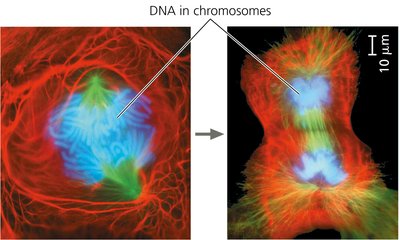
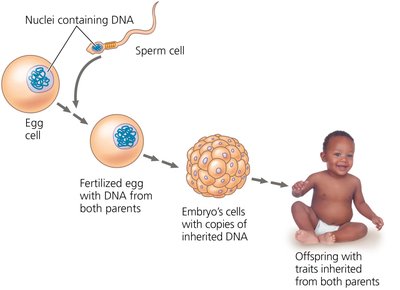
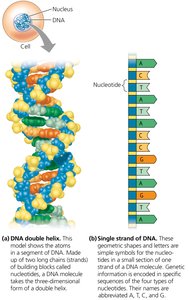
Genetic information is stored in DNA, which is organized into chromosomes. Genes, segments of DNA, encode instructions for building proteins and RNAs, guiding development and functioning.
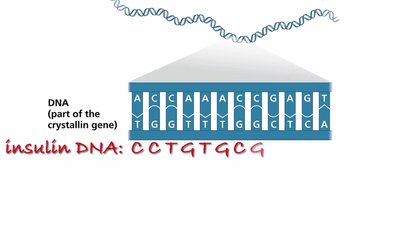
DNA Structure: Double helix composed of four nucleotides (A, T, C, G).
Gene Expression: The process by which information from a gene is used to synthesize a functional product (protein or RNA).
Universality of Genetic Code: The genetic code is nearly universal among organisms, supporting the unity of life.
Genomics and Proteomics
Genome: The complete set of genetic instructions in an organism.
Genomics: Study of whole sets of genes and their interactions.
Proteomics: Study of sets of proteins and their properties.
Bioinformatics: Use of computational tools to analyze biological data.
Theme: Life Requires the Transfer and Transformation of Energy and Matter
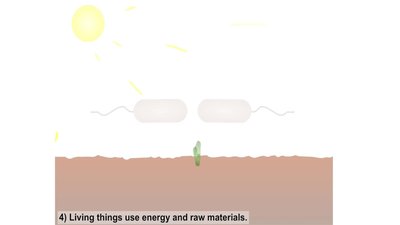
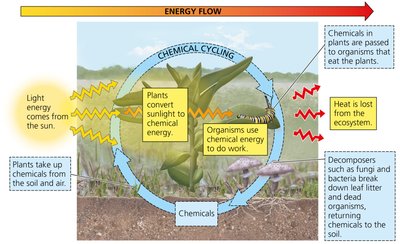
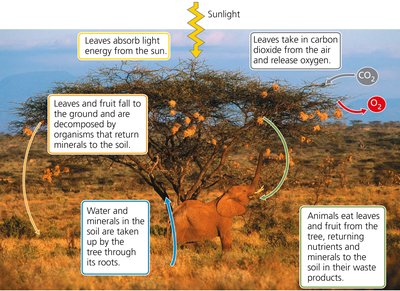
All living things require energy to perform work. Energy flows through ecosystems, primarily entering as sunlight and exiting as heat, while matter cycles within ecosystems.
Producers: Organisms (e.g., plants) that convert sunlight to chemical energy via photosynthesis.
Consumers: Organisms that obtain energy by eating other organisms or their remains.
Decomposers: Organisms that break down dead material, recycling nutrients.
Theme: Interactions Are Important in Biological Systems
Interactions occur at all levels, from molecules within cells to organisms within ecosystems. These interactions regulate processes and maintain balance.
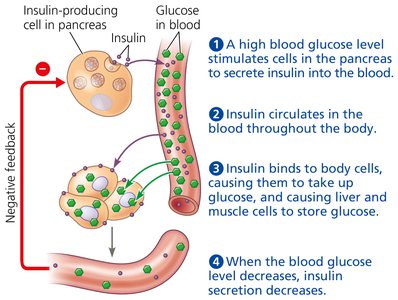
Feedback Regulation
Negative Feedback: The response reduces the initial stimulus (e.g., regulation of blood glucose by insulin).
Positive Feedback: The response amplifies the stimulus (e.g., blood clotting).
Interactions in Ecosystems
Organisms interact with each other and with their physical environment, affecting nutrient cycling, energy flow, and ecosystem stability.
Human activities, such as burning fossil fuels, impact global climate and threaten biodiversity.
Properties of Life
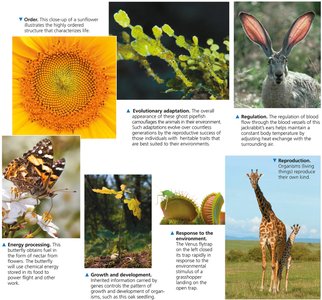
Living things share several key properties that distinguish them from nonliving matter:
Order: Highly ordered structure (e.g., sunflower pattern).
Evolutionary Adaptation: Adaptations that enhance survival and reproduction.
Regulation: Ability to maintain internal stability (homeostasis).
Energy Processing: Use of energy to power activities.
Growth and Development: Inherited information controls growth patterns.
Response to the Environment: Ability to respond to stimuli.
Reproduction: Ability to produce offspring.
Summary Table: Key Differences Between Prokaryotic and Eukaryotic Cells
Feature | Prokaryotic Cell | Eukaryotic Cell |
|---|---|---|
Nucleus | Absent | Present (membrane-bound) |
Membrane-bound Organelles | Absent | Present |
Size | Generally smaller | Generally larger |
Examples | Bacteria, Archaea | Plants, Animals, Fungi, Protists |
Conclusion
Understanding the unifying themes of biology—organization, information, energy and matter, interactions, and evolution—provides a foundation for exploring the complexity and diversity of life. These themes recur throughout all levels of biological study and are essential for grasping the principles that govern living systems.
