 뒤로
뒤로Water and Life: Properties, Acids, Bases, and pH
스터디 가이드 - 스마트 노트
 자료에 맞춘 맞춤형 노트, 핵심 정의, 예시, 맥락을 확장해 제공합니다.
Water and Life
Introduction
Water is essential for all known forms of life. Its unique chemical and physical properties, largely due to hydrogen bonding, make it indispensable for biological processes. This chapter explores the molecular structure of water, its emergent properties, and the significance of acids, bases, and pH in biological systems.
Polar Covalent Bonds and Hydrogen Bonding
Structure of Water Molecules
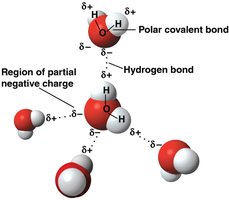
Polar covalent bonds occur when electrons are shared unequally between atoms, as in water (H2O), where electrons spend more time near the oxygen atom than the hydrogen atoms.
This unequal sharing creates a polar molecule with partial negative (δ–) and positive (δ+) charges.
Polarity allows water molecules to form hydrogen bonds with each other, where the hydrogen atom of one molecule is attracted to the oxygen atom of another.
Emergent Properties of Water
1. Cohesion and Adhesion
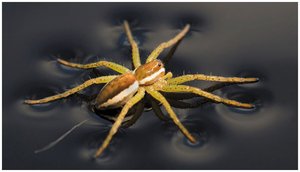
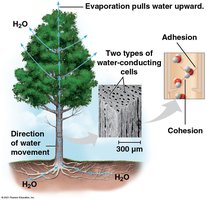
Cohesion refers to the attraction between water molecules due to hydrogen bonding, resulting in high surface tension. Adhesion is the attraction between water molecules and other substances, such as plant cell walls.
Cohesion enables water to move against gravity in plants and contributes to surface tension, allowing small organisms to walk on water.
Adhesion helps water cling to plant cell walls, aiding in the transport of water from roots to leaves.
2. Moderation of Temperature
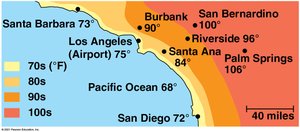
Water moderates temperature by absorbing heat from warmer air and releasing it to cooler air. It can absorb or release large amounts of heat with only slight changes in its own temperature due to its high specific heat.
Specific heat is the amount of heat required to change the temperature of 1 g of a substance by 1ºC. For water, this value is 1 cal/(g·ºC).
Hydrogen bonding is responsible for water's high specific heat: heat is absorbed to break bonds and released when bonds form.
This property stabilizes ocean and coastal temperatures, creating a favorable environment for life.
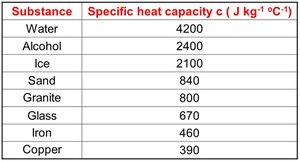
Substance | Specific heat capacity c (J kg–1 ºC–1) |
|---|---|
Water | 4200 |
Alcohol | 2400 |
Ice | 2100 |
Sand | 840 |
Granite | 800 |
Glass | 670 |
Iron | 460 |
Copper | 390 |
3. Floating of Ice on Liquid Water
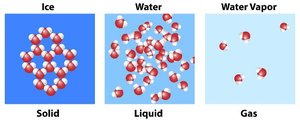
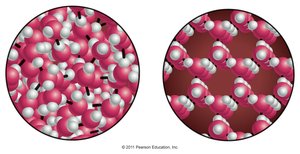
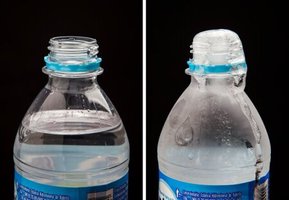
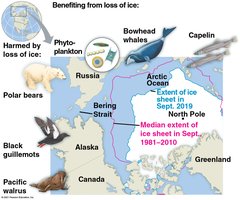
Water is less dense as a solid than as a liquid. At 0ºC, water molecules form a crystalline lattice, making ice about 10% less dense than liquid water. This property ensures that ice floats, insulating aquatic life in winter.
If ice sank, bodies of water would freeze solid, making life impossible.
Water reaches its greatest density at 4ºC.

4. Water as the Solvent of Life
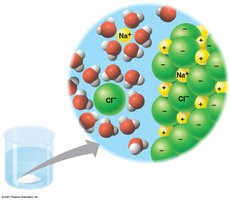
Water's polarity makes it an excellent solvent, capable of dissolving a wide range of substances. Solutions in which water is the solvent are called aqueous solutions.
Solvent: the dissolving agent (water).
Solute: the substance dissolved (e.g., salt).
When ionic compounds dissolve, each ion is surrounded by a hydration shell of water molecules.
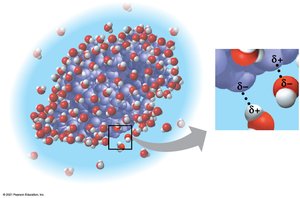
Water can also dissolve large polar molecules, such as proteins, if they have ionic and polar regions.
Hydrophilic and Hydrophobic Substances
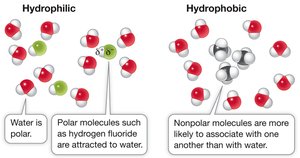
Hydrophilic substances have an affinity for water (e.g., salts, sugars).
Hydrophobic substances do not interact with water (e.g., oils), and are major components of cell membranes.
Solute Concentration in Aqueous Solutions
Molecular mass is the sum of the masses of all atoms in a molecule (e.g., H2O = 18 daltons).
The mole (mol) is a unit for counting molecules: 1 mol = 6.02 × 10²³ molecules (Avogadro’s number).
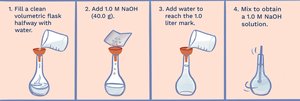
Molarity (M) is the number of moles of solute per liter of solution.
Acids, Bases, and pH
Dissociation of Water Molecules
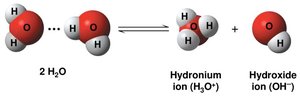
Water molecules can dissociate into hydronium (H3O+) and hydroxide (OH–) ions. This process is rare but crucial for biological systems.
H+ ions are highly reactive and affect cellular chemistry.
In pure water, [H+] = [OH–].
Acids and Bases
Acids increase the H+ concentration of a solution (proton donors).
Bases decrease the H+ concentration (proton acceptors).
Strong acids and bases dissociate completely; weak acids and bases dissociate partially and reversibly.
The pH Scale
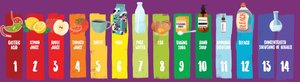
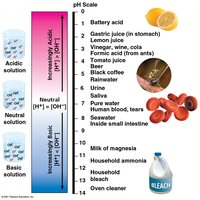
The pH scale measures the concentration of H+ ions in a solution, ranging from 0 (most acidic) to 14 (most basic). It is logarithmic: each unit represents a tenfold difference in H+ concentration.
pH is defined as
In pure water at 25ºC:
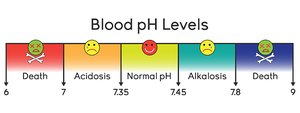
Most biological fluids have pH values between 6 and 8.
Buffers
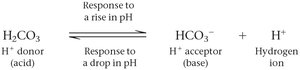
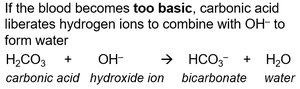
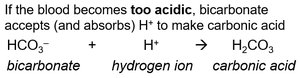
Buffers are substances that minimize changes in pH by reversibly binding H+ ions. Most buffers consist of a weak acid and its conjugate base.
They help maintain the internal pH of cells and biological fluids near neutrality (pH ~7).
The bicarbonate buffer system is crucial in human blood.
Summary Table: Properties of Water
Property | Biological Importance |
|---|---|
Cohesion/Adhesion | Transport of water in plants, surface tension |
High Specific Heat | Stabilizes temperature in organisms and environments |
Expansion upon Freezing | Ice floats, insulating aquatic life |
Versatility as a Solvent | Facilitates chemical reactions in cells |
