 뒤로
뒤로Water: Structure, Polarity, and Its Essential Role in Biology
스터디 가이드 - 스마트 노트
 자료에 맞춘 맞춤형 노트, 핵심 정의, 예시, 맥락을 확장해 제공합니다.
Water and Life
Introduction to Water's Importance
Water is fundamental to all known forms of life. Its unique chemical and physical properties arise from its molecular structure and the interactions between water molecules. Understanding water's behavior is essential for grasping many biological processes.
Chemical Bonds and Electronegativity
Types of Chemical Bonds
Covalent Bonds: Atoms share electrons. Can be nonpolar (equal sharing) or polar (unequal sharing).
Ionic Bonds: Electrons are transferred from one atom to another, creating charged ions.
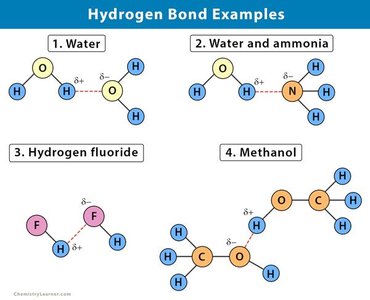
Hydrogen Bonds: Weak attractions between a partially positive hydrogen atom and a partially negative atom (usually O or N).
Electronegativity is the tendency of an atom to attract electrons in a bond. The difference in electronegativity between atoms determines bond type:
Nonpolar covalent: ΔEN < 0.5
Polar covalent: 0.5 < ΔEN < 1.7
Ionic: ΔEN > 1.7

Structure and Polarity of Water
Molecular Structure of Water
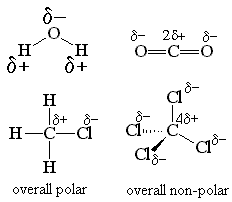
A water molecule (H2O) consists of two hydrogen atoms covalently bonded to one oxygen atom. The oxygen atom is more electronegative, causing electrons to spend more time near oxygen, resulting in partial charges.
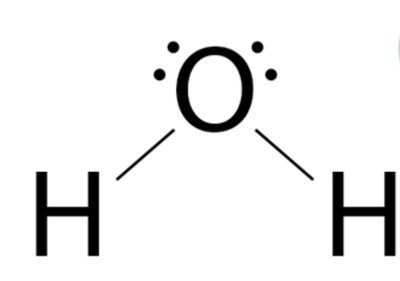
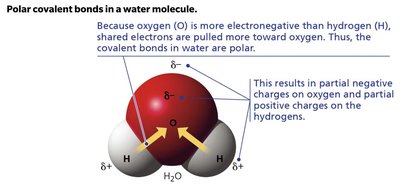
Polarity: Water is a polar molecule due to its bent shape and unequal sharing of electrons.
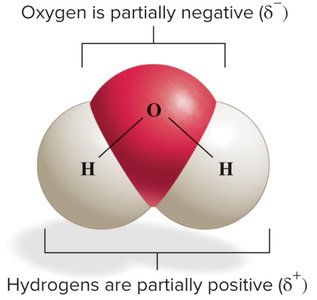
Partial Charges: Oxygen is partially negative (δ−), hydrogens are partially positive (δ+).
Comparison with Nonpolar Molecules
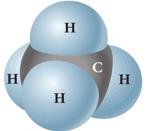
Nonpolar molecules, such as methane (CH4), have symmetrical shapes and equal sharing of electrons, resulting in no partial charges.
Shape and Polarity
The shape of a molecule affects its polarity. Water's bent shape makes it polar, while carbon dioxide's linear shape makes it nonpolar despite having polar bonds.
Bond Type | Molecular Shape | Molecular Type |
|---|---|---|
Water | Bent | Polar |
Methane | Tetrahedral | Nonpolar |
Carbon dioxide | Linear | Nonpolar |
Hydrogen Bonding
Formation and Properties
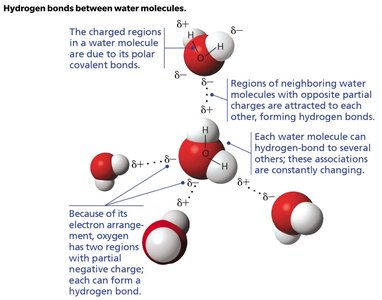
Hydrogen bonds form between the partially positive hydrogen of one water molecule and the partially negative oxygen of another. These bonds are much weaker than covalent bonds but are crucial for water's properties.
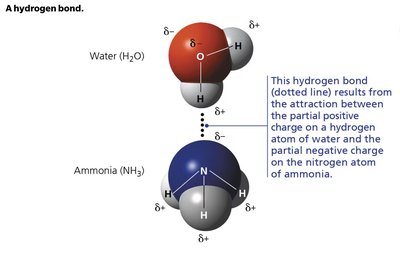
Each hydrogen bond is weak, but collectively they have significant effects.
Hydrogen bonds are responsible for water's high cohesion, surface tension, and other emergent properties.
Emergent Properties of Water
Cohesion and Adhesion
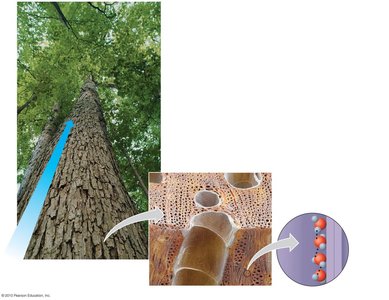
Cohesion is the attraction between water molecules, while adhesion is the attraction between water and other polar substances. These properties enable water transport in plants and contribute to surface tension.
High Specific Heat and Heat of Vaporization
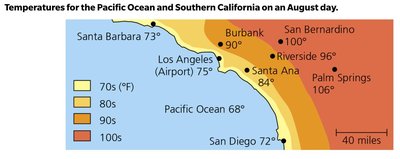
Water resists temperature changes due to hydrogen bonding. It can absorb or release large amounts of heat with little temperature change, stabilizing environments and organisms.
Specific heat: Amount of heat needed to raise 1g of water by 1°C.
Heat of vaporization: Energy required to convert water from liquid to gas.
Ice Floats
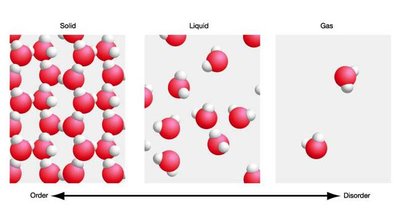
At low temperatures, water forms a crystalline structure with hydrogen bonds, making ice less dense than liquid water. This allows ice to float, insulating aquatic life in winter.
Water as a Solvent
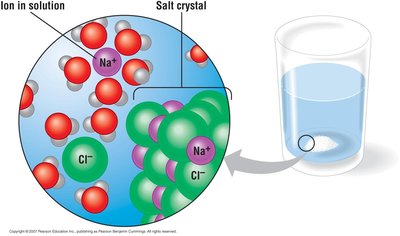
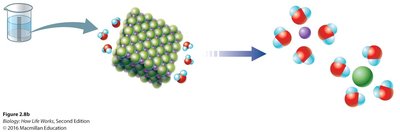
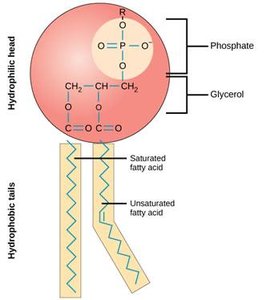
Water dissolves many substances due to its polarity. Polar and ionic compounds are hydrophilic and dissolve easily, while nonpolar molecules are hydrophobic and do not dissolve.
Hydrophilic and Hydrophobic Substances
Definitions and Biological Importance
Hydrophilic: Water-loving; polar molecules that dissolve in water (e.g., salts, sugars).
Hydrophobic: Water-fearing; nonpolar molecules that do not dissolve in water (e.g., oils, lipids).
Hydrophobic interactions are crucial for the structure of cell membranes and protein folding.
pH, Acids, Bases, and Buffers
Water Ionization and the pH Scale
Water can ionize to form H+ and OH− ions. The concentration of H+ ions determines the pH of a solution.
pH = -log10[H+]
Neutral water: [H+] = 1 × 10⁻⁷ M, pH = 7
The pH scale is logarithmic; each unit change represents a tenfold change in [H+].
Acids and Bases
Acids: Donate H+ ions, lowering pH (e.g., HCl, COOH).
Bases: Accept H+ ions, raising pH (e.g., NH3).
Biological systems use buffers to resist changes in pH and maintain homeostasis.
Biological Relevance of Water's Properties
Role in Biomolecules and Cells
Hydrogen bonds stabilize the structure of proteins and DNA.
Water's solvent properties facilitate biochemical reactions and transport of substances.
Hydrophobic and hydrophilic interactions drive membrane formation and protein folding.
Summary Table: Key Properties of Water
Property | Explanation | Biological Importance |
|---|---|---|
Cohesion/Adhesion | Hydrogen bonds hold water molecules together and to other substances | Water transport in plants, surface tension |
High Specific Heat | Resists temperature change | Stabilizes organism and environmental temperatures |
Ice Floats | Solid water is less dense than liquid | Insulates aquatic life in winter |
Solvent Ability | Dissolves polar and ionic substances | Facilitates biochemical reactions |
pH Buffering | Resists changes in pH | Maintains cellular homeostasis |
