 뒤로
뒤로Water: Structure, Properties, and Biological Importance
스터디 가이드 - 스마트 노트
 자료에 맞춘 맞춤형 노트, 핵심 정의, 예시, 맥락을 확장해 제공합니다.
Water: Structure, Polarity, and Bonding
Atomic Structure and Covalent Bonding
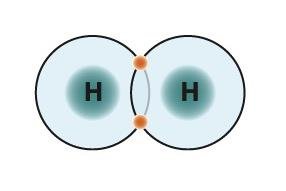
Water (H2O) is a simple molecule composed of two hydrogen atoms covalently bonded to one oxygen atom. Covalent bonds involve the sharing of electron pairs between atoms. In a nonpolar covalent bond, electrons are shared equally, while in a polar covalent bond, electrons are shared unequally due to differences in electronegativity.
Covalent Bond: A chemical bond formed by the sharing of electron pairs between atoms.
Nonpolar Covalent Bond: Electrons are shared equally (e.g., H2 molecule).
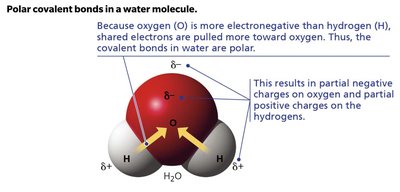
Polar Covalent Bond: Electrons are shared unequally, resulting in partial charges (e.g., O-H bond in water).
Electronegativity: The tendency of an atom to attract electrons in a bond. Oxygen is more electronegative than hydrogen.

Polarity of Water
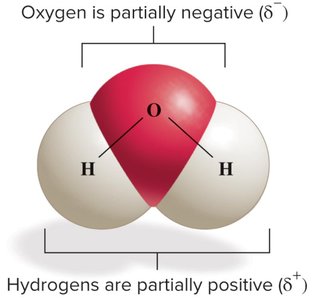
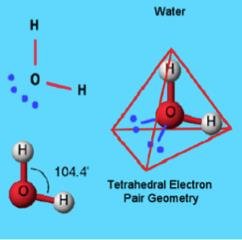
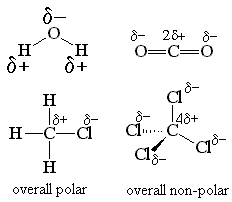
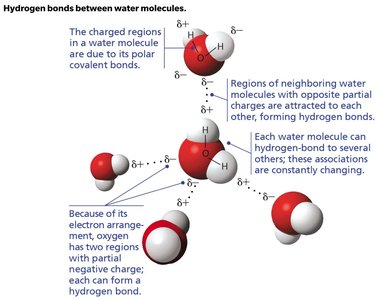
Water is a polar molecule due to its bent shape and the difference in electronegativity between oxygen and hydrogen. The oxygen atom attracts electrons more strongly, resulting in a partial negative charge (δ-) on the oxygen and partial positive charges (δ+) on the hydrogens. This asymmetry makes water a directional, polar molecule.
Polar Molecule: A molecule with an uneven distribution of charge, resulting in positive and negative poles.
Hydrophilic: "Water-loving"; polar molecules that dissolve easily in water.
Hydrophobic: "Water-fearing"; nonpolar molecules that do not dissolve in water.
Molecular Geometry and Polarity
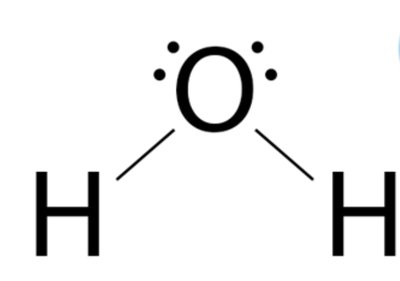
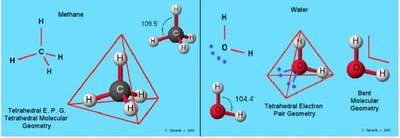
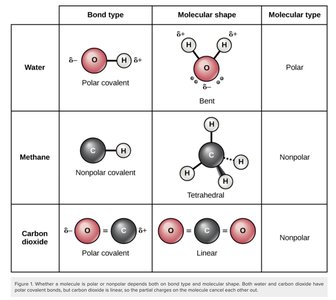
The shape of a molecule affects its polarity. Water has a bent molecular geometry (bond angle ~104.5°), making it polar, while carbon dioxide (CO2) is linear and nonpolar despite having polar bonds. Methane (CH4) is tetrahedral and nonpolar.
Bent Geometry: Water's two lone pairs on oxygen push the hydrogens, creating a bent shape.
Symmetry and Polarity: Symmetrical molecules (e.g., CO2, CH4) are often nonpolar; asymmetrical molecules (e.g., H2O) are polar.
Hydrogen Bonding and Emergent Properties of Water
Hydrogen Bonds
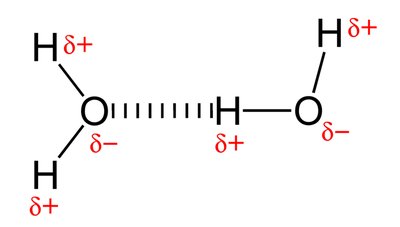
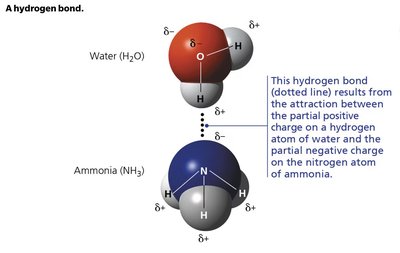
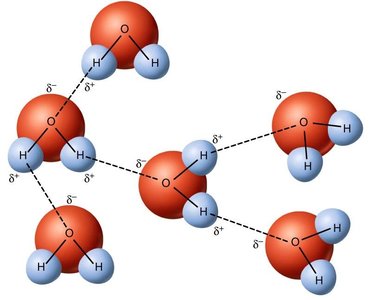
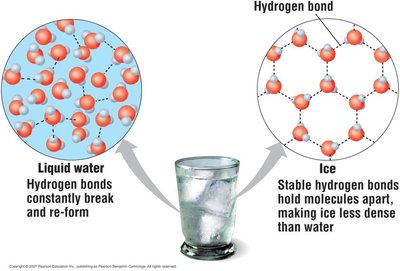
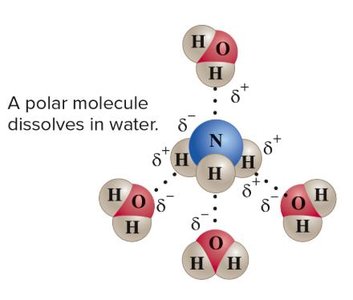
Hydrogen bonds are weak, noncovalent interactions that occur between a partially positive hydrogen atom and a highly electronegative atom (such as oxygen or nitrogen) in another molecule. Although individually weak, the cumulative effect of many hydrogen bonds is significant in biological systems.
Hydrogen Bond: Attraction between a δ+ hydrogen and a δ- atom (O or N).
Noncovalent: No sharing of electrons; hydrogen bonds are much weaker than covalent bonds.
Importance: Stabilize DNA double helix, protein folding, and contribute to water's unique properties.
Emergent Properties of Water
Hydrogen bonding gives rise to several unique and essential properties of water, known as emergent properties. These properties are critical for life and result from the collective behavior of water molecules.
Cohesion: Water molecules stick to each other due to hydrogen bonding, leading to surface tension.
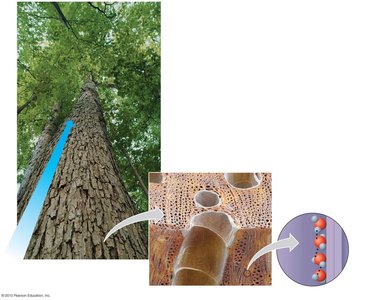
Adhesion: Water molecules stick to other polar substances, aiding processes like capillary action in plants.
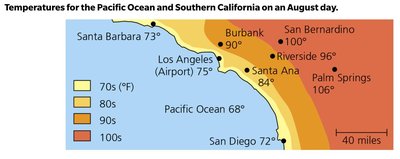
High Specific Heat: Water resists temperature changes, stabilizing environments and organisms.
High Heat of Vaporization: Large amounts of energy are required to convert water from liquid to gas, enabling evaporative cooling.
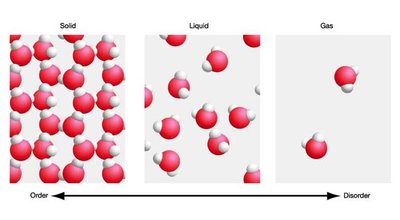
Ice Floats: Solid water (ice) is less dense than liquid water due to stable hydrogen bonds forming a crystalline structure.
Excellent Solvent: Water dissolves many polar and ionic substances, facilitating biochemical reactions.
Water as a Solvent
Solubility and Hydration Shells
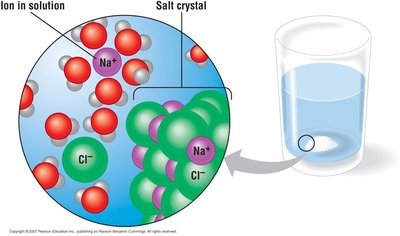
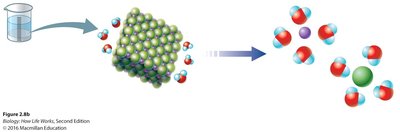
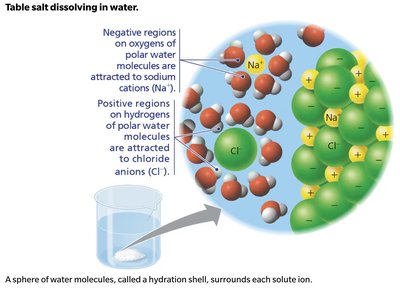
Water's polarity allows it to dissolve many substances, especially ionic and polar compounds. When an ionic compound like sodium chloride (NaCl) dissolves, water molecules surround each ion, forming hydration shells that keep the ions separated and dissolved.
Hydrophilic: Polar molecules and ions that dissolve in water.
Hydrophobic: Nonpolar molecules that do not dissolve in water (e.g., oils, fats).
Biological Relevance: Water is the solvent in blood, cytoplasm, and plant sap.
pH, Acids, Bases, and Buffers
Water Ionization and the pH Scale
Water can ionize to form hydrogen ions (H+) and hydroxide ions (OH-). The concentration of H+ in solution determines the pH, which is a logarithmic scale. Pure water has a neutral pH of 7, where [H+] = [OH-].
pH: A measure of hydrogen ion concentration;
Acid: A substance that donates H+ ions, lowering pH.
Base: A substance that accepts H+ ions, raising pH.
Buffer: A chemical that resists changes in pH by accepting or donating H+ ions.
Examples:
If [H+] = 0.001 M, then
A solution of pH 3 has 1000x more H+ than a solution of pH 6.
Summary Table: Types of Bonds and Water's Role
Bond Type | Description | Example |
|---|---|---|
Polar Covalent | Unequal sharing of electrons | O-H in water |
Nonpolar Covalent | Equal sharing of electrons | H-H, C-H |
Ionic | Transfer of electrons | NaCl |
Hydrogen Bond | Attraction between δ+ H and δ- O/N | Between water molecules, DNA strands |
Key Takeaways
Water's polarity and hydrogen bonding are fundamental to its role in biology.
Emergent properties of water support life at all levels of biological organization.
pH and buffering systems are crucial for maintaining homeostasis in living organisms.
