 뒤로
뒤로Water: Structure, Properties, and Biological Importance
스터디 가이드 - 스마트 노트
 자료에 맞춘 맞춤형 노트, 핵심 정의, 예시, 맥락을 확장해 제공합니다.
Water is Essential for Life
Bond Types and Electronegativity
Understanding the types of chemical bonds and the concept of electronegativity is fundamental to grasping water's unique properties. Electronegativity is a measure of an atom's ability to attract electrons in a chemical bond. The difference in electronegativity between atoms determines whether a bond is nonpolar covalent, polar covalent, or ionic.
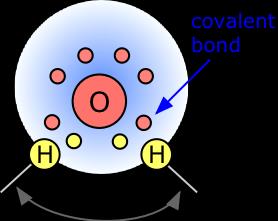
Covalent bonds: Electrons are shared between atoms.
Nonpolar covalent bonds: Electrons are shared equally (e.g., C–C, H–H).
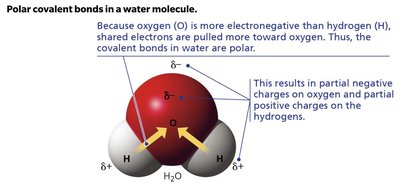
Polar covalent bonds: Electrons are shared unequally due to differences in electronegativity (e.g., O–H, C–O).
Ionic bonds: Electrons are transferred from one atom to another, resulting in charged ions.
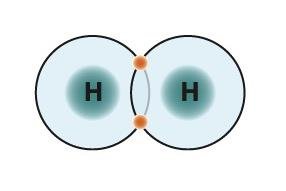

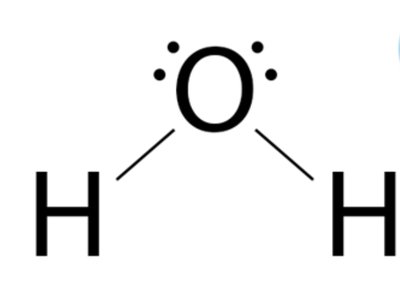
Example: Oxygen (O) is more electronegative than hydrogen (H), so in water (H2O), electrons are pulled closer to oxygen, making the O–H bond polar.
Structure and Polarity of Water
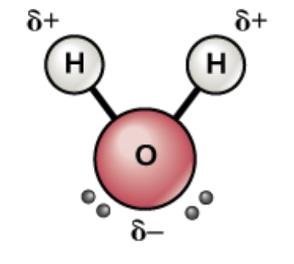
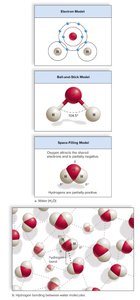
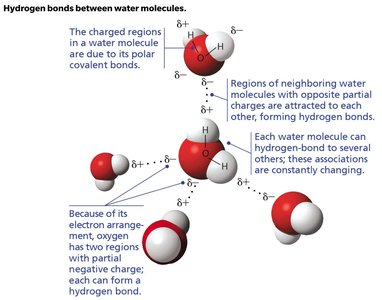
Water (H2O) is a polar molecule due to its bent shape and the unequal sharing of electrons between oxygen and hydrogen. The oxygen atom has a higher electronegativity, resulting in partial negative (δ-) charge on oxygen and partial positive (δ+) charges on hydrogens.
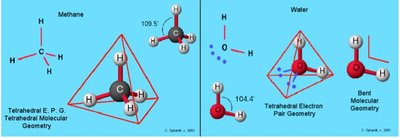
Asymmetrical shape: Water's bent geometry (104.5° angle) creates distinct poles.
Polar covalent bonds: O–H bonds are polar due to electronegativity difference.
Hydrophilic nature: Polar molecules like water are attracted to other polar substances.
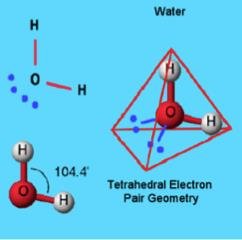
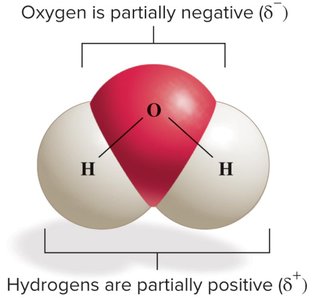
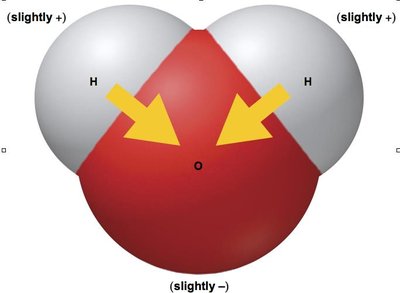
Comparison of Molecular Shapes and Polarity
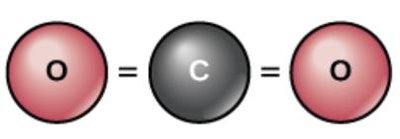
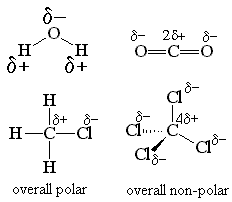
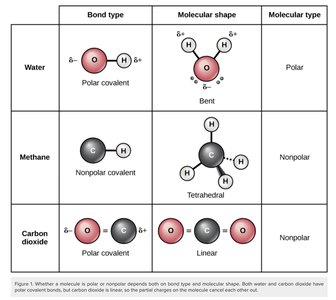
The shape of a molecule determines its overall polarity. Water is bent and polar, methane (CH4) is tetrahedral and nonpolar, and carbon dioxide (CO2) is linear and nonpolar despite having polar bonds.
Water: Bent shape, polar covalent bonds, overall polar.
Methane: Tetrahedral shape, nonpolar covalent bonds, overall nonpolar.
Carbon dioxide: Linear shape, polar covalent bonds, overall nonpolar due to symmetry.
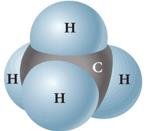
Hydrogen Bonds
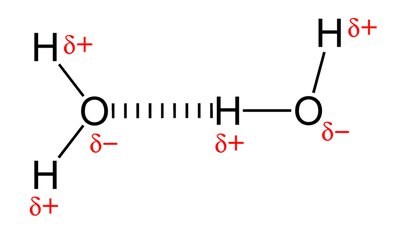
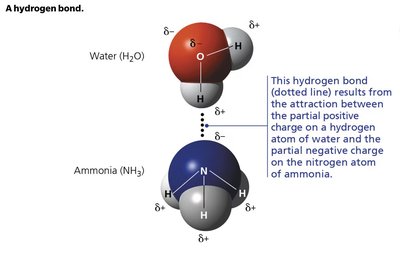
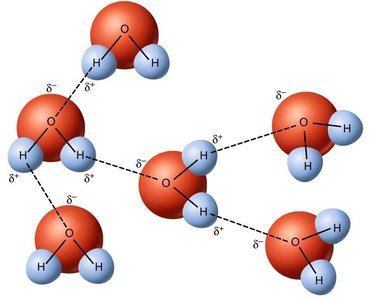
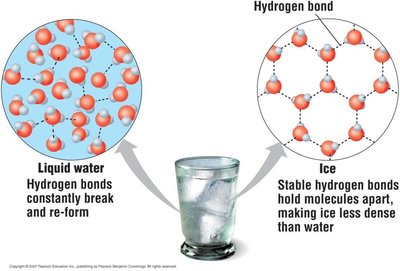
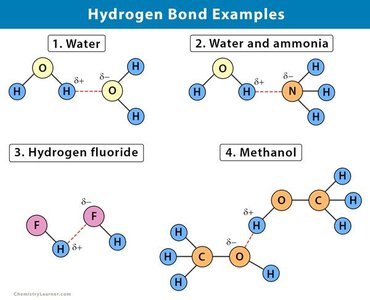
Hydrogen bonds are weak attractions between the partially positive hydrogen atom of one molecule and the partially negative atom (usually oxygen or nitrogen) of another. Although individually weak, their cumulative effect is significant in biological systems.
Formation: Occurs between δ+ hydrogen and δ- oxygen or nitrogen.
Strength: About 5% the strength of a covalent bond.
Importance: Responsible for many emergent properties of water.
Emergent Properties of Water
Hydrogen bonding gives rise to several unique properties essential for life:
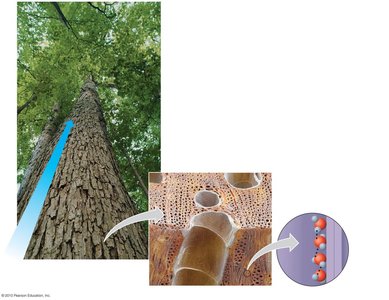
Cohesion: Water molecules stick to each other.
Adhesion: Water molecules stick to other polar substances.
Surface tension: Difficult to break or stretch the surface of water.
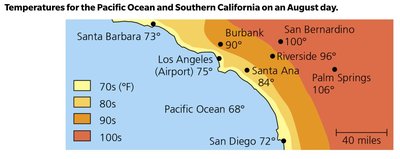
High specific heat: Water resists temperature changes.
High heat of vaporization: Water absorbs a lot of heat before evaporating.
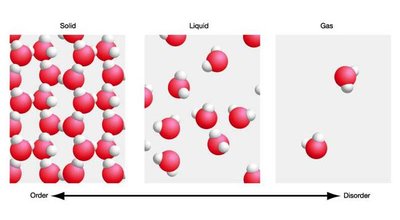
Ice floats: Solid water is less dense than liquid water due to stable hydrogen bonds.
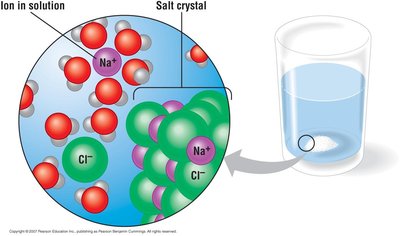
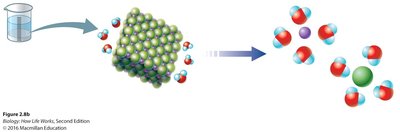
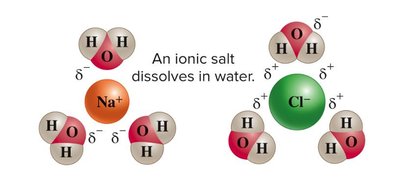
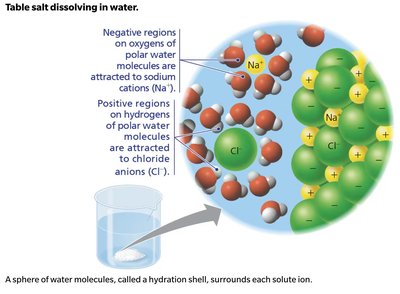
Good solvent: Water dissolves polar and ionic substances.
Water as a Solvent
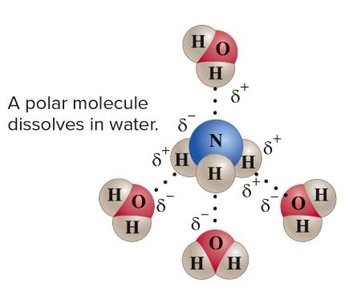
Water's polarity allows it to dissolve many substances, making it the universal solvent in biological systems. Polar and ionic compounds are hydrophilic and dissolve easily, while nonpolar compounds are hydrophobic and do not dissolve.
Hydrophilic: Polar molecules (e.g., salt, sugar) dissolve in water.
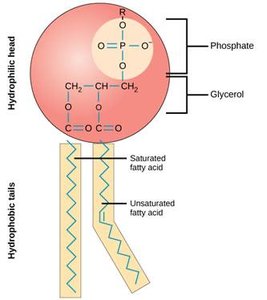
Hydrophobic: Nonpolar molecules (e.g., oils, lipids) do not dissolve in water.
Biological importance: Water is the solvent in blood, cells, and plant sap.
Hydrogen Bonds in Biological Molecules
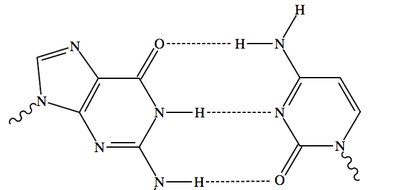
Hydrogen bonds play a crucial role in the structure and function of biomolecules such as DNA and proteins.
DNA: Hydrogen bonds hold the two strands of the double helix together.
Proteins: Hydrogen bonds contribute to protein folding and stability.
pH and Water Ionization
Water can ionize to form H+ and OH- ions. The concentration of H+ ions determines the pH of a solution, which affects the structure and function of biomolecules.
pH scale: Logarithmic scale measuring [H+].
Neutral pH: Water has a pH of 7 ([H+] = [OH-]).
Acids: Donate H+ ions, lowering pH.
Bases: Accept H+ ions, raising pH.
Buffers: Chemicals that resist changes in pH.
Formula:
Example: If [H+] = 0.001, then pH = 3.
Summary Table: Water, Methane, and Carbon Dioxide
Bond Type | Molecular Shape | Molecular Type |
|---|---|---|
Water: Polar covalent | Bent | Polar |
Methane: Nonpolar covalent | Tetrahedral | Nonpolar |
Carbon dioxide: Polar covalent | Linear | Nonpolar |
Key Takeaways
Water's polarity and hydrogen bonding are fundamental to its biological roles.
Emergent properties such as cohesion, adhesion, high specific heat, and solvent ability arise from hydrogen bonding.
pH is a critical concept in biology, affecting molecular structure and function.
Hydrophilic and hydrophobic interactions drive the structure of cell membranes and biomolecules.
