
Ch. 10 - Photosynthesis
Campbell - Campbell Biology 12th Edition
Urry12th EditionCampbell BiologyISBN: 9785794169850당신이 사용하는 게 아니라요?교과서 변경
10장, 문제 6

In mechanism, photophosphorylation is most similar to
a. Substrate-level phosphorylation in glycolysis.
b. Oxidative phosphorylation in cellular respiration.
c. Carbon fixation.
d. Reduction of NADP+.

검증된 단계별 안내
1
Understand the concept of photophosphorylation: Photophosphorylation is the process by which ATP is formed using the energy of sunlight during photosynthesis. It occurs in the chloroplasts of plant cells.
Compare photophosphorylation with substrate-level phosphorylation: Substrate-level phosphorylation occurs in glycolysis and involves the direct transfer of a phosphate group to ADP from a phosphorylated intermediate. This process does not involve an electron transport chain.
Compare photophosphorylation with oxidative phosphorylation: Oxidative phosphorylation occurs in cellular respiration within the mitochondria. It involves the electron transport chain and chemiosmosis, where ATP is synthesized using energy derived from the transfer of electrons through a series of complexes.
Consider the role of carbon fixation: Carbon fixation is part of the Calvin cycle in photosynthesis, where CO2 is converted into organic molecules. It does not directly involve the formation of ATP through an electron transport chain.
Evaluate the reduction of NADP+: The reduction of NADP+ to NADPH occurs during the light reactions of photosynthesis, but it is not directly involved in the phosphorylation of ADP to ATP.

비슷한 문제에 대한 검증된 영상 답변:

이 영상 해법은 위 문제에 도움이 된다고 튜터들이 추천한 것입니다.
영상 길이:
49s

주요 개념

질문에 올바르게 답하기 위해 반드시 이해해야 하는 핵심 개념들은 다음과 같습니다.

Photophosphorylation

Photophosphorylation is the process by which ATP is formed using the energy of sunlight during photosynthesis. It occurs in the chloroplasts of plant cells, where light energy is captured by chlorophyll and used to drive the synthesis of ATP from ADP and inorganic phosphate. This process is crucial for converting solar energy into chemical energy.
추천 영상:
10:11
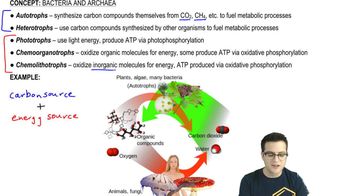
Prokaryote Metabolism

Oxidative Phosphorylation

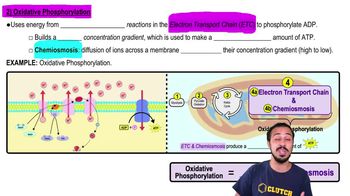
Oxidative phosphorylation is a metabolic pathway that uses energy released by the oxidation of nutrients to produce ATP. It occurs in the mitochondria during cellular respiration, where electrons are transferred through a series of complexes in the electron transport chain, ultimately reducing oxygen to water and driving the synthesis of ATP. This process is similar to photophosphorylation in its use of a proton gradient to generate ATP.
추천 영상:
06:27
Oxidative Phosphorylation

Electron Transport Chain

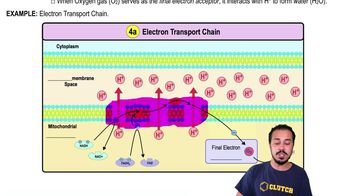
The electron transport chain is a series of protein complexes located in the inner mitochondrial membrane (or thylakoid membrane in chloroplasts) that transfer electrons from electron donors to electron acceptors via redox reactions. This transfer of electrons is coupled with the pumping of protons across the membrane, creating a proton gradient that drives ATP synthesis. Both photophosphorylation and oxidative phosphorylation rely on this mechanism to produce ATP.
추천 영상:
07:41
Electron Transport Chain