Ch. 10 - Photosynthesis
Campbell - Campbell Biology 12th Edition
Urry12th EditionCampbell BiologyISBN: 9785794169850당신이 사용하는 게 아니라요?교과서 변경
10장, 문제 7

Which process is most directly driven by light energy?
a. Creation of a pH gradient by pumping protons across the thylakoid membrane
b. Reduction of NADP+ molecules
c. Transfer of energy from pigment molecule to pigment molecule
d. ATP synthesis

검증된 단계별 안내
1
Understand that the question is about photosynthesis, which is the process plants use to convert light energy into chemical energy.
Identify the role of light energy in photosynthesis. Light energy is primarily absorbed by chlorophyll and other pigments in the chloroplasts.
Recognize that the absorbed light energy excites electrons in the chlorophyll molecules, which is the initial step in the light-dependent reactions of photosynthesis.
Consider each option: (a) involves the creation of a proton gradient, (b) involves the reduction of NADP+, (c) involves the transfer of energy between pigment molecules, and (d) involves ATP synthesis.
Determine that the process most directly driven by light energy is the transfer of energy from pigment molecule to pigment molecule, as this is the immediate result of light absorption, leading to the excitation of electrons.

비슷한 문제에 대한 검증된 영상 답변:

이 영상 해법은 위 문제에 도움이 된다고 튜터들이 추천한 것입니다.
영상 길이:
1m
도움이 되었나요?

주요 개념

질문에 올바르게 답하기 위해 반드시 이해해야 하는 핵심 개념들은 다음과 같습니다.

Photosynthesis

Photosynthesis is the process by which green plants, algae, and some bacteria convert light energy into chemical energy stored in glucose. It occurs in the chloroplasts and involves two main stages: the light-dependent reactions and the Calvin cycle. Light energy is captured by chlorophyll and other pigments, driving the synthesis of ATP and NADPH, which are used in the Calvin cycle to produce glucose.
추천 영상:
가이드 코스
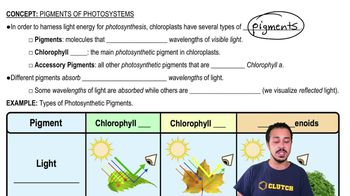
05:58
Pigments of Photosynthesis

Light-Dependent Reactions

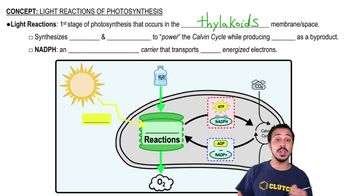
The light-dependent reactions are the first stage of photosynthesis, occurring in the thylakoid membranes of chloroplasts. These reactions require light energy to excite electrons in chlorophyll, leading to the production of ATP and NADPH. The process involves the transfer of energy between pigment molecules and the creation of a proton gradient across the thylakoid membrane, which drives ATP synthesis.
추천 영상:
가이드 코스
04:06
Light Reactions of Photosynthesis

Energy Transfer in Photosystems

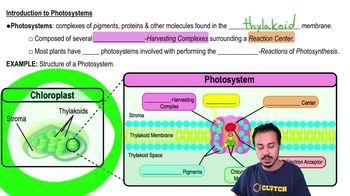
Energy transfer in photosystems involves the movement of energy from one pigment molecule to another within the thylakoid membrane. This process is initiated by the absorption of light energy, which excites electrons in chlorophyll molecules. The energy is then transferred through a series of pigments until it reaches the reaction center, where it is used to drive the light-dependent reactions of photosynthesis.
추천 영상:
가이드 코스
04:59
Introduction to Photosystems