
Ch. 17 - Gene Expression: From Gene to Protein
Campbell - Campbell Biology 12th Edition
Urry12th EditionCampbell BiologyISBN: 9785794169850당신이 사용하는 게 아니라요?교과서 변경
17장, 문제 9

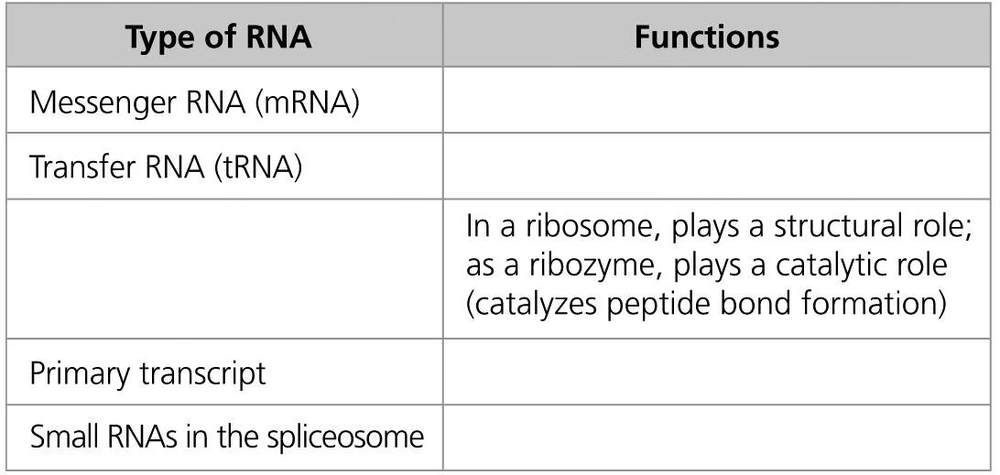
Complete the following table:
Table listing types of RNA: mRNA, tRNA, primary transcript, small RNAs; with functions for tRNA in ribosomes.

검증된 단계별 안내
1
Identify the type of table you are working with and the specific information required to complete it. This could be a table related to biological data, such as a classification table, a data set from an experiment, or a comparison of biological processes.
Gather all necessary data or information that is needed to fill in the table. This may involve reviewing your notes, textbooks, or any provided resources that contain the relevant biological information.
Determine the categories or columns of the table and understand what each represents. For example, if it's a table comparing different species, columns might include 'Species Name', 'Habitat', 'Diet', etc.
Fill in the table systematically, starting with the information you are most confident about. Ensure that each entry is accurate and corresponds correctly to the category or column it is placed under.
Review the completed table to ensure all information is accurate and complete. Check for any missing data or inconsistencies, and make any necessary corrections to ensure the table is a reliable source of information.

비슷한 문제에 대한 검증된 영상 답변:

이 영상 해법은 위 문제에 도움이 된다고 튜터들이 추천한 것입니다.
영상 길이:
50s
도움이 되었나요?

주요 개념

질문에 올바르게 답하기 위해 반드시 이해해야 하는 핵심 개념들은 다음과 같습니다.

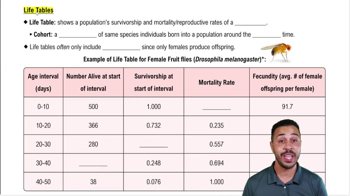
Understanding Tables in Biology

Tables in biology are used to organize and present data systematically, allowing for easy comparison and analysis. They typically consist of rows and columns, where each cell contains specific information related to the study or experiment. Understanding how to read and complete tables is crucial for interpreting biological data accurately.
추천 영상:

Data Interpretation

Data interpretation involves analyzing and making sense of data presented in tables or graphs. It requires identifying patterns, trends, and anomalies within the data, and understanding the implications of these findings in a biological context. This skill is essential for drawing valid conclusions and making informed decisions based on the data.
추천 영상:
03:54
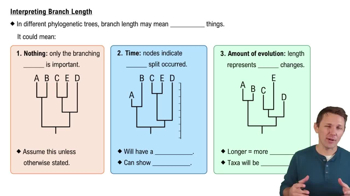
Interpreting Branch Length

Biological Variables

Biological variables are factors that can change and affect the outcome of experiments or studies. These include independent variables, which are manipulated, and dependent variables, which are measured. Recognizing and understanding these variables is key to completing tables accurately, as they determine the structure and content of the data presented.
추천 영상:
가이드 코스
06:04
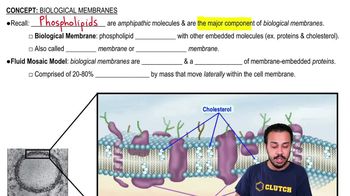
Biological Membranes