Ch. 21 - Genomes and Their Evolution
Campbell - Campbell Biology 12th Edition
Urry12th EditionCampbell BiologyISBN: 9785794169850당신이 사용하는 게 아니라요?교과서 변경
21장, 문제 2

Homeotic genes
a. Encode transcription factors that control the expression of genes responsible for specific anatomical structures.
b. Are found only in Drosophila and other arthropods.
c. Are the only genes that contain the homeobox domain.
d. Encode proteins that form anatomical structures in the fly.

검증된 단계별 안내
1
Understand that homeotic genes are a group of genes that regulate the development of anatomical structures in various organisms, not just in Drosophila or arthropods.
Recognize that homeotic genes encode transcription factors, which are proteins that help turn specific genes on or off by binding to nearby DNA.
Identify that these transcription factors control the expression of other genes responsible for the development of specific anatomical structures.
Note that homeotic genes are characterized by the presence of a homeobox domain, a DNA sequence that is highly conserved across different species.
Clarify that while homeotic genes encode transcription factors, they do not directly encode proteins that form anatomical structures; instead, they regulate the expression of other genes that do.

비슷한 문제에 대한 검증된 영상 답변:

이 영상 해법은 위 문제에 도움이 된다고 튜터들이 추천한 것입니다.
영상 길이:
2m
도움이 되었나요?

주요 개념

질문에 올바르게 답하기 위해 반드시 이해해야 하는 핵심 개념들은 다음과 같습니다.

Homeotic Genes

Homeotic genes are crucial in developmental biology as they encode transcription factors that regulate the expression of other genes, determining the identity and arrangement of anatomical structures during development. These genes are not limited to Drosophila or arthropods but are found across various species, including humans.
추천 영상:
가이드 코스
05:02
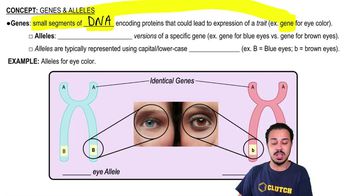
Genes & Alleles

Homeobox Domain

The homeobox domain is a conserved DNA sequence found within homeotic genes, encoding a part of the protein that binds to DNA. This domain is essential for the gene's role in controlling the development of body structures, and it is present in many genes beyond just homeotic genes, indicating its widespread importance in gene regulation.
추천 영상:
가이드 코스
05:20
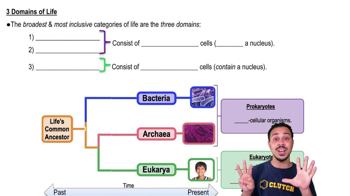
3 Domains of Life

Transcription Factors

Transcription factors are proteins that bind to specific DNA sequences, controlling the rate of transcription of genetic information from DNA to messenger RNA. They play a pivotal role in turning genes on or off, thus influencing cell function and development, including the formation of anatomical structures as directed by homeotic genes.
추천 영상:
가이드 코스
03:32
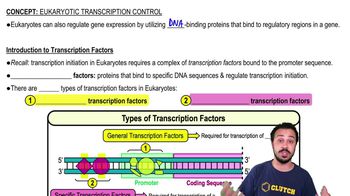
Introduction to Transcription Factors
관련 실천
교과서 질문

Two eukaryotic proteins have one domain in common but are otherwise very different. Which of the following processes is most likely to have contributed to this similarity?

a. Gene duplication

b. Alternative splicing

c. Exon shuffling

d. Random point mutations

1485
views
교과서 질문

In the human sequence, underline any amino acid that differs from the sequence for the chimpanzee, gorilla, and rhesus monkey.

1125
views
교과서 질문

Below are the amino acid sequences (using single letters; see Figure 5.14) of three short segments of the FOXP2 protein from five species. These segments contain all amino acid differences between the FOXP2 proteins of these species. Compare the amino acid sequences by answering parts (a)–(d).

Chimpanzee: PKSSD ... TSSTT ... NARRD

Mouse: PKSSE ... TSSTT ... NARRD

Gorilla: PKSSD ... TSSTT ... NARRD

Human: PKSSD ... TSSNT ... SARRD

Rhesus monkey: PKSSD ... TSSTT ... NARRD

Circle the names of any species that have identical amino acid sequences for the FOXP2 protein.

a. Chimpanzee, Gorilla, Rhesus monkey

b. Human, Mouse

c. Chimpanzee, Human, Mouse

d. Rhesus monkey, Human, Gorilla

1581
views
교과서 질문

Bioinformatics includes

a. Using DNA technology to clone genes.

b. Using computer programs to align DNA sequences.

c. Using a person's genomic sequence to inform decisions about medical treatment.

d. Amplifying DNA segments from a species' genome.

1497
views
교과서 질문

In the sequence for the mouse, circle any amino acid that differs from the sequence for the chimpanzee, gorilla, and rhesus monkey. Then draw a box around any amino acid that differs from the human sequence.

1237
views