Ch. 21 - Genomes and Their Evolution
Campbell - Campbell Biology 12th Edition
Urry12th EditionCampbell BiologyISBN: 9785794169850당신이 사용하는 게 아니라요?교과서 변경
21장, 문제 3

Two eukaryotic proteins have one domain in common but are otherwise very different. Which of the following processes is most likely to have contributed to this similarity?
a. Gene duplication
b. Alternative splicing
c. Exon shuffling
d. Random point mutations

검증된 단계별 안내
1
Understand the concept of protein domains: Protein domains are distinct functional and structural units within a protein. They can evolve, function, and exist independently of the rest of the protein chain.
Consider the process of exon shuffling: Exon shuffling is a molecular mechanism that can create new genes by rearranging exons, which are coding sequences within a gene. This can lead to proteins with new combinations of domains.
Evaluate how exon shuffling contributes to protein diversity: Exon shuffling can result in proteins that share common domains while having different overall structures and functions. This process can lead to the presence of similar domains in otherwise different proteins.
Compare exon shuffling with other processes: Gene duplication involves copying entire genes, alternative splicing involves generating different mRNA transcripts from the same gene, and random point mutations involve changes in individual nucleotides. Exon shuffling specifically involves rearranging exons to create new domain combinations.
Conclude that exon shuffling is the most likely process: Given the presence of a common domain in otherwise different proteins, exon shuffling is the process most likely to have contributed to this similarity by rearranging exons to create new domain combinations.

비슷한 문제에 대한 검증된 영상 답변:

이 영상 해법은 위 문제에 도움이 된다고 튜터들이 추천한 것입니다.
영상 길이:
4m
도움이 되었나요?

주요 개념

질문에 올바르게 답하기 위해 반드시 이해해야 하는 핵심 개념들은 다음과 같습니다.

Exon Shuffling

Exon shuffling is a molecular mechanism through which new genes are created by rearranging exons, the coding sequences of DNA. This process can result in proteins with new combinations of functional domains, leading to evolutionary innovation. It is a key contributor to the diversity of protein structures and functions in eukaryotic organisms.
추천 영상:
가이드 코스
05:30
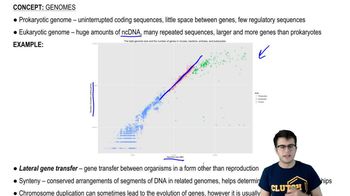
Genomes and Genome Evolution

Protein Domains

Protein domains are distinct functional and structural units within a protein, often responsible for a particular function or interaction. Domains can be independently stable and can fold into a specific three-dimensional structure. The presence of a common domain in different proteins suggests a shared evolutionary origin or functional similarity, often due to processes like exon shuffling.
추천 영상:
가이드 코스
05:20
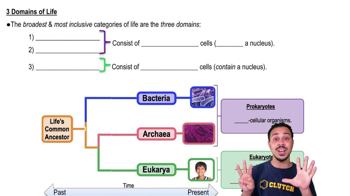
3 Domains of Life

Gene Duplication

Gene duplication is an evolutionary process where an organism gains extra copies of a gene, leading to genetic redundancy. This can allow one copy to mutate and potentially acquire new functions while the other maintains the original function. Although gene duplication can lead to protein diversity, it is less likely to explain the presence of a common domain in otherwise different proteins compared to exon shuffling.
추천 영상:
가이드 코스
05:02
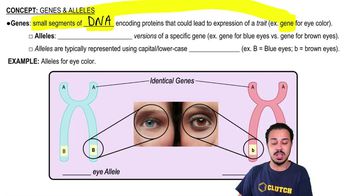
Genes & Alleles
관련 실천
교과서 질문

Homeotic genes

a. Encode transcription factors that control the expression of genes responsible for specific anatomical structures.

b. Are found only in Drosophila and other arthropods.

c. Are the only genes that contain the homeobox domain.

d. Encode proteins that form anatomical structures in the fly.

1601
views
교과서 질문

In the human sequence, underline any amino acid that differs from the sequence for the chimpanzee, gorilla, and rhesus monkey.

1125
views
교과서 질문

Below are the amino acid sequences (using single letters; see Figure 5.14) of three short segments of the FOXP2 protein from five species. These segments contain all amino acid differences between the FOXP2 proteins of these species. Compare the amino acid sequences by answering parts (a)–(d).

Chimpanzee: PKSSD ... TSSTT ... NARRD

Mouse: PKSSE ... TSSTT ... NARRD

Gorilla: PKSSD ... TSSTT ... NARRD

Human: PKSSD ... TSSNT ... SARRD

Rhesus monkey: PKSSD ... TSSTT ... NARRD

Circle the names of any species that have identical amino acid sequences for the FOXP2 protein.

a. Chimpanzee, Gorilla, Rhesus monkey

b. Human, Mouse

c. Chimpanzee, Human, Mouse

d. Rhesus monkey, Human, Gorilla
1581
views
교과서 질문

Bioinformatics includes

a. Using DNA technology to clone genes.

b. Using computer programs to align DNA sequences.

c. Using a person's genomic sequence to inform decisions about medical treatment.

d. Amplifying DNA segments from a species' genome.

1497
views
교과서 질문

Below are the amino acid sequences (using single letters; see Figure 5.14) of three short segments of the FOXP2 protein from five species. These segments contain all amino acid differences between the FOXP2 proteins of these species. Compare the amino acid sequences by answering parts (a)–(d).


b. In the sequence for the mouse, circle any amino acid that differs from the sequence for the chimpanzee, gorilla, and rhesus monkey. Then draw a box around any amino acid that differs from the human sequence.

517
views
교과서 질문

In the sequence for the mouse, circle any amino acid that differs from the sequence for the chimpanzee, gorilla, and rhesus monkey. Then draw a box around any amino acid that differs from the human sequence.

1237
views