Ch. 33 - An introduction to Invertebrates
Campbell - Campbell Biology 12th Edition
Urry12th EditionCampbell BiologyISBN: 9785794169850당신이 사용하는 게 아니라요?교과서 변경
33장, 문제 1

A land snail, a clam, and an octopus all share
a. A mantle
b. A radula
c. Gills
d. Distinct cephalization

검증된 단계별 안내
1
Begin by identifying the common phylum to which a land snail, a clam, and an octopus belong. All three are part of the phylum Mollusca.
Understand the characteristics of the phylum Mollusca. Members of this phylum typically have a mantle, which is a significant part of their anatomy.
Consider the function of the mantle in mollusks. The mantle is a layer of tissue that covers the body and is responsible for secreting the shell in many mollusks.
Evaluate the other options provided: a radula is a specialized feeding organ found in some mollusks, but not all (e.g., clams do not have a radula). Gills are present in aquatic mollusks, but not in land snails. Distinct cephalization refers to the development of a head region, which is more pronounced in octopuses than in snails or clams.
Conclude that the shared feature among a land snail, a clam, and an octopus is the mantle, as it is a defining characteristic of the phylum Mollusca.

비슷한 문제에 대한 검증된 영상 답변:

이 영상 해법은 위 문제에 도움이 된다고 튜터들이 추천한 것입니다.
영상 길이:
54s

주요 개념

질문에 올바르게 답하기 위해 반드시 이해해야 하는 핵심 개념들은 다음과 같습니다.

Mantle

The mantle is a significant part of mollusks, including snails, clams, and octopuses. It is a layer of tissue that covers the visceral mass and is responsible for secreting the shell in those mollusks that have one. The mantle also plays a role in respiration and excretion, making it a crucial anatomical feature across different mollusk species.
추천 영상:
04:33
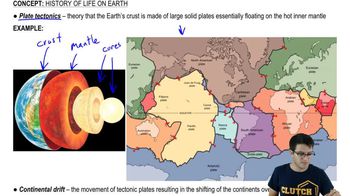
Plate Tectonics and Continental Drift

Radula

A radula is a specialized feeding organ found in most mollusks, except bivalves like clams. It is a ribbon-like structure covered with tiny teeth used to scrape or cut food before ingestion. The presence or absence of a radula is a key distinguishing feature among mollusk classes, highlighting differences in feeding strategies.
추천 영상:
06:30
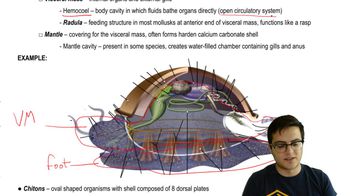
Mollusks

Cephalization

Cephalization refers to the concentration of sensory organs and nerve cells at the anterior end of an organism, forming a head region. This feature is prominent in octopuses, which have a well-developed head and brain, but is less distinct in snails and clams. Cephalization is associated with increased complexity and specialization in the nervous system, enhancing an organism's ability to interact with its environment.
추천 영상:
11:10
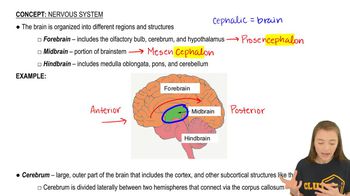
Cerebrum and Cerebral Cortex