Ch. 42 - Circulation and Gas Exchange
Campbell - Campbell Biology 12th Edition
Urry12th EditionCampbell BiologyISBN: 9785794169850당신이 사용하는 게 아니라요?교과서 변경
42장, 문제 4

When you hold your breath, which of the following blood gas changes first leads to the urge to breathe?
a. Rising O2
b. Falling O2
c. Rising CO2
d. Falling CO2

검증된 단계별 안내
1
Understand the role of blood gases in respiration: The primary gases involved in respiration are oxygen (O2) and carbon dioxide (CO2). The body monitors levels of these gases to regulate breathing.
Identify the primary driver for the urge to breathe: The urge to breathe is primarily triggered by changes in CO2 levels rather than O2 levels. This is because CO2 is a byproduct of metabolism and its accumulation can lead to acidification of the blood.
Consider the physiological response to holding your breath: When you hold your breath, CO2 accumulates in the blood because it is not being expelled through exhalation.
Analyze the effect of rising CO2 levels: As CO2 levels rise, the blood becomes more acidic, which is detected by chemoreceptors in the brain and blood vessels. This triggers the urge to breathe to expel the excess CO2.
Conclude which change leads to the urge to breathe: The rising levels of CO2 in the blood are the primary factor that leads to the urge to breathe when holding your breath.

비슷한 문제에 대한 검증된 영상 답변:

이 영상 해법은 위 문제에 도움이 된다고 튜터들이 추천한 것입니다.
영상 길이:
59s

주요 개념

질문에 올바르게 답하기 위해 반드시 이해해야 하는 핵심 개념들은 다음과 같습니다.

Respiratory Drive

The respiratory drive is primarily controlled by the levels of carbon dioxide (CO2) in the blood. Chemoreceptors in the brain and blood vessels detect changes in CO2 levels, which are more sensitive than oxygen (O2) levels. An increase in CO2 concentration is the main trigger for the urge to breathe, as it indicates the need to expel excess CO2 and maintain acid-base balance.
추천 영상:
06:28
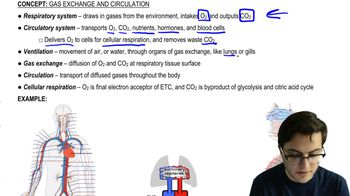
Gas Exchange and Circulation

Chemoreceptors

Chemoreceptors are specialized sensory receptors that respond to changes in chemical concentrations in the blood. Central chemoreceptors, located in the medulla oblongata, primarily detect changes in CO2 and pH levels, while peripheral chemoreceptors in the carotid and aortic bodies respond to changes in O2, CO2, and pH. The central chemoreceptors are more sensitive to CO2, making it the primary driver for breathing regulation.
추천 영상:
02:54
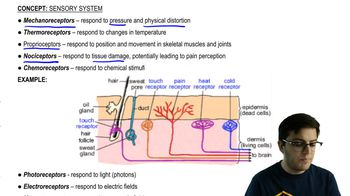
Sensory Receptors

Carbon Dioxide and Blood pH

Carbon dioxide (CO2) in the blood is converted to carbonic acid, which dissociates into hydrogen ions and bicarbonate, affecting blood pH. An increase in CO2 leads to a decrease in pH (acidosis), stimulating the respiratory center to increase breathing rate and depth to expel CO2 and restore pH balance. This mechanism is crucial for maintaining homeostasis and is more immediate than the response to low oxygen levels.
추천 영상:
04:19
Carbon