Ch. 47 - Animal Development
Campbell - Campbell Biology 12th Edition
Urry12th EditionCampbell BiologyISBN: 9785794169850당신이 사용하는 게 아니라요?교과서 변경
47장, 문제 6

In humans, identical twins are possible because
a. Extraembryonic cells interact with the zygote nucleus.
b. Convergent extension occurs.
c. Early blastomeres can form a complete embryo if isolated.
d. The gray crescent divides the dorsal-ventral axis into new cells.

검증된 단계별 안내
1
Understand the context: Identical twins, also known as monozygotic twins, occur when a single fertilized egg splits and develops into two embryos.
Consider the options: Each option describes a different biological process or concept. We need to identify which one is related to the formation of identical twins.
Option a: Extraembryonic cells are involved in forming structures like the placenta, not in splitting the zygote.
Option b: Convergent extension is a process during gastrulation that involves cell movement and tissue elongation, not related to twin formation.
Option c: Early blastomeres are cells formed during the early stages of embryonic development. If these cells are isolated, they have the potential to develop into a complete embryo, which is the basis for the formation of identical twins.

비슷한 문제에 대한 검증된 영상 답변:

이 영상 해법은 위 문제에 도움이 된다고 튜터들이 추천한 것입니다.
영상 길이:
2m
도움이 되었나요?

주요 개념

질문에 올바르게 답하기 위해 반드시 이해해야 하는 핵심 개념들은 다음과 같습니다.

Identical Twins Formation

Identical twins, or monozygotic twins, occur when a single fertilized egg, or zygote, splits into two separate embryos. This splitting usually happens during the early stages of embryonic development, leading to two genetically identical individuals. The process is distinct from fraternal twins, which result from two separate eggs being fertilized by two different sperm cells.
추천 영상:
가이드 코스
03:08
Formation & Breakdown of Polysaccharides

Blastomeres

Blastomeres are the cells formed by the division of the fertilized egg during the early stages of embryonic development. In some species, including humans, early blastomeres have the potential to develop into a complete embryo if they become isolated. This totipotency is crucial for the formation of identical twins, as it allows the separated cells to develop independently into two embryos.
추천 영상:
가이드 코스
07:18
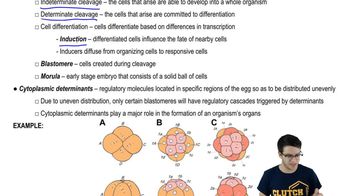
Cleavage and Blastulation

Embryonic Development

Embryonic development is the process by which a fertilized egg transforms into a fully formed organism. It involves multiple stages, including cleavage, blastulation, gastrulation, and organogenesis. Understanding these stages is essential for comprehending how identical twins can form, as the splitting of the embryo typically occurs during the early cleavage stage, when cells are still totipotent.
추천 영상:
가이드 코스
06:02
Embryonic Plant Development