Ch. 48 - Neurons, Synapses, and Signaling
Campbell - Campbell Biology 12th Edition
Urry12th EditionCampbell BiologyISBN: 9785794169850당신이 사용하는 게 아니라요?교과서 변경
48장, 문제 6

Suppose a particular neurotransmitter causes an IPSP in postsynaptic cell X and an EPSP in postsynaptic cell Y. A likely explanation is that
a. The threshold value in the postsynaptic membrane is different for cell X and cell Y
b. The axon of cell X is myelinated, but that of cell Y is not
c. Only cell Y produces an enzyme that terminates the activity of the neurotransmitter
d. Cells X and Y express different receptor molecules for this particular neurotransmitter

검증된 단계별 안내
1
Understand the terms IPSP and EPSP: IPSP stands for Inhibitory Postsynaptic Potential, which makes the postsynaptic neuron less likely to fire an action potential. EPSP stands for Excitatory Postsynaptic Potential, which makes the postsynaptic neuron more likely to fire an action potential.
Consider the role of receptor molecules: Different receptor molecules can respond differently to the same neurotransmitter. This means that the same neurotransmitter can cause an IPSP in one cell and an EPSP in another if they have different receptors.
Evaluate the options: Option (d) suggests that cells X and Y express different receptor molecules for the neurotransmitter. This is a plausible explanation because different receptors can lead to different responses (IPSP or EPSP) to the same neurotransmitter.
Analyze the other options: Option (a) involves threshold values, which are related to the likelihood of firing an action potential but do not directly explain the difference between IPSP and EPSP. Option (b) involves myelination, which affects the speed of action potential propagation but not the type of postsynaptic potential. Option (c) involves enzyme production, which affects neurotransmitter activity termination but not the type of postsynaptic potential.
Conclude the most likely explanation: Based on the analysis, the most likely explanation is that cells X and Y express different receptor molecules for the neurotransmitter, leading to different postsynaptic potentials (IPSP in cell X and EPSP in cell Y).

비슷한 문제에 대한 검증된 영상 답변:

이 영상 해법은 위 문제에 도움이 된다고 튜터들이 추천한 것입니다.
영상 길이:
48s
도움이 되었나요?

주요 개념

질문에 올바르게 답하기 위해 반드시 이해해야 하는 핵심 개념들은 다음과 같습니다.

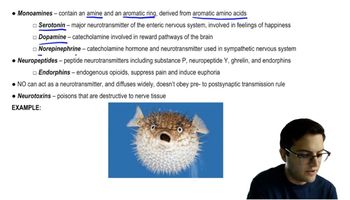
Neurotransmitters

Neurotransmitters are chemical messengers that transmit signals across synapses from one neuron to another. They can cause either excitatory postsynaptic potentials (EPSPs) or inhibitory postsynaptic potentials (IPSPs) depending on the type of receptor they bind to on the postsynaptic cell. The effect of a neurotransmitter is determined by the receptor it interacts with, not the neurotransmitter itself.
추천 영상:
가이드 코스
12:47
Neurotransmitters

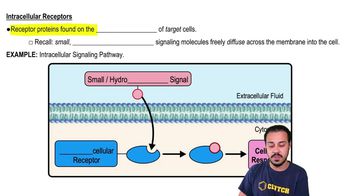
Receptor Molecules

Receptor molecules are proteins located on the cell membrane that bind to neurotransmitters and initiate a cellular response. Different receptors can cause different effects; for example, one receptor might cause an EPSP while another causes an IPSP. The diversity in receptor types allows for varied responses to the same neurotransmitter in different cells.
추천 영상:
가이드 코스
02:28
Intracellular Receptors

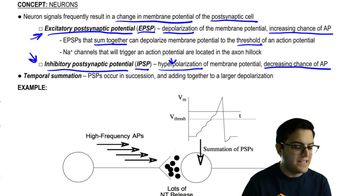
Postsynaptic Potentials

Postsynaptic potentials are changes in the membrane potential of the postsynaptic neuron. EPSPs make the neuron more likely to fire an action potential, while IPSPs make it less likely. The type of postsynaptic potential generated depends on the neurotransmitter and the receptor it binds to, influencing whether the neuron becomes excited or inhibited.
추천 영상:
가이드 코스
05:33
Postsynaptic Potentials and Summation