Ch. 7 - Membrane Structure and Function
Campbell - Campbell Biology 12th Edition
Urry12th EditionCampbell BiologyISBN: 9785794169850당신이 사용하는 게 아니라요?교과서 변경
7장, 문제 2

According to the fluid mosaic model of membrane structure, proteins of the membrane are mostly
a. Spread in a continuous layer over the inner and outer surfaces of the membrane.
b. Confined to the hydrophobic interior of the membrane.
c. Embedded in a lipid bilayer.
d. Randomly oriented in the membrane, with no fixed inside-outside polarity.

검증된 단계별 안내
1
Understand the fluid mosaic model: This model describes the structure of cell membranes as a mosaic of components, including lipids, proteins, and carbohydrates, which gives the membrane a fluid character.
Identify the main components of the membrane: The membrane is primarily composed of a lipid bilayer, which provides a flexible matrix and serves as a barrier to the passage of molecules.
Consider the role of proteins in the membrane: Proteins are embedded within the lipid bilayer and can move laterally, contributing to the fluid nature of the membrane.
Evaluate the options given: Analyze each option to determine which best describes the arrangement of proteins according to the fluid mosaic model.
Select the correct option: Based on the understanding that proteins are embedded within the lipid bilayer, choose the option that accurately reflects this aspect of the fluid mosaic model.

비슷한 문제에 대한 검증된 영상 답변:

이 영상 해법은 위 문제에 도움이 된다고 튜터들이 추천한 것입니다.
영상 길이:
2m
도움이 되었나요?

주요 개념

질문에 올바르게 답하기 위해 반드시 이해해야 하는 핵심 개념들은 다음과 같습니다.

Fluid Mosaic Model

The fluid mosaic model describes the structure of cell membranes as a dynamic and flexible arrangement of lipids and proteins. In this model, the membrane is composed of a lipid bilayer with proteins embedded within it, allowing for lateral movement. This structure enables the membrane to be fluid, facilitating various cellular processes such as transport and signaling.
추천 영상:
01:09
Introduction to Population Growth Models

Lipid Bilayer

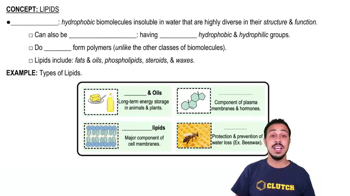
The lipid bilayer is a fundamental component of the cell membrane, consisting of two layers of phospholipids. Each phospholipid has a hydrophilic head and hydrophobic tail, creating a barrier that separates the cell's interior from its external environment. This bilayer provides structural integrity and regulates the passage of substances in and out of the cell.
추천 영상:
04:19
Lipids

Membrane Proteins

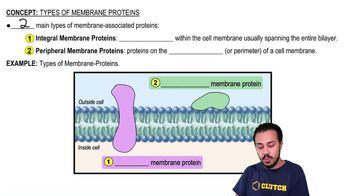
Membrane proteins are integral or peripheral proteins that are embedded within or attached to the lipid bilayer. They play crucial roles in various functions such as transport, signal transduction, and cell recognition. In the fluid mosaic model, these proteins are not fixed but can move laterally within the lipid bilayer, contributing to the dynamic nature of the membrane.
추천 영상:
02:35
Types of Membrane Proteins