
Ch. 11 - Cell-Cell Interactions
Freeman - Biological Science 8th Edition
Freeman8th EditionBiological ScienceISBN: 9780138276263당신이 사용하는 게 아니라요?교과서 변경
11장, 문제 5

How do the extracellular filaments in plants differ from those in animals?
a. Plant filaments resist compression forces; animal filaments resist pulling forces.
b. Animal filaments consist of proteins; plant filaments consist of polysaccharides.
c. Plant extracellular filaments never move; animal filaments can slide past one another.
d. Plant filaments run parallel to one another; animal filaments crisscross.

검증된 단계별 안내
1
Understand the role of extracellular filaments in both plants and animals. These structures provide support and help maintain the integrity of cells and tissues.
Recognize that plant extracellular filaments are primarily composed of polysaccharides, such as cellulose, which form a rigid structure to resist compression forces. This is crucial for maintaining plant cell shape and structure.
Identify that animal extracellular filaments are mainly composed of proteins, such as collagen, which are designed to resist pulling forces. This allows for flexibility and movement within animal tissues.
Consider the movement capabilities of these filaments. Animal filaments, due to their protein composition, can slide past one another, allowing for dynamic changes in tissue structure. In contrast, plant filaments are more static and do not move in the same way.
Examine the arrangement of these filaments. Plant filaments tend to run parallel to each other, forming a structured network, whereas animal filaments often crisscross, providing a mesh-like support system.

비슷한 문제에 대한 검증된 영상 답변:

이 영상 해법은 위 문제에 도움이 된다고 튜터들이 추천한 것입니다.
영상 길이:
1m
도움이 되었나요?

주요 개념

질문에 올바르게 답하기 위해 반드시 이해해야 하는 핵심 개념들은 다음과 같습니다.

Extracellular Filaments in Plants

In plants, extracellular filaments are primarily composed of polysaccharides like cellulose, which form a rigid structure in the cell wall. These filaments provide structural support and resist compression forces, helping maintain the plant's shape and integrity. The parallel arrangement of these filaments contributes to the plant's ability to withstand external pressures.
추천 영상:
가이드 코스
02:28
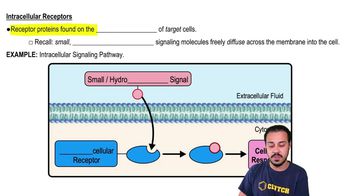
Intracellular Receptors

Extracellular Filaments in Animals

Animal extracellular filaments are mainly protein-based, such as collagen and elastin, which are part of the extracellular matrix. These filaments are designed to resist tensile forces, allowing tissues to stretch and return to their original shape. The crisscross arrangement of these filaments provides flexibility and strength, enabling movement and dynamic structural support.
추천 영상:
가이드 코스
02:28
Intracellular Receptors

Functional Differences in Filaments

The functional differences between plant and animal extracellular filaments are rooted in their composition and arrangement. Plant filaments, being rigid and parallel, are static and provide structural stability, while animal filaments, being flexible and crisscrossed, allow for movement and adaptability. These differences reflect the distinct mechanical needs of plants and animals in their respective environments.
추천 영상:
가이드 코스
06:04
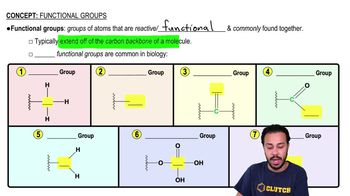
Functional Groups
관련 실천
교과서 질문

Which of the following actions correctly describe a role performed by at least one type of intercellular connection? Select True or False for each statement.

T/FAllows communication between adjacent cells.

T/FForms a watertight barrier between the cells.

T/FUses components of the extracellular matrix to indirectly connect adjacent cells.

T/FAssociates with cytoskeletal components to resist pulling forces.

885
views
교과서 질문

Summarize the experimental evidence in sponges showing that animal cells adhere to each other selectively. Explain the molecular basis of selective adhesion.

904
views
교과서 질문

Where are protein components of the extracellular matrix synthesized?

a. In the rough ER

b. In the Golgi apparatus

c. In the plasma membrane

d. In the extracellular layer itself

2741
views
교과서 질문

What is the significance of the observation that many signal transduction pathways create a network, where they intersect or overlap?

968
views
교과서 질문

Suppose you were to model amplification by the phosphorylation cascade in Figure 11.16, using a penny for each kinase 1, a nickel for each kinase 2, and a dime for each kinase 3. Also suppose that Ras and each of the kinases can activate 10 proteins. How much money would you need to construct your model?

650
views
교과서 질문

What does it mean to say that a signal is transduced?

a. The signaling molecule enters the cell directly and elicits a cellular response.

b. The signal is generated by the production of proteins.

c. The physical form of the signal changes between the outside of the cell and the inside.

d. The signal is amplified.

1042
views