Ch. 11 - Cell-Cell Interactions
Freeman - Biological Science 8th Edition
Freeman8th EditionBiological ScienceISBN: 9780138276263당신이 사용하는 게 아니라요?교과서 변경
11장, 문제 6

Summarize the experimental evidence in sponges showing that animal cells adhere to each other selectively. Explain the molecular basis of selective adhesion.

검증된 단계별 안내
1
Step 1: Start by understanding the concept of cell adhesion. Cell adhesion is the process by which cells interact and attach to neighbouring cells through specialized molecules of the cell surface. This process is vital in the formation and maintenance of tissue structures.
Step 2: Discuss the experimental evidence in sponges. In the 19th century, biologist H.V. Wilson conducted experiments on marine sponges. He dissociated sponge cells by passing them through a fine mesh. The cells separated but later reaggregated to form a sponge again. This experiment showed that cells of a particular species of sponge would only reaggregate with cells of their own kind, demonstrating selective adhesion.
Step 3: Explain the molecular basis of selective adhesion. Selective adhesion is primarily due to cell adhesion molecules (CAMs) on the cell surface. These molecules allow cells to identify each other and adhere accordingly. Different types of cells have different CAMs, which is why cells of the same type stick together.
Step 4: Discuss the role of calcium ions in cell adhesion. Calcium ions are necessary for many types of cell adhesion. In the case of sponges, if calcium ions are removed from the environment, the cells will not adhere. When calcium ions are reintroduced, adhesion resumes.
Step 5: Conclude by summarizing the importance of selective adhesion. Selective adhesion is crucial for the formation of tissues and organs in animals. It allows cells of the same type to stick together, forming a specific structure. The understanding of this process has significant implications in the fields of developmental biology and regenerative medicine.

비슷한 문제에 대한 검증된 영상 답변:

이 영상 해법은 위 문제에 도움이 된다고 튜터들이 추천한 것입니다.
영상 길이:
1m
도움이 되었나요?

주요 개념

질문에 올바르게 답하기 위해 반드시 이해해야 하는 핵심 개념들은 다음과 같습니다.

Cell Adhesion Molecules (CAMs)

Cell adhesion molecules (CAMs) are proteins located on the cell surface that facilitate cell-cell adhesion. They play a crucial role in the selective adhesion of animal cells by recognizing and binding to specific receptors on adjacent cells. This selective binding is essential for the formation of tissues and organs, as it helps maintain the structural integrity and function of multicellular organisms.
추천 영상:
가이드 코스
04:16
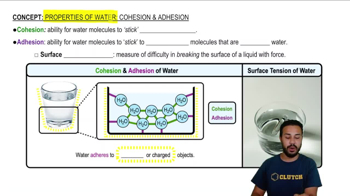
Properties of Water- Cohesion and Adhesion

Extracellular Matrix (ECM)

The extracellular matrix (ECM) is a complex network of proteins and carbohydrates that provides structural and biochemical support to surrounding cells. In sponges, the ECM plays a vital role in cell adhesion by providing a scaffold for cells to attach to and interact with one another. The composition of the ECM can influence the types of cells that adhere, contributing to the selective nature of cell adhesion.
추천 영상:
가이드 코스
02:28
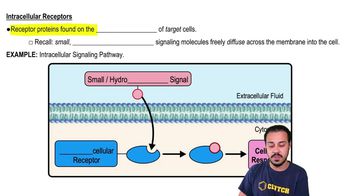
Intracellular Receptors

Experimental Evidence in Sponges

Experimental evidence in sponges, such as the use of cell aggregation assays, demonstrates that sponge cells can selectively adhere to cells of the same species while rejecting those from different species. This selective adhesion is often tested by mixing cells from different sponges and observing their behavior. The results highlight the importance of specific molecular interactions, such as the recognition of unique surface markers, in determining cell adhesion patterns.
추천 영상:
02:27
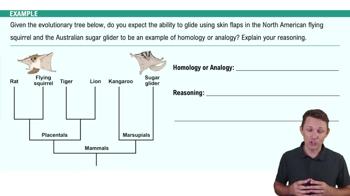
Evidence of Evolution Example 1
관련 실천
교과서 질문

Which of the following actions correctly describe a role performed by at least one type of intercellular connection? Select True or False for each statement.

T/FAllows communication between adjacent cells.

T/FForms a watertight barrier between the cells.

T/FUses components of the extracellular matrix to indirectly connect adjacent cells.

T/FAssociates with cytoskeletal components to resist pulling forces.

885
views
교과서 질문

Steroid hormones, like most lipid-soluble signaling molecules, are processed directly. How does the absence of a signal transduction cascade in the processing of steroid hormones affect (a) signal amplification?

1068
views
교과서 질문

What is the significance of the observation that many signal transduction pathways create a network, where they intersect or overlap?

968
views
교과서 질문

Suppose you were to model amplification by the phosphorylation cascade in Figure 11.16, using a penny for each kinase 1, a nickel for each kinase 2, and a dime for each kinase 3. Also suppose that Ras and each of the kinases can activate 10 proteins. How much money would you need to construct your model?

650
views
교과서 질문

What does it mean to say that a signal is transduced?

a. The signaling molecule enters the cell directly and elicits a cellular response.

b. The signal is generated by the production of proteins.

c. The physical form of the signal changes between the outside of the cell and the inside.

d. The signal is amplified.

1042
views
교과서 질문

How do the extracellular filaments in plants differ from those in animals?

a. Plant filaments resist compression forces; animal filaments resist pulling forces.

b. Animal filaments consist of proteins; plant filaments consist of polysaccharides.

c. Plant extracellular filaments never move; animal filaments can slide past one another.

d. Plant filaments run parallel to one another; animal filaments crisscross.

2322
views