Ch. 26 - Bacteria and Archaea
Freeman - Biological Science 8th Edition
Freeman8th EditionBiological ScienceISBN: 9780138276263당신이 사용하는 게 아니라요?교과서 변경
26장, 문제 6

Biologists often use the term 'energy source' as a synonym for 'electron donor.' Why?

검증된 단계별 안내
1
Understand the concept of 'energy source': In biological systems, an energy source is something that can be used to drive biological processes by providing the necessary energy to cells.
Recognize the role of electrons in energy production: Electrons play a crucial role in cellular respiration and photosynthesis, where they are transferred through various molecules to ultimately produce ATP, the energy currency of the cell.
Connect 'electron donor' to 'energy source': An electron donor is a substance that can donate electrons to another substance. In biological systems, these donated electrons are used to generate energy, thus making the electron donor an energy source.
Consider examples: In photosynthesis, water acts as an electron donor, releasing electrons that are then used to convert light energy into chemical energy. In cellular respiration, glucose is an electron donor, providing electrons that help in the production of ATP.
Summarize the synonymy: Since electron donors provide the necessary electrons for energy production in biological processes, they are effectively serving as energy sources. Therefore, biologists use these terms interchangeably.

비슷한 문제에 대한 검증된 영상 답변:

이 영상 해법은 위 문제에 도움이 된다고 튜터들이 추천한 것입니다.
영상 길이:
39s
도움이 되었나요?

주요 개념

질문에 올바르게 답하기 위해 반드시 이해해야 하는 핵심 개념들은 다음과 같습니다.

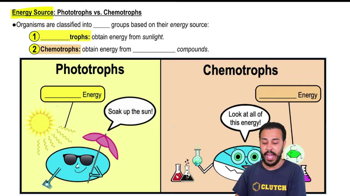
Energy Source

In biological systems, an energy source refers to any substance that can provide energy for metabolic processes. This energy is often harnessed through the transfer of electrons during chemical reactions, particularly in cellular respiration and photosynthesis. Organisms utilize various energy sources, such as glucose or sunlight, to fuel their biological functions.
추천 영상:
가이드 코스
02:00
Energy Source: Phototrophs vs. Chemotrophs

Electron Donor

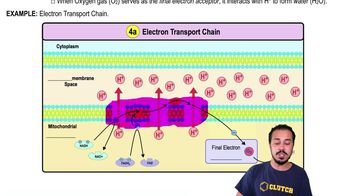
An electron donor is a molecule that donates electrons to another molecule in a redox (reduction-oxidation) reaction. In biological contexts, electron donors are crucial for processes like cellular respiration, where they provide the electrons needed to generate ATP, the energy currency of the cell. Common electron donors include NADH and FADH2, which are derived from metabolic pathways.
추천 영상:
가이드 코스
07:41
Electron Transport Chain

Redox Reactions

Redox reactions are chemical reactions that involve the transfer of electrons between two species, leading to changes in their oxidation states. These reactions are fundamental to energy production in biological systems, as they allow for the conversion of energy stored in nutrients into usable forms. Understanding redox reactions is essential for grasping how electron donors and energy sources function in metabolism.
추천 영상:
가이드 코스
04:47
Redox Reactions
관련 실천
교과서 질문

Unlike plant cell walls that contain cellulose, bacterial cell walls are composed of ___________.

1354
views
교과서 질문

The text claims that the evolution of an oxygen-rich atmosphere paved the way for increasingly efficient cellular respiration and higher growth rates in organisms. Explain.

1875
views
교과서 질문

Streptococcus mutans obtains energy by oxidizing sucrose. This bacterium is abundant in the mouths of Western European and North American children and is a prominent cause of cavities. The organism is virtually absent in children from East Africa, where tooth decay is rare. Propose a hypothesis to explain this observation. Outline the design of a study that would test your hypothesis.

738
views
교과서 질문

Suppose that you've been hired by a firm interested in using bacteria to clean up organic solvents found in toxic waste dumps. Your new employer is particularly interested in finding cells that are capable of breaking a molecule called benzene into less-toxic compounds. Where would you go to look for bacteria that can metabolize benzene as an energy or carbon source? How would you design an enrichment culture capable of isolating benzene-metabolizing species?

860
views
교과서 질문

Evaluate these statements about Koch's postulates, which are used to establish a causative link between a specific microbe and a specific disease. Select True or False for each statement.

T/FThe microbe must be present in individuals suffering from the disease and absent from healthy individuals.

T/FThe microbe must be isolated and grown in pure culture.

T/FIf organisms from the pure culture are injected into a healthy experimental animal, the disease symptoms should appear.

T/FThe microbe does not have to be isolated from the experimental animal as long as the disease is present.

1093
views
교과서 질문

What has metagenomic analysis allowed researchers to do for the first time? a. sample organisms from an environment and grow them under defined conditions in the lab b. isolate organisms from an environment and sequence their entire genome c. study organisms that cannot be cultured (grown in the lab) d. identify important morphological differences among species

697
views