Use your understanding of insect evolution to predict two adaptations for terrestrial living that occurred in spiders.
Ch. 31 - Protostome Animals
31장, 문제 7
Pose a hypothesis to explain why the evolution of the wing was such an important event in the evolution of insects.
검증된 단계별 안내1
Step 1: Understand the concept of evolution. Evolution is a process that results in changes in the inherited characteristics of species over successive generations. It's driven by natural selection, where traits that enhance survival and reproduction become more common in successive generations.
Step 2: Consider the role of wings in insects. Wings allow insects to fly, which can aid in finding food, escaping predators, and dispersing to new habitats. This can increase their survival and reproduction rates.
Step 3: Formulate a hypothesis. Based on the above understanding, a possible hypothesis could be: 'The evolution of the wing in insects was a significant event because it provided them with the ability to fly. This ability to fly could have increased their survival and reproduction rates by allowing them to find food more efficiently, escape from predators more effectively, and disperse to new habitats more easily.'
Step 4: Consider how you could test this hypothesis. This could involve comparing the survival and reproduction rates of winged and wingless insects, or studying the fossil record to see if the appearance of wings in insects coincided with an increase in their diversity or abundance.
Step 5: Remember that a hypothesis is a proposed explanation for a phenomenon, and it must be testable and falsifiable. It's not a fact, but a starting point for further investigation.

비슷한 문제에 대한 검증된 영상 답변:
이 영상 해법은 위 문제에 도움이 된다고 튜터들이 추천한 것입니다.
영상 길이:
1m도움이 되었나요?
주요 개념
질문에 올바르게 답하기 위해 반드시 이해해야 하는 핵심 개념들은 다음과 같습니다.
Evolutionary Adaptation
Evolutionary adaptation refers to the process by which species develop traits that enhance their survival and reproduction in specific environments. The evolution of wings in insects is a prime example, as it allowed for improved mobility, access to new habitats, and evasion from predators, significantly impacting their ecological success.
추천 영상:
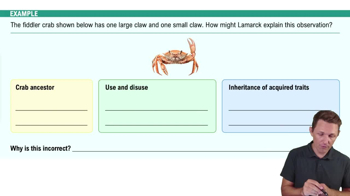
History of Evolutionary Theory Example 1
Flight Mechanics
Flight mechanics involves the principles governing how organisms achieve and maintain flight. Insects utilize various wing structures and flapping techniques to generate lift and thrust, which not only facilitates movement but also enables behaviors such as foraging and mating, contributing to their evolutionary fitness.
추천 영상:
가이드 코스
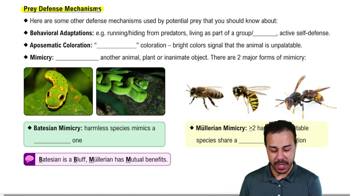
Prey Defense Mechanisms
Ecological Diversification
Ecological diversification is the process by which species exploit different ecological niches, leading to increased biodiversity. The development of wings in insects opened up numerous ecological opportunities, allowing them to colonize diverse environments, adapt to various food sources, and evolve into a wide range of forms and functions.
추천 영상:
가이드 코스
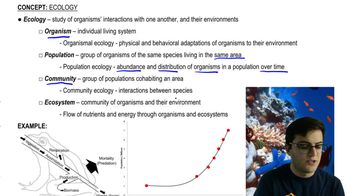
Ecology
관련 실천
교과서 질문
715
views
교과서 질문
Evaluate this statement: Evolution is said to occur when new traits accumulate over time, increasing complexity.
640
views
교과서 질문
Which of these choices is an example of homology (similarity due to common ancestry)?
a. Suspension feeding in sponges and clams
b. Ectoparasite lifestyle in aphids and ticks
c. Cnidocytes (stinging cells) in jellyfish and sea anemones
d. Radial symmetry in cnidarians and echinoderms
856
views
교과서 질문
Which protostome phyla successfully made the transition from water to land? Select True or False for each phylum.
T/FMollusca
T/FArthropoda
T/FAnnelida
T/FNematoda
790
views
교과서 질문
Propose an explanation for why annelids and arthropods were thought to be closely related, before phylogenetic analyses in the late 1990s.
913
views