Ch. 31 - Protostome Animals
Freeman - Biological Science 8th Edition
Freeman8th EditionBiological ScienceISBN: 9780138276263당신이 사용하는 게 아니라요?교과서 변경
31장, 문제 4

Which protostome phyla successfully made the transition from water to land? Select True or False for each phylum.
T/FMollusca
T/FArthropoda
T/FAnnelida
T/FNematoda

검증된 단계별 안내
1
Understand the concept of protostomes: Protostomes are a group of animals that develop the mouth before the anus during embryonic development. They include several phyla, some of which have successfully adapted to terrestrial environments.
Review the characteristics of each phylum: Mollusca, Arthropoda, Annelida, and Nematoda. Consider their adaptations for life on land, such as respiratory structures, support systems, and mechanisms to prevent desiccation.
Analyze Mollusca: While most mollusks are aquatic, some, like land snails and slugs, have adapted to terrestrial environments. Evaluate whether this phylum has successfully transitioned to land.
Analyze Arthropoda: Arthropods, including insects, arachnids, and myriapods, are highly successful in terrestrial environments due to adaptations like exoskeletons, specialized respiratory systems, and jointed appendages. Determine if this phylum has made the transition.
Analyze Annelida and Nematoda: Annelids, such as earthworms, and nematodes, like certain soil-dwelling species, have representatives that live on land. Assess whether these phyla have successfully transitioned to terrestrial environments.

비슷한 문제에 대한 검증된 영상 답변:

이 영상 해법은 위 문제에 도움이 된다고 튜터들이 추천한 것입니다.
영상 길이:
1m
도움이 되었나요?

주요 개념

질문에 올바르게 답하기 위해 반드시 이해해야 하는 핵심 개념들은 다음과 같습니다.

Protostome Development

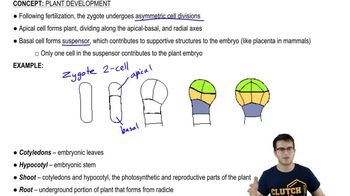
Protostomes are a group of animals characterized by their embryonic development, where the mouth forms before the anus. This developmental pathway is crucial for understanding the evolutionary relationships among various phyla, including those that transitioned from aquatic to terrestrial environments.
추천 영상:
가이드 코스
06:02
Embryonic Plant Development

Adaptations for Terrestrial Life

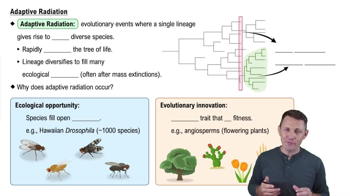
Transitioning from water to land requires significant adaptations, such as the development of respiratory systems to extract oxygen from air, protective coverings to prevent desiccation, and mechanisms for reproduction that do not rely on water. These adaptations are essential for survival in terrestrial habitats.
추천 영상:
05:24
Adaptive Radiation

Major Protostome Phyla

The major protostome phyla include Mollusca, Arthropoda, Annelida, and Nematoda. Each of these groups has unique characteristics and varying degrees of adaptation to terrestrial life, with Arthropoda being the most successful in colonizing land, while others like Mollusca have also developed terrestrial forms.
추천 영상:
가이드 코스
04:04
Major Histocompatibility Complex