Ch. 33 - Viruses
Freeman - Biological Science 8th Edition
Freeman8th EditionBiological ScienceISBN: 9780138276263당신이 사용하는 게 아니라요?교과서 변경
33장, 문제 5

The outer surface of a virion consists of either a membranous envelope or a protein capsid. How does the outer surface correlate with a virus's mode of exiting a host cell?

검증된 단계별 안내
1
Understand the structure of a virion: Virions, or virus particles, can have two types of outer surfaces - a membranous envelope or a protein capsid. The envelope is derived from the host cell's membrane, whereas the capsid is a protein shell made up of protein subunits called capsomeres.
Recognize the role of the envelope in exiting the host cell: Enveloped viruses typically exit the host cell through a process called budding. During budding, the virus acquires its envelope from the host cell's membrane as it exits. This process allows the virus to leave the cell without causing immediate lysis (destruction) of the cell.
Identify the exit mechanism of non-enveloped viruses: Non-enveloped viruses, which have a protein capsid, generally exit the host cell by causing lysis. The virus replicates inside the cell, and as the number of new virions increases, the cell eventually bursts (lyses), releasing the new virions.
Correlate the structure with the mode of exit: The presence of an envelope enables a virus to exit the host cell more subtly through budding, which can help the virus evade the host's immune system. In contrast, the more abrupt lysis caused by non-enveloped viruses can trigger a stronger immune response.
Apply this understanding to viral pathogenesis: Knowing whether a virus is enveloped or non-enveloped can help predict its mode of transmission and the immune response it may elicit. This information is crucial for developing strategies for prevention and treatment of viral infections.

비슷한 문제에 대한 검증된 영상 답변:

이 영상 해법은 위 문제에 도움이 된다고 튜터들이 추천한 것입니다.
영상 길이:
27s
도움이 되었나요?

주요 개념

질문에 올바르게 답하기 위해 반드시 이해해야 하는 핵심 개념들은 다음과 같습니다.

Virion Structure

A virion is the complete virus particle that consists of genetic material encased in a protective coat. This coat can be a protein capsid or a lipid envelope. The structure of the virion is crucial as it influences how the virus interacts with host cells and how it exits the host after replication.
추천 영상:
가이드 코스
04:25
Community Structure

Viral Exit Mechanisms

Viruses can exit host cells through various mechanisms, primarily budding or lysis. Enveloped viruses typically exit by budding, where they acquire their lipid envelope from the host cell membrane, while non-enveloped viruses often cause cell lysis, leading to the release of viral particles. The mode of exit is closely linked to the virion's outer structure.
추천 영상:
가이드 코스
02:28
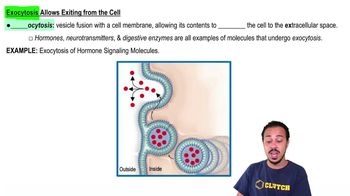
Exocytosis Allows Exiting from the Cell

Host Cell Interaction

The interaction between a virus and its host cell is critical for the virus's life cycle. The outer surface of the virion determines how it attaches to and penetrates the host cell, which in turn affects how it exits. Understanding these interactions helps explain the relationship between virion structure and viral propagation.
추천 영상:
가이드 코스
04:25
Interspecific Interactions