Ch. 33 - Viruses
Freeman - Biological Science 8th Edition
Freeman8th EditionBiological ScienceISBN: 9780138276263당신이 사용하는 게 아니라요?교과서 변경
33장, 문제 4

What features distinguish the seven major categories of viruses?

검증된 단계별 안내
1
Understand that viruses are classified into seven major categories based on the Baltimore classification system, which is determined by their type of genetic material and replication strategy.
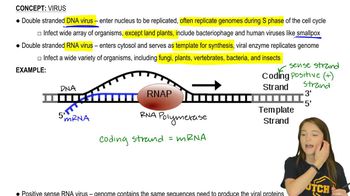
Step 1: Identify the type of nucleic acid in the virus. Viruses can have either DNA or RNA as their genetic material, and this is the first distinguishing feature.
Step 2: Determine whether the nucleic acid is single-stranded (ss) or double-stranded (ds). This is another key feature that helps classify the virus.
Step 3: For RNA viruses, assess whether the RNA is positive-sense (+) or negative-sense (-). Positive-sense RNA can be directly translated into proteins, while negative-sense RNA must first be converted into a complementary strand.
Step 4: Consider whether the virus uses reverse transcription. Some viruses, like retroviruses, use reverse transcriptase to convert RNA into DNA, which is then integrated into the host genome.
Step 5: Combine these features to place the virus into one of the seven categories: dsDNA viruses, ssDNA viruses, dsRNA viruses, (+)ssRNA viruses, (-)ssRNA viruses, RNA reverse-transcribing viruses, or DNA reverse-transcribing viruses.

비슷한 문제에 대한 검증된 영상 답변:

이 영상 해법은 위 문제에 도움이 된다고 튜터들이 추천한 것입니다.
영상 길이:
50s
도움이 되었나요?

주요 개념

질문에 올바르게 답하기 위해 반드시 이해해야 하는 핵심 개념들은 다음과 같습니다.

Virus Classification

Viruses are classified into categories based on various criteria, including their genetic material (DNA or RNA), structure (enveloped or non-enveloped), and replication method. The seven major categories include DNA viruses, RNA viruses, retroviruses, and others, each with distinct characteristics that influence their behavior and interaction with host cells.
추천 영상:
가이드 코스
04:30
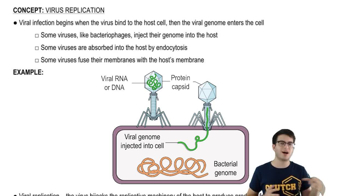
Virus Replication

Viral Structure

The structure of a virus is crucial for its classification and function. Viruses typically consist of a nucleic acid core surrounded by a protein coat called a capsid, and some have an additional lipid envelope. The arrangement of these components can vary significantly among the seven categories, affecting how viruses infect host cells and evade the immune system.
추천 영상:

Host Range and Tropism

Host range refers to the variety of hosts that a virus can infect, while tropism indicates the specific types of cells or tissues within a host that a virus targets. Understanding these concepts is essential for distinguishing between virus categories, as different viruses have evolved to infect specific hosts and cell types, influencing their pathogenicity and transmission.
추천 영상:
가이드 코스
01:59
How Mountain Ranges Affect Climate