Ch. 33 - Viruses
Freeman - Biological Science 8th Edition
Freeman8th EditionBiological ScienceISBN: 9780138276263당신이 사용하는 게 아니라요?교과서 변경
33장, 문제 1

What do host cells provide for viruses?
a. ATP
b. Nucleotides and amino acids
c. Ribosomes
d. All of the above

검증된 단계별 안내
1
Understand the basic needs of viruses: Viruses are obligate intracellular parasites, meaning they require a host cell to replicate and perform their life cycle functions.
Consider the role of ATP: ATP is the energy currency of the cell, and viruses rely on the host cell's ATP to fuel their replication processes.
Examine the need for nucleotides and amino acids: Viruses use the host cell's nucleotides to synthesize their genetic material and amino acids to build viral proteins.
Evaluate the importance of ribosomes: Viruses do not have their own ribosomes, so they depend on the host cell's ribosomes to translate viral mRNA into proteins.
Conclude by considering all options: Since viruses require ATP, nucleotides, amino acids, and ribosomes from the host cell, the correct answer is likely 'd. all of the above'.

비슷한 문제에 대한 검증된 영상 답변:

이 영상 해법은 위 문제에 도움이 된다고 튜터들이 추천한 것입니다.
영상 길이:
48s
도움이 되었나요?

주요 개념

질문에 올바르게 답하기 위해 반드시 이해해야 하는 핵심 개념들은 다음과 같습니다.

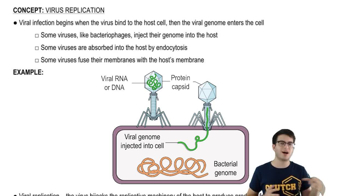
Virus Replication

Viruses rely on host cells to replicate because they lack the necessary machinery to do so independently. They use the host's cellular machinery to synthesize viral components, including nucleic acids and proteins, which are essential for assembling new virus particles.
추천 영상:
04:30
Virus Replication

Host Cell Resources

Host cells provide essential resources for viral replication, including ATP for energy, nucleotides for building viral RNA or DNA, and amino acids for constructing viral proteins. These resources are crucial for the virus to hijack the host's cellular processes and produce new virions.
추천 영상:
03:57
Resource Partitioning (Partial Niche Overlap)

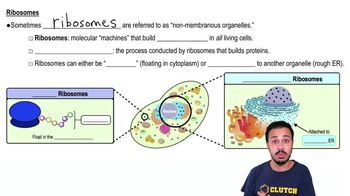
Ribosomes

Ribosomes are cellular structures responsible for protein synthesis. Viruses depend on host cell ribosomes to translate viral mRNA into proteins, which are necessary for the virus's structure and function. Without access to ribosomes, viruses cannot produce the proteins required for their replication and assembly.
추천 영상:
06:51
Ribosomes