
Ch. 42 - Gas Exchange and Circulation
Freeman - Biological Science 8th Edition
Freeman8th EditionBiological ScienceISBN: 9780138276263당신이 사용하는 게 아니라요?교과서 변경
42장, 문제 11a

During exercise, the cardiovascular system must supply muscles with large amounts of oxygen and fuel and get rid of a lot of waste.
How do the cardiovascular systems of athletes respond to prolonged exercise?
During athletic training, the oxygen–hemoglobin dissociation curve
a. Shifts to the right, unloading more oxygen to tissues.
b. Shifts to the right, unloading less oxygen to tissues.
c. Shifts to the left, unloading more oxygen to tissues.
d. Shifts to the left, unloading less oxygen to tissues.

검증된 단계별 안내
1
Understand the oxygen–hemoglobin dissociation curve: This curve represents the relationship between the partial pressure of oxygen and the saturation of hemoglobin with oxygen. It is crucial for understanding how oxygen is delivered to tissues.
Consider the effects of exercise on the body: During prolonged exercise, muscles require more oxygen to sustain activity, and the body needs to efficiently deliver this oxygen to the tissues.
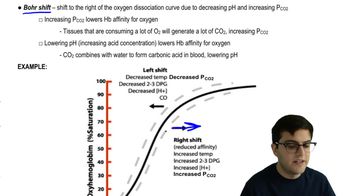
Analyze the shift in the curve: A rightward shift in the oxygen–hemoglobin dissociation curve indicates that hemoglobin releases oxygen more readily to the tissues. This is beneficial during exercise as it allows more oxygen to be available for muscle use.
Evaluate the options: Given the need for increased oxygen delivery during exercise, the correct response would involve a shift that facilitates more oxygen unloading to tissues.
Select the correct answer: Based on the analysis, the cardiovascular system of athletes during prolonged exercise would likely cause the oxygen–hemoglobin dissociation curve to shift to the right, unloading more oxygen to tissues.

비슷한 문제에 대한 검증된 영상 답변:

이 영상 해법은 위 문제에 도움이 된다고 튜터들이 추천한 것입니다.
영상 길이:
52s
도움이 되었나요?

주요 개념

질문에 올바르게 답하기 위해 반드시 이해해야 하는 핵심 개념들은 다음과 같습니다.

Cardiovascular System Adaptations

During prolonged exercise, the cardiovascular system adapts by increasing cardiac output, which is the volume of blood the heart pumps per minute. This is achieved through a higher heart rate and stroke volume, allowing more oxygen and nutrients to reach the muscles. Over time, athletes develop a more efficient cardiovascular system, with increased capillary density and improved blood flow to active tissues.
추천 영상:
가이드 코스
05:50
Adaptive Immune Response

Oxygen-Hemoglobin Dissociation Curve

The oxygen-hemoglobin dissociation curve illustrates how readily hemoglobin in the blood releases oxygen to tissues. A rightward shift in the curve indicates that hemoglobin releases more oxygen at a given partial pressure, which is beneficial during exercise as it enhances oxygen delivery to active muscles. Factors like increased temperature, CO2, and acidity during exercise promote this shift, facilitating better oxygen unloading.
추천 영상:
가이드 코스
10:50
Oxygen Dissociation Curve and the Bohr Shift

Bohr Effect

The Bohr effect describes the physiological phenomenon where an increase in carbon dioxide concentration and a decrease in pH result in hemoglobin proteins releasing their load of oxygen. This effect is crucial during exercise, as active muscles produce more CO2 and lactic acid, lowering blood pH and causing the oxygen-hemoglobin dissociation curve to shift to the right, thus enhancing oxygen delivery to tissues.
추천 영상:
가이드 코스
10:50
Oxygen Dissociation Curve and the Bohr Shift
관련 실천
교과서 질문

During exercise, the cardiovascular system must supply muscles with large amounts of oxygen and fuel and get rid of a lot of waste.

How do the cardiovascular systems of athletes respond to prolonged exercise?

When athletes exercise, what is the primary physiological variable responsible for their sustained increase in ventilation rate?

a. Decreased blood PO₂

b. Increased blood PCO2

c. Increased blood pH

d. Increased body temperature

940
views
교과서 질문

During exercise, the cardiovascular system must supply muscles with large amounts of oxygen and fuel and get rid of a lot of waste.

How do the cardiovascular systems of athletes respond to prolonged exercise?

Researchers used echocardiography, a sonogram of the heart, to estimate the mass of the left ventricle in current athletes, non-athletes, and ex-athletes. The data are graphed below (***meansP<0.001, and the P value comparing non-athletes and ex-athletes is >0.05).

What conclusion can be drawn from the graph?

669
views
교과서 질문

Why did separate systemic and pulmonary circulations evolve in species that have the high-pressure circulatory system required for rapid movement of blood?

762
views
교과서 질문

During exercise, the cardiovascular system must supply muscles with large amounts of oxygen and fuel and get rid of a lot of waste.

How do the cardiovascular systems of athletes respond to prolonged exercise?

Explain the advantage of the observed difference between current athletes and non-athletes in the graph shown here.

579
views
교과서 질문

Explain why a person who survives a myocardial infarction might need to have an artificial pacemaker implanted.

592
views
교과서 질문

Predict how Antarctic icefish can transport enough oxygen in their blood to meet their needs even though they lack hemoglobin.

723
views