Ch. 43 - Animal Nervous Systems
Freeman - Biological Science 8th Edition
Freeman8th EditionBiological ScienceISBN: 9780138276263당신이 사용하는 게 아니라요?교과서 변경
43장, 문제 9

Explain why drugs that prevent neurotransmitters from being taken back up by a presynaptic neuron have dramatic effects on the activity of postsynaptic neurons.

검증된 단계별 안내
1
Step 1: Understand the concept of neurotransmission. Neurotransmission is the process by which signaling molecules called neurotransmitters are released by a neuron (the presynaptic neuron), and bind to and activate the receptors of another neuron (the postsynaptic neuron).
Step 2: Understand the role of neurotransmitters. Neurotransmitters are chemical messengers that transmit a message from a nerve cell across the synapse to a target cell. The target can be another nerve cell, or a muscle cell, or a gland cell.
Step 3: Understand the concept of reuptake. After a neurotransmitter has been recognized by the receptor, it gets reabsorbed by the presynaptic neuron, a process known as reuptake. This process helps to regulate the amount of neurotransmitter that is present in the synapse and available to bind to receptors.
Step 4: Understand the effect of drugs that prevent reuptake. Drugs that prevent the reuptake of neurotransmitters increase the amount of neurotransmitter present in the synapse. This means that more neurotransmitter is available to bind to and activate the receptors of the postsynaptic neuron, thereby increasing its activity.
Step 5: Understand the implications of increased postsynaptic activity. The increased activity of the postsynaptic neuron can have various effects, depending on the specific neurotransmitter involved and the type of neuron. These effects can range from increased alertness to feelings of euphoria, and can also lead to side effects such as addiction.

비슷한 문제에 대한 검증된 영상 답변:

이 영상 해법은 위 문제에 도움이 된다고 튜터들이 추천한 것입니다.
영상 길이:
1m
도움이 되었나요?

주요 개념

질문에 올바르게 답하기 위해 반드시 이해해야 하는 핵심 개념들은 다음과 같습니다.

Neurotransmitter Release and Reuptake

Neurotransmitters are chemical messengers released from presynaptic neurons into the synaptic cleft, where they bind to receptors on postsynaptic neurons to transmit signals. After their action, neurotransmitters are typically reabsorbed by the presynaptic neuron in a process called reuptake. This mechanism regulates neurotransmitter levels in the synapse, ensuring that signaling is precise and temporary.
추천 영상:
12:47
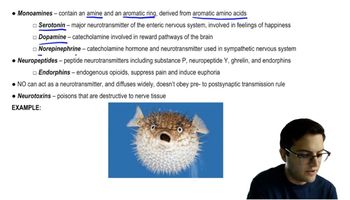
Neurotransmitters

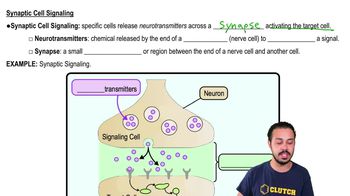
Synaptic Transmission

Synaptic transmission is the process by which a signal is transmitted from one neuron to another across a synapse. When neurotransmitters bind to receptors on the postsynaptic neuron, they can cause excitatory or inhibitory effects, influencing the likelihood of the postsynaptic neuron firing an action potential. Disruption of this process, such as by preventing reuptake, can lead to prolonged signaling and altered neuronal activity.
추천 영상:
02:50
Synaptic Cell Signaling

Effects of Drug Interventions

Drugs that inhibit the reuptake of neurotransmitters increase their availability in the synaptic cleft, enhancing and prolonging their effects on postsynaptic neurons. This can lead to heightened neuronal activity, which is often associated with various psychological and physiological effects. For example, selective serotonin reuptake inhibitors (SSRIs) are used to treat depression by increasing serotonin levels, thereby improving mood and emotional regulation.
추천 영상:
04:52
Coriolis Effect Curves Prevailing Winds
관련 실천
교과서 질문

Describe the role of summation in postsynaptic cells.

1010
views

교과서 질문

Certain species of frogs in the genus Phyllobates have a powerful defensive adaptation—their skin can secrete a milky fluid that contains an extremely toxic compound called batrachotoxin (BTX). These frogs, which are found in Colombia, are known as poison dart frogs because some indigenous Colombian hunters coat the tips of their blowgun darts with the frogs' skin secretions. An animal hit by one of these darts dies quickly.

What is the mechanism of action of BTX? The graph here shows the effect of BTX on the membrane potential of a squid giant axon.

Which of the following is the most likely explanation for the effect of BTX on the squid giant axon?

a. Inactivation of Na+/K+-ATPase

b. Closing of sodium channels

c. Opening of sodium channels

d. Opening of potassium channels

856
views
교과서 질문

Why is memory thought to involve changes in particular synapses?

a. At some synapses, more neurotransmitters are released after learning takes place.

b. At some synapses, a different type of neurotransmitter is released after learning takes place.

c. When researchers stimulated certain neurons electrically, individuals replayed memories.

d. When researchers changed synapses in the brains of patients during surgery, the patients' memories changed.

820
views
교과서 질문

Certain species of frogs in the genus Phyllobates have a powerful defensive adaptation—their skin can secrete a milky fluid that contains an extremely toxic compound called batrachotoxin (BTX). These frogs, which are found in Colombia, are known as poison dart frogs because some indigenous Colombian hunters coat the tips of their blowgun darts with the frogs' skin secretions. An animal hit by one of these darts dies quickly.

What is the mechanism of action of BTX?

Identify a research technique that could be used to discover how BTX affects specific membrane proteins.

Based on the graph in Question 11, what would you expect this technique to show?

617
views
교과서 질문

Compare and contrast the somatic nervous system and autonomic nervous system.

1522
views
교과서 질문

Alzheimer's disease is a common form of dementia affecting millions of people, especially the elderly. Two regions of the brain are particularly affected, often shrinking dramatically and accumulating large deposits of extracellular material. Based on your knowledge of memory, what two brain regions do you think these are? Explain.

707
views