
Ch. 45 - Animal Movement
Freeman - Biological Science 8th Edition
Freeman8th EditionBiological ScienceISBN: 9780138276263당신이 사용하는 게 아니라요?교과서 변경
45장, 문제 2

In muscle cells, myosin molecules continue moving along actin molecules as long as:
a. ATP is present and troponin is not bound to Ca²⁺.
b. ADP is present and tropomyosin is released from intracellular stores.
c. ADP is present and the intracellular acetylcholine level is high.
d. ATP is present and the intracellular Ca²⁺ concentration is high.

검증된 단계별 안내
1
Understand the role of ATP in muscle contraction: ATP is crucial for the detachment of myosin heads from actin filaments, allowing the cycle of muscle contraction to continue.
Recognize the importance of calcium ions (Ca2+) in muscle contraction: High intracellular Ca2+ concentration leads to the binding of Ca2+ to troponin, which causes a conformational change that moves tropomyosin away from the binding sites on actin, allowing myosin to bind to actin.
Identify the role of troponin and tropomyosin: Troponin binds to Ca2+, which then causes tropomyosin to shift and expose the binding sites on actin for myosin attachment.
Consider the conditions required for continuous movement of myosin along actin: ATP must be present to provide energy for the myosin head to detach and reattach, and Ca2+ must be present to ensure that the binding sites on actin are exposed.
Evaluate the options given in the problem: The correct condition for myosin to continue moving along actin is when ATP is present and the intracellular Ca2+ concentration is high, as this allows the cycle of muscle contraction to proceed.

비슷한 문제에 대한 검증된 영상 답변:

이 영상 해법은 위 문제에 도움이 된다고 튜터들이 추천한 것입니다.
영상 길이:
2m
도움이 되었나요?

주요 개념

질문에 올바르게 답하기 위해 반드시 이해해야 하는 핵심 개념들은 다음과 같습니다.

ATP and Muscle Contraction

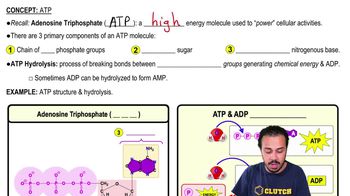
ATP is crucial for muscle contraction as it provides the energy needed for myosin heads to detach from actin filaments and re-cock for another cycle of movement. Without ATP, myosin remains bound to actin, preventing further contraction cycles. Thus, ATP presence is essential for continuous muscle contraction.
추천 영상:

Role of Calcium Ions (Ca2+) in Muscle Contraction

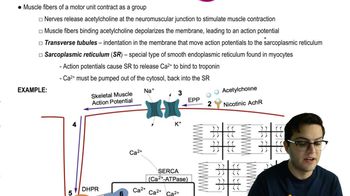
Calcium ions play a pivotal role in muscle contraction by binding to troponin, which causes a conformational change that moves tropomyosin away from actin's binding sites. This exposure allows myosin to bind to actin, facilitating contraction. High intracellular Ca2+ concentration is necessary for sustained muscle contraction.
추천 영상:
가이드 코스
03:14
Motor Unit and Neuromuscular Junction

Troponin and Tropomyosin Regulation

Troponin and tropomyosin are regulatory proteins that control muscle contraction. Troponin binds to Ca2+, leading to tropomyosin's repositioning, which exposes actin's binding sites for myosin. This regulation ensures that muscle contraction occurs only when Ca2+ is present, preventing unwanted contractions.
추천 영상:
가이드 코스
03:31
Cell Cycle Regulation