

Ch. 5 - An Introduction to Carbohydrates
Freeman - Biological Science 8th Edition
Freeman8th EditionBiological ScienceISBN: 9780138276263당신이 사용하는 게 아니라요?교과서 변경
5장, 문제 10

If you hold a salty cracker in your mouth long enough, it will begin to taste sweet. What is responsible for this change in taste?

검증된 단계별 안내
1
Step 1: Understand the question. The question is asking why a salty cracker begins to taste sweet if it's held in the mouth for a long time.
Step 2: Recall the process of digestion. Digestion begins in the mouth where food is broken down into simpler forms. The enzyme responsible for this in the mouth is called amylase.
Step 3: Understand the role of amylase. Amylase breaks down complex carbohydrates (like those found in crackers) into simpler sugars. This process is called hydrolysis.
Step 4: Apply this knowledge to the question. As the cracker is held in the mouth, amylase continues to break down the carbohydrates into sugars. This is why the cracker begins to taste sweet after a while.
Step 5: Formulate the answer. The change in taste from salty to sweet when a cracker is held in the mouth for a long time is due to the action of the enzyme amylase, which breaks down the carbohydrates in the cracker into simpler sugars.

비슷한 문제에 대한 검증된 영상 답변:

이 영상 해법은 위 문제에 도움이 된다고 튜터들이 추천한 것입니다.
영상 길이:
1m
도움이 되었나요?

주요 개념

질문에 올바르게 답하기 위해 반드시 이해해야 하는 핵심 개념들은 다음과 같습니다.

Taste Perception

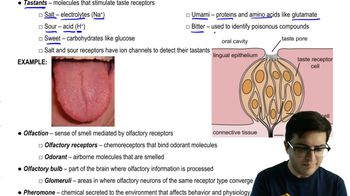
Taste perception involves the sensory experience of flavor through taste buds on the tongue. These taste buds detect five primary tastes: sweet, sour, salty, bitter, and umami. The brain interprets signals from these receptors, allowing us to perceive different flavors based on the chemical composition of the food.
추천 영상:
04:46
Smell and Taste

Saliva and Enzymatic Action

Saliva plays a crucial role in taste perception by dissolving food particles, which allows taste receptors to interact with the chemicals in the food. Saliva contains enzymes, such as amylase, that begin the breakdown of carbohydrates, potentially altering the flavor profile of the food as it is processed in the mouth.
추천 영상:
09:55
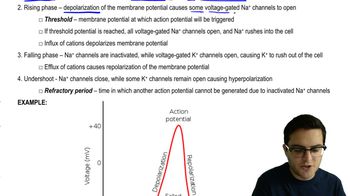
Action Potential

Flavor Change Over Time

The phenomenon of a salty cracker tasting sweet over time can be attributed to the prolonged exposure of the cracker to saliva, which alters its chemical composition. As the starches in the cracker are broken down into simpler sugars by salivary enzymes, the initial salty flavor diminishes, allowing the sweetness to emerge more prominently.
추천 영상:
03:36
Pollution and Climate Change