Ch. 50 - Behavioral Ecology
Freeman - Biological Science 8th Edition
Freeman8th EditionBiological ScienceISBN: 9780138276263당신이 사용하는 게 아니라요?교과서 변경
50장, 문제 9

Evolutionary biologist Hopi Hoekstra and colleagues have hypothesized that the burrow-digging behavior of mice (and the resulting shape of their underground burrows) is heritable—innate and not learned. Design an experiment to test this hypothesis.

검증된 단계별 안내
1
Step 1: Define the hypothesis and variables. Hypothesis: The burrow-digging behavior and the resulting shape of the burrows in mice are heritable traits. Independent Variable: Genetic makeup of the mice. Dependent Variable: The shape and characteristics of the burrows dug by the mice.
Step 2: Select a suitable population of mice. Use two groups of mice with known genetic differences related to burrowing behavior. Ensure that one group has a history of specific burrowing traits, while the other group does not.
Step 3: Control environmental factors. Raise both groups of mice in a controlled environment where all external factors such as food, space, and soil type are kept constant to ensure that any differences observed in burrowing behavior are due to genetics rather than environmental factors.
Step 4: Observe and record burrowing behavior. Allow both groups of mice to dig burrows in similar controlled environments. Document the shape, size, and complexity of the burrows using standardized measurement techniques. Record these observations over multiple generations to see if the traits persist.
Step 5: Analyze the data and draw conclusions. Compare the burrowing behaviors and burrow characteristics between the two groups of mice. Use statistical analysis to determine if there are significant differences that can be attributed to genetics. Confirm the hypothesis if the traits are consistently observed in the genetically predisposed group across generations.

비슷한 문제에 대한 검증된 영상 답변:

이 영상 해법은 위 문제에 도움이 된다고 튜터들이 추천한 것입니다.
영상 길이:
1m
도움이 되었나요?

주요 개념

질문에 올바르게 답하기 위해 반드시 이해해야 하는 핵심 개념들은 다음과 같습니다.

Heritability

Heritability refers to the proportion of variation in a trait among individuals in a population that can be attributed to genetic differences. In the context of the burrow-digging behavior of mice, understanding heritability is crucial to determine whether this behavior is passed down from parents to offspring, indicating a genetic basis rather than being learned through experience.
추천 영상:
가이드 코스
04:52
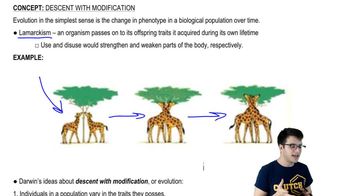
Descent With Modification

Behavioral Genetics

Behavioral genetics is the field of study that examines the role of genetic and environmental influences on behaviors. This concept is essential for designing experiments that isolate genetic factors affecting burrow-digging behavior, allowing researchers to differentiate between innate behaviors and those acquired through learning or environmental factors.
추천 영상:

Experimental Design

Experimental design involves planning how to conduct an experiment to test a hypothesis effectively. In this case, it would include selecting appropriate mouse populations, controlling environmental variables, and determining methods for measuring burrow characteristics, ensuring that the results can accurately reflect the heritability of the burrow-digging behavior.
추천 영상:
가이드 코스
02:50
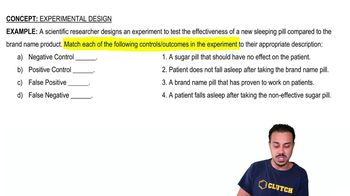
Experimental Design Example 1
관련 실천
교과서 질문

Hamilton's rule states that an altruistic allele could spread in a population if Br > C, where B represents the fitness benefit to the recipient, r is the coefficient of relatedness between altruist and recipient, and C represents the fitness cost to the altruist. If r = 0.5 between the altruist and the recipient, what would the ratio of costs to benefits have to be for the altruistic allele to spread?

a. C/ B > 0.5

b. C/ B > 0

c. C/ B < 0.5

d. C/ B < 0

1603
views
교과서 질문

<Image>

Mass strandings of whales occur on beaches near military exercises where sonar is used, raising concerns about the effects of human-generated underwater sounds on animal behavior. Scientists are collecting behavioral data on several species of whales to find out how sonar affects them.

Researchers followed tagged blue whales to observe how they respond to simulated military sonar—using sound levels much lower than those typically used during military exercises. Analyze the sample of data below for one individual blue whale and summarize the behavioral effect of the sound exposure.

720
views
교과서 질문

Propose an evolutionary hypothesis to explain the observation that some bird populations do not migrate if people supply food for them in feeders.

676
views
교과서 질문

The male cuttlefish in the chapter-opening photo can rapidly change their skin colors (under nerve control) to flash warning patterns to rivals. Predict the proximate and ultimate causes of this behavior.

472
views
교과서 질문

<Image>

Mass strandings of whales occur on beaches near military exercises where sonar is used, raising concerns about the effects of human-generated underwater sounds on animal behavior. Scientists are collecting behavioral data on several species of whales to find out how sonar affects them.

Using the graph, estimate the number of minutes of foraging per hour before and after the sound exposure. Then predict the effect of sonar on the fitness of blue whales. Explain your reasoning.

619
views
교과서 질문

<Image>

Mass strandings of whales occur on beaches near military exercises where sonar is used, raising concerns about the effects of human-generated underwater sounds on animal behavior. Scientists are collecting behavioral data on several species of whales to find out how sonar affects them.

Whales communicate with one another using sound. What is one benefit and one cost to whales of using sound to communicate underwater?

570
views