
Ch. 9 - Cellular Respiration and Fermentation
Freeman - Biological Science 8th Edition
Freeman8th EditionBiological ScienceISBN: 9780138276263당신이 사용하는 게 아니라요?교과서 변경
9장, 문제 9

Cyanide (C ≡ N) blocks complex IV of the electron transport chain. Suggest a hypothesis for what happens to the ETC when complex IV stops working. Your hypothesis should explain why cyanide poisoning in humans is fatal.

검증된 단계별 안내
1
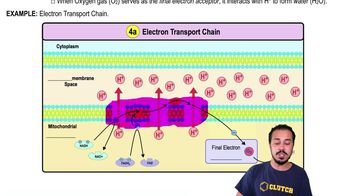
Understand the role of complex IV in the electron transport chain (ETC). Complex IV, also known as cytochrome c oxidase, is responsible for the final step of electron transfer to oxygen, forming water. This step is crucial for maintaining the proton gradient across the mitochondrial membrane.
Recognize the impact of cyanide on complex IV. Cyanide binds to the iron within cytochrome c oxidase, inhibiting its function. This prevents the transfer of electrons to oxygen, effectively halting the ETC.
Formulate a hypothesis: If complex IV is blocked by cyanide, electrons cannot be transferred to oxygen, leading to a cessation of ATP production. This is because the proton gradient necessary for ATP synthesis by ATP synthase is disrupted.
Explain the consequences of the hypothesis: Without ATP production, cells cannot perform essential functions, leading to cell death. Since ATP is vital for energy-dependent processes, cyanide poisoning results in rapid organ failure and is fatal.
Consider the broader implications: Cyanide poisoning affects all cells reliant on aerobic respiration, particularly those with high energy demands like neurons and cardiac cells, explaining the rapid onset of symptoms and fatality.

비슷한 문제에 대한 검증된 영상 답변:

이 영상 해법은 위 문제에 도움이 된다고 튜터들이 추천한 것입니다.
영상 길이:
2m
도움이 되었나요?

주요 개념

질문에 올바르게 답하기 위해 반드시 이해해야 하는 핵심 개념들은 다음과 같습니다.

Electron Transport Chain (ETC)

The electron transport chain is a series of protein complexes located in the inner mitochondrial membrane that facilitates the transfer of electrons from electron donors to oxygen. This process generates a proton gradient across the membrane, which is used to produce ATP, the cell's energy currency. Disruption of the ETC can halt ATP production, leading to cellular energy failure.
추천 영상:
07:41
Electron Transport Chain

Complex IV Function

Complex IV, also known as cytochrome c oxidase, is the final enzyme in the electron transport chain. It facilitates the transfer of electrons to oxygen, forming water. This step is crucial for maintaining the proton gradient necessary for ATP synthesis. Inhibition of complex IV prevents electron transfer to oxygen, disrupting ATP production and leading to energy depletion in cells.
추천 영상:
가이드 코스
06:15
Origin of Complex Traits

Cyanide Poisoning

Cyanide is a potent inhibitor of complex IV, blocking the electron transport chain and preventing ATP synthesis. Without ATP, cells cannot perform essential functions, leading to rapid cell death. In humans, cyanide poisoning is fatal because it causes widespread energy failure in vital organs, particularly the brain and heart, which rely heavily on aerobic respiration for energy.
추천 영상:
03:55
Mimicry