
Ch. 9 - Cellular Respiration and Fermentation
Freeman - Biological Science 8th Edition
Freeman8th EditionBiological ScienceISBN: 9780138276263당신이 사용하는 게 아니라요?교과서 변경
9장, 문제 8

The researchers who observed that magnetite was produced by bacterial cultures from the deep subsurface carried out a follow-up experiment. These biologists treated some of the cultures with a drug that poisons the enzymes involved in electron transport chains. In cultures where the drug was present, no more magnetite was produced. Does this result support or undermine their hypothesis that the bacteria in the cultures perform cellular respiration? Explain your reasoning.

검증된 단계별 안내
1
Step 1: Begin by understanding the hypothesis. The researchers hypothesize that the bacteria in the cultures perform cellular respiration, which is a process that involves electron transport chains to generate energy.
Step 2: Analyze the experimental setup. The researchers treated some bacterial cultures with a drug that poisons enzymes involved in electron transport chains. This drug would disrupt cellular respiration if the bacteria rely on it.
Step 3: Examine the results. In the cultures treated with the drug, no magnetite was produced. This suggests that the production of magnetite is dependent on the bacteria's ability to perform cellular respiration.
Step 4: Connect the results to the hypothesis. Since the drug disrupted magnetite production by interfering with electron transport chains, this supports the hypothesis that the bacteria perform cellular respiration as part of the process leading to magnetite production.
Step 5: Conclude the reasoning. The experiment demonstrates a direct link between cellular respiration and magnetite production, reinforcing the idea that the bacteria rely on electron transport chains for this function.

비슷한 문제에 대한 검증된 영상 답변:

이 영상 해법은 위 문제에 도움이 된다고 튜터들이 추천한 것입니다.
영상 길이:
3m
도움이 되었나요?

주요 개념

질문에 올바르게 답하기 위해 반드시 이해해야 하는 핵심 개념들은 다음과 같습니다.

Cellular Respiration

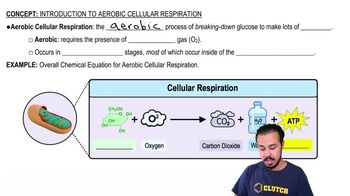
Cellular respiration is a metabolic process in which cells convert nutrients into energy, primarily in the form of ATP, while producing waste products. This process typically involves glycolysis, the Krebs cycle, and the electron transport chain. In bacteria, this can occur anaerobically or aerobically, depending on the organism and environmental conditions.
추천 영상:
03:39
Introduction to Cellular Respiration

Electron Transport Chain (ETC)

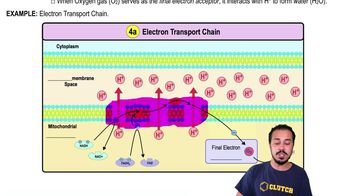
The electron transport chain is a series of protein complexes located in the inner mitochondrial membrane (or the plasma membrane in bacteria) that facilitate the transfer of electrons derived from nutrients. This process generates a proton gradient that drives ATP synthesis. Inhibition of the ETC can halt cellular respiration, leading to a lack of energy production and, in this case, the cessation of magnetite production.
추천 영상:
07:41
Electron Transport Chain

Magnetite Production

Magnetite is a magnetic iron oxide produced by certain bacteria as a byproduct of their metabolic processes, often linked to their respiratory activities. The production of magnetite can indicate that the bacteria are engaging in cellular respiration, as it is typically associated with the reduction of iron ions during energy generation. Thus, the absence of magnetite in the presence of an ETC-inhibiting drug suggests a disruption in the bacteria's ability to perform respiration.
추천 영상:
04:36
Primary Production in Aquatic Ecosystems