 뒤로
뒤로Limits: Concepts, Definitions, and Computation Techniques
스터디 가이드 - 스마트 노트
 자료에 맞춘 맞춤형 노트, 핵심 정의, 예시, 맥락을 확장해 제공합니다.
Limits and Their Role in Calculus
The Idea of Limits
Limits are foundational to calculus, describing how a function behaves as its input approaches a particular value. They allow us to rigorously define instantaneous rates of change and continuity.
Intuitive Notion: The limit of a function as x approaches a value a is the value that f(x) gets closer to as x gets closer to a.
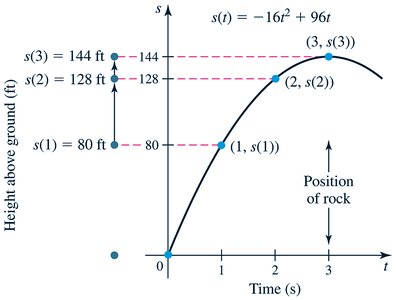
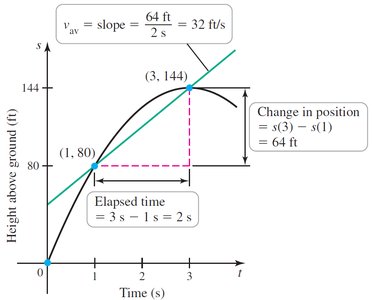
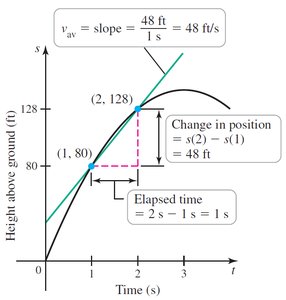
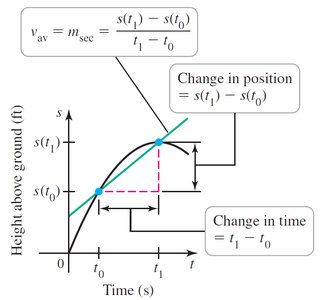
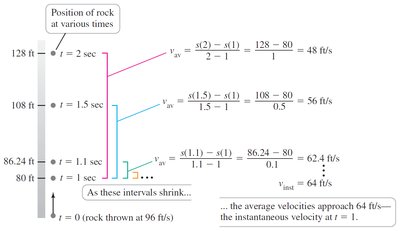
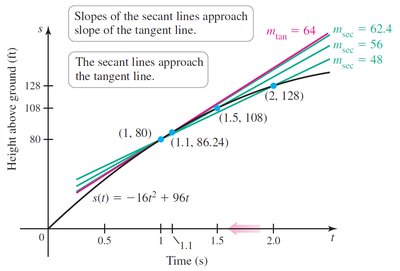
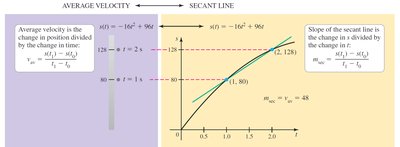
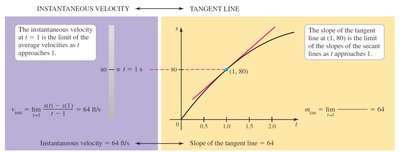
Physical Example: The position of a rock thrown upward can be modeled by a function s(t), and the average velocity over an interval is the slope of the secant line connecting two points on the graph.
Instantaneous Velocity: As the time interval shrinks, the average velocity approaches the instantaneous velocity, which is the slope of the tangent line at a point.
Mathematical Notation: means f(x) approaches L as x approaches a.
Definitions and Properties of Limits
Preliminary Definition of a Limit
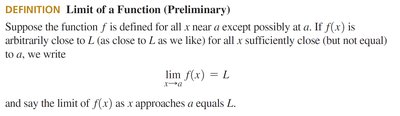
A function f(x) has a limit L as x approaches a if f(x) can be made arbitrarily close to L by taking x sufficiently close to a (but not equal to a).
Formal Notation:
Interpretation: The value of f(x) can be made as close as desired to L by choosing x close enough to a.
One-Sided Limits
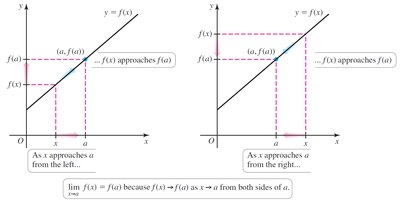
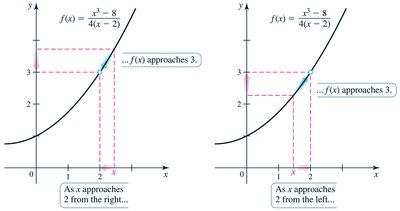
One-sided limits consider the behavior of a function as x approaches a from only one direction (left or right).
Right-sided limit: (x approaches a from the right)
Left-sided limit: (x approaches a from the left)

Relationship Between One-Sided and Two-Sided Limits
The two-sided limit exists if and only if both one-sided limits exist and are equal.
Theorem: if and only if and
Computing Limits: Laws and Theorems
Limit Laws
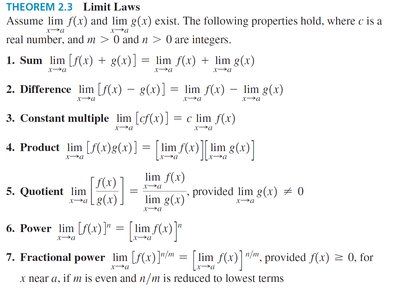
Limit laws allow the computation of limits for combinations of functions, provided the individual limits exist.
Sum Law:
Difference Law:
Constant Multiple Law:
Product Law:
Quotient Law: , provided
Power Law:
Fractional Power Law: , with domain restrictions for even roots
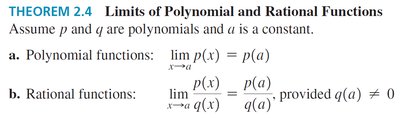
Limits of Linear, Polynomial, and Rational Functions
Linear Functions:
Polynomial Functions:
Rational Functions: , provided
Special Limit Laws for One-Sided Limits
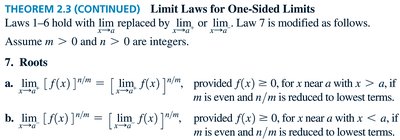
Similar to the standard limit laws, but applied to one-sided limits.
Roots require special attention to the domain (e.g., even roots require non-negative arguments).
Graphical and Numerical Approaches to Limits
Graphical Interpretation
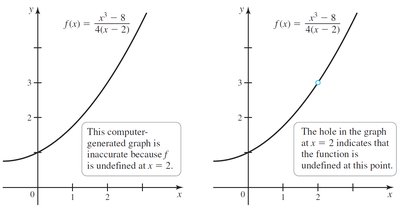
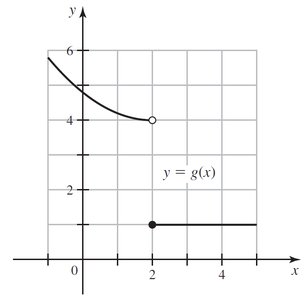
Limits can be visualized by observing the behavior of a function's graph as x approaches a specific value from either side.
If the left and right approaches yield the same value, the limit exists.
If they differ, the two-sided limit does not exist.
Numerical Tables
Tables of values can help estimate limits by showing how f(x) behaves as x gets closer to a.
Choose values of x approaching a from both sides and observe the trend in f(x).

Special Theorems and Examples
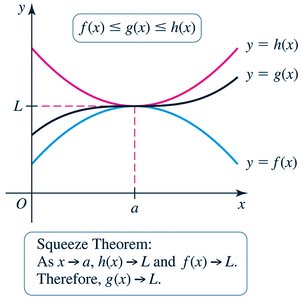
The Squeeze Theorem
The Squeeze Theorem is used when a function is bounded above and below by two functions that have the same limit at a point. If both bounding functions approach the same limit, so does the squeezed function.
Theorem: If near a (except possibly at a), and , then .
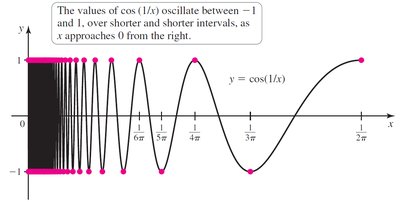
Limits Involving Oscillation
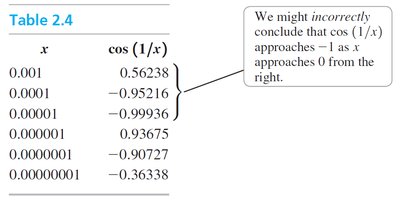
Some functions, such as as , do not have limits because they oscillate infinitely between two values.
Numerical and graphical evidence can show the lack of a single limiting value.

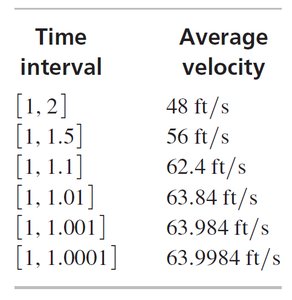
Summary Table: Average Velocity Approaching Instantaneous Velocity
Time interval | Average velocity |
|---|---|
[1, 2] | 48 ft/s |
[1, 1.5] | 56 ft/s |
[1, 1.1] | 62.4 ft/s |
[1, 1.01] | 63.84 ft/s |
[1, 1.001] | 63.984 ft/s |
[1, 1.0001] | 63.9984 ft/s |
Key Takeaways
Limits describe the behavior of functions as inputs approach specific values.
They are essential for defining derivatives, continuity, and understanding instantaneous rates of change.
Both graphical and numerical methods are useful for estimating and understanding limits.
Limit laws and theorems provide systematic ways to compute limits for a wide variety of functions.
