Ch. 3 - Derivatives
Briggs - Calculus: Early Transcendentals 3rd Edition
Briggs3rd EditionCalculus: Early TranscendentalsISBN: 9780136847243당신이 사용하는 게 아니라요?교과서 변경
3장, 문제 33d

Based on sales data over the past year, the owner of a DVD store devises the demand function D(p) = 40 - 2p, where D(p) is the number of DVDs that can be sold in one day at a price of p dollars.
For what prices is the demand elastic? Inelastic?

검증된 단계별 안내
1
First, understand the concept of elasticity of demand. Demand is considered elastic if a small change in price leads to a large change in quantity demanded. Conversely, demand is inelastic if a change in price leads to a small change in quantity demanded.
To determine elasticity, we use the formula for elasticity of demand: E(p) = -p * (D'(p) / D(p)), where D'(p) is the derivative of the demand function D(p) with respect to price p.
Calculate the derivative of the demand function D(p) = 40 - 2p. The derivative, D'(p), is the rate at which demand changes with respect to price. For D(p) = 40 - 2p, D'(p) = -2.
Substitute D'(p) and D(p) into the elasticity formula: E(p) = -p * (-2 / (40 - 2p)). Simplify the expression to find E(p) in terms of p.
Determine the values of p for which E(p) > 1 (elastic demand) and E(p) < 1 (inelastic demand). Solve the inequality to find the range of prices where demand is elastic and inelastic.

비슷한 문제에 대한 검증된 영상 답변:

이 영상 해법은 위 문제에 도움이 된다고 튜터들이 추천한 것입니다.
영상 길이:
12m
도움이 되었나요?

주요 개념

질문에 올바르게 답하기 위해 반드시 이해해야 하는 핵심 개념들은 다음과 같습니다.

Demand Elasticity

Demand elasticity measures how the quantity demanded of a good responds to changes in its price. If the percentage change in quantity demanded is greater than the percentage change in price, demand is considered elastic. Conversely, if the percentage change in quantity demanded is less than the percentage change in price, demand is inelastic. Understanding this concept is crucial for analyzing how price changes affect sales.
추천 영상:
04:18
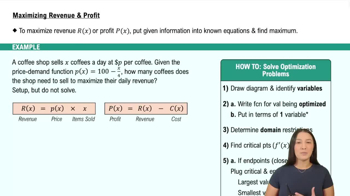
Maximizing Profit & Revenue

Calculating Elasticity

The price elasticity of demand can be calculated using the formula E = (dD/dp) * (p/D), where dD/dp is the derivative of the demand function with respect to price, p is the price, and D is the quantity demanded. This calculation helps determine whether demand is elastic or inelastic at specific price points. A value of E greater than 1 indicates elastic demand, while a value less than 1 indicates inelastic demand.
추천 영상:
가이드 코스
04:46
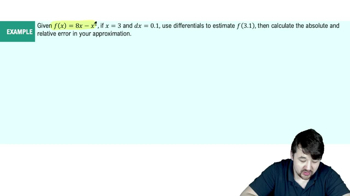
Determining Error and Relative Error Example 1

Critical Points in Demand Function

In the context of the demand function D(p) = 40 - 2p, critical points occur where the demand changes from elastic to inelastic. This transition typically happens at the price where the elasticity equals 1. By finding this price, one can identify the range of prices for which demand is elastic (E > 1) and inelastic (E < 1), providing valuable insights for pricing strategies.
추천 영상:
04:50
Critical Points