

Ch. 3 - Derivatives
3์žฅ, ๋ฌธ์ œ 3.5.19

Use Theorem 3.10 to evaluate the following limits.
lim x๐Ÿ ‚2 (sin (x-2)) / (x2 - 4)

๊ฒ€์ฆ๋œ ๋‹จ๊ณ„๋ณ„ ์•ˆ๋‚ด
1
Theorem 3.10 refers to L'Hรดpital's Rule, which is used to evaluate limits of indeterminate forms like 0/0 or โˆž/โˆž. First, check if the given limit is in an indeterminate form by substituting x = 2 into the expression.
Substitute x = 2 into the expression: (sin(x-2)) / (x^2 - 4). This results in (sin(0)) / (2^2 - 4), which simplifies to 0/0, confirming the indeterminate form.
Since the limit is in the 0/0 indeterminate form, apply L'Hรดpital's Rule. This involves taking the derivative of the numerator and the derivative of the denominator separately.
Differentiate the numerator: The derivative of sin(x-2) with respect to x is cos(x-2). Differentiate the denominator: The derivative of x^2 - 4 with respect to x is 2x.
Apply L'Hรดpital's Rule by taking the limit of the new expression: lim xโ†’2 (cos(x-2)) / (2x). Substitute x = 2 into this expression to evaluate the limit.

๋น„์Šทํ•œ ๋ฌธ์ œ์— ๋Œ€ํ•œ ๊ฒ€์ฆ๋œ ์˜์ƒ ๋‹ต๋ณ€:

์ด ์˜์ƒ ํ•ด๋ฒ•์€ ์œ„ ๋ฌธ์ œ์— ๋„์›€์ด ๋œ๋‹ค๊ณ  ํŠœํ„ฐ๋“ค์ด ์ถ”์ฒœํ•œ ๊ฒƒ์ž…๋‹ˆ๋‹ค.
์˜์ƒ ๊ธธ์ด:
3m
๋„์›€์ด ๋˜์—ˆ๋‚˜์š”?

์ฃผ์š” ๊ฐœ๋…

์งˆ๋ฌธ์— ์˜ฌ๋ฐ”๋ฅด๊ฒŒ ๋‹ตํ•˜๊ธฐ ์œ„ํ•ด ๋ฐ˜๋“œ์‹œ ์ดํ•ดํ•ด์•ผ ํ•˜๋Š” ํ•ต์‹ฌ ๊ฐœ๋…๋“ค์€ ๋‹ค์Œ๊ณผ ๊ฐ™์Šต๋‹ˆ๋‹ค.

Limits

Limits are fundamental in calculus, representing the value that a function approaches as the input approaches a certain point. In this context, evaluating the limit as x approaches 2 involves determining the behavior of the function (sin(x-2) / (xยฒ - 4)) near that point, which may require simplification or application of limit laws.
์ถ”์ฒœ ์˜์ƒ:
05:50
One-Sided Limits

Theorem 3.10 (L'Hรดpital's Rule)

Theorem 3.10, commonly known as L'Hรดpital's Rule, provides a method for evaluating limits that result in indeterminate forms like 0/0 or โˆž/โˆž. It states that if such a form occurs, the limit of the ratio of two functions can be found by taking the derivative of the numerator and the derivative of the denominator, and then re-evaluating the limit.
์ถ”์ฒœ ์˜์ƒ:
๊ฐ€์ด๋“œ ์ฝ”์Šค
06:11
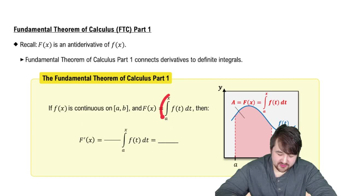
Fundamental Theorem of Calculus Part 1

Trigonometric Limits

Trigonometric limits often involve functions like sine and cosine, which can exhibit unique behaviors near certain points. In this case, the limit of sin(x-2) as x approaches 2 is crucial, as it simplifies the evaluation of the overall limit. Understanding the properties of trigonometric functions helps in resolving limits involving these functions effectively.
์ถ”์ฒœ ์˜์ƒ:
๊ฐ€์ด๋“œ ์ฝ”์Šค
6:04
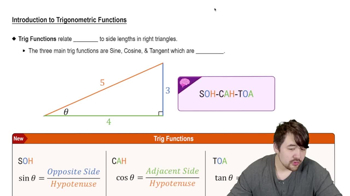
Introduction to Trigonometric Functions
๊ด€๋ จ ์‹ค์ฒœ
๊ต๊ณผ์„œ ์งˆ๋ฌธ

Watching an elevator An observer is 20 m above the ground floor of a large hotel atrium looking at a glass-enclosed elevator shaft that is 20 m horizontally from the observer (see figure). The angle of elevation of the elevator is the angle that the observerโ€™s line of sight makes with the horizontal (it may be positive or negative). Assuming the elevator rises at a rate of 5 m/s, what is the rate of change of the angle of elevation when the elevator is 10 m above the ground? When the elevator is 40 m above the ground? <IMAGE>

259
views
๊ต๊ณผ์„œ ์งˆ๋ฌธ

Derivatives Find and simplify the derivative of the following functions.

h(w) = wโต/ยณ / wโต/ยณ+1

295
views
๊ต๊ณผ์„œ ์งˆ๋ฌธ

90โ€“93. {Use of Tech} Work carefully Proceed with caution when using implicit differentiation to find points at which a curve has a specified slope. For the following curves, find the points on the curve (if they exist) at which the tangent line is horizontal or vertical. Once you have found possible points, make sure that they actually lie on the curve. Confirm your results with a graph.

x(1โˆ’yยฒ)+yยณ=0

189
views
๊ต๊ณผ์„œ ์งˆ๋ฌธ

Derivatives Find and simplify the derivative of the following functions.

g(x) = e^x / xยฒ-1

424
views
๊ต๊ณผ์„œ ์งˆ๋ฌธ

A challenging second derivative Find dยฒy/dxยฒ, where โˆšy+xy=1.

355
views
๊ต๊ณผ์„œ ์งˆ๋ฌธ

Derivatives of products and quotients Find the derivative of the following functions by first expanding or simplifying the expression. Simplify your answers. 

y = 12sยณ-8sยฒ+12s/4s

267
views