Ch. 4 - Applications of the Derivative
Briggs - Calculus: Early Transcendentals 3rd Edition
Briggs3rd EditionCalculus: Early TranscendentalsISBN: 9780136847243당신이 사용하는 게 아니라요?교과서 변경
4장, 문제 4.2.42

Avalanche forecasting Avalanche forecasters measure the temperature gradient dT/dh, which is the rate at which the temperature in a snowpack T changes with respect to its depth h. A large temperature gradient may lead to a weak layer in the snowpack. When these weak layers collapse, avalanches occur. Avalanche forecasters use the following rule of thumb: If dT/dh exceeds 10° C/m anywhere in the snowpack, conditions are favorable for weak-layer formation, and the risk of avalanche increases. Assume the temperature function is continuous and differentiable.


a. An avalanche forecaster digs a snow pit and takes two temperature measurements. At the surface (h = 0), the temperature is -16° C. At a depth of 1.1 m, the temperature is -2° C. Using the Mean Value Theorem, what can he conclude about the temperature gradient? Is the formation of a weak layer likely?

검증된 단계별 안내
1
Identify the given information: The temperature at the surface (h = 0) is -16°C, and at a depth of 1.1 m, the temperature is -2°C.
Recall the Mean Value Theorem (MVT) for derivatives, which states that if a function f is continuous on [a, b] and differentiable on (a, b), then there exists at least one c in (a, b) such that f'(c) = (f(b) - f(a)) / (b - a).
Apply the Mean Value Theorem to the temperature function T(h) over the interval [0, 1.1]. Here, f(a) = T(0) = -16°C and f(b) = T(1.1) = -2°C.
Calculate the average rate of change of temperature over the interval [0, 1.1] using the formula: (T(1.1) - T(0)) / (1.1 - 0).
Interpret the result: If the calculated average rate of change exceeds 10°C/m, then according to the rule of thumb, the conditions are favorable for weak-layer formation, increasing the risk of an avalanche.

비슷한 문제에 대한 검증된 영상 답변:

이 영상 해법은 위 문제에 도움이 된다고 튜터들이 추천한 것입니다.
영상 길이:
4m
도움이 되었나요?

주요 개념

질문에 올바르게 답하기 위해 반드시 이해해야 하는 핵심 개념들은 다음과 같습니다.

Mean Value Theorem

The Mean Value Theorem states that for a continuous function that is differentiable on an interval, there exists at least one point in that interval where the derivative (slope) of the function equals the average rate of change over the interval. In this context, it allows the forecaster to conclude that there is a specific depth at which the temperature gradient can be calculated, providing insight into the behavior of the temperature function in the snowpack.
추천 영상:
가이드 코스
06:11
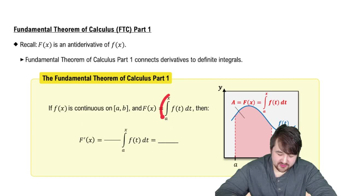
Fundamental Theorem of Calculus Part 1

Temperature Gradient

The temperature gradient, denoted as dT/dh, measures how temperature changes with respect to depth in the snowpack. A steep gradient indicates a rapid change in temperature over a small depth, which can lead to the formation of weak layers. Understanding this gradient is crucial for avalanche forecasting, as it helps predict conditions that may lead to instability in the snowpack.

Weak Layer Formation

Weak layer formation in a snowpack occurs when there are significant temperature differences within the layers of snow, often indicated by a high temperature gradient. When the gradient exceeds a certain threshold, such as 10° C/m, it suggests that the snow structure may be compromised, increasing the likelihood of avalanches. Recognizing these conditions is essential for avalanche forecasters to assess risk and implement safety measures.
추천 영상:
3:56
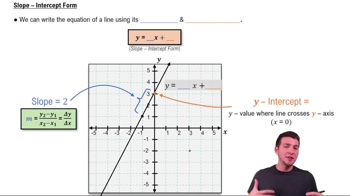
Slope-Intercept Form