Graph the function y = โ|x|.
Ch. 1 - Functions
Hass15th EditionThomas' CalculusISBN: 9780137616077๋น์ ์ด ์ฌ์ฉํ๋ ๊ฒ ์๋๋ผ์?๊ต๊ณผ์ ๋ณ๊ฒฝ
1์ฅ, ๋ฌธ์ 1.23
In Exercises 19โ32, find the (a) domain and (b) range.
๐ = 2eโปหฃ - 3
๊ฒ์ฆ๋ ๋จ๊ณ๋ณ ์๋ด1
Step 1: Understand the function given, which is ๐ = 2eโปหฃ - 3. This is an exponential function where the base is e (Euler's number) and the exponent is -x.
Step 2: Determine the domain of the function. The domain of an exponential function is all real numbers because you can substitute any real number for x without restriction. Therefore, the domain is (-โ, โ).
Step 3: Analyze the behavior of the function to find the range. As x approaches positive infinity, eโปหฃ approaches 0, making ๐ approach -3. As x approaches negative infinity, eโปหฃ becomes very large, making ๐ approach positive infinity.
Step 4: Conclude the range based on the behavior of the function. Since ๐ approaches -3 but never actually reaches it, and can increase without bound, the range is (-3, โ).
Step 5: Summarize the findings: The domain of the function is all real numbers (-โ, โ), and the range is all real numbers greater than -3, which is (-3, โ).

๋น์ทํ ๋ฌธ์ ์ ๋ํ ๊ฒ์ฆ๋ ์์ ๋ต๋ณ:
์ด ์์ ํด๋ฒ์ ์ ๋ฌธ์ ์ ๋์์ด ๋๋ค๊ณ ํํฐ๋ค์ด ์ถ์ฒํ ๊ฒ์
๋๋ค.
์์ ๊ธธ์ด:
3m๋์์ด ๋์๋์?
์ฃผ์ ๊ฐ๋
์ง๋ฌธ์ ์ฌ๋ฐ๋ฅด๊ฒ ๋ตํ๊ธฐ ์ํด ๋ฐ๋์ ์ดํดํด์ผ ํ๋ ํต์ฌ ๊ฐ๋
๋ค์ ๋ค์๊ณผ ๊ฐ์ต๋๋ค.
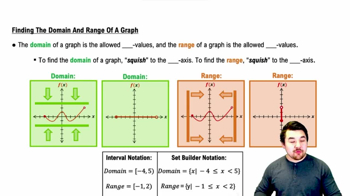
Domain of a Function
The domain of a function refers to the set of all possible input values (x-values) for which the function is defined. For the function y = 2eโปหฃ - 3, the exponential function eโปหฃ is defined for all real numbers, meaning the domain is all real numbers, or (-โ, โ). Understanding the domain is crucial for determining where the function can be evaluated.
์ถ์ฒ ์์:
Finding the Domain and Range of a Graph
Range of a Function
The range of a function is the set of all possible output values (y-values) that the function can produce. For the function y = 2eโปหฃ - 3, as x approaches infinity, eโปหฃ approaches 0, making y approach -3. As x approaches negative infinity, y approaches positive infinity. Thus, the range is (-3, โ). Knowing the range helps in understanding the behavior of the function.
์ถ์ฒ ์์:
Finding the Domain and Range of a Graph
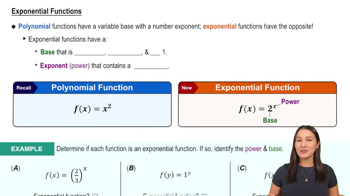
Exponential Functions
Exponential functions are mathematical functions of the form f(x) = a * bหฃ, where a is a constant, b is a positive real number, and x is the exponent. In the given function y = 2eโปหฃ - 3, the base e (approximately 2.718) is a natural constant, and the function exhibits rapid growth or decay. Understanding the properties of exponential functions is essential for analyzing their behavior and transformations.
์ถ์ฒ ์์:
Exponential Functions
๊ด๋ จ ์ค์ฒ
๊ต๊ณผ์ ์ง๋ฌธ
280
views
๊ต๊ณผ์ ์ง๋ฌธ
Algebraic Combinations
In Exercises 3 and 4, find the domains of f, g, f/g and g/f.
f(x) = 1, g(x) = 1 + โx
276
views
๊ต๊ณผ์ ์ง๋ฌธ
Finding Formulas for Functions
Consider the point (x,y) lying on the graph of y = โ(x โ 3). Let L be the distance between the points (x,y) and (4,0). Write L as a function of y.
356
views
๊ต๊ณผ์ ์ง๋ฌธ
In Exercises 9โ16, determine whether the function is even, odd, or neither.
๐ = x cos x
240
views
๊ต๊ณผ์ ์ง๋ฌธ
Finding Formulas for Functions
Express the side length of a square as a function of the length d of the squareโs diagonal. Then express the area as a function of the diagonal length.
534
views
๊ต๊ณผ์ ์ง๋ฌธ
General Sine Curves
For
f(x) = A sin ((2ฯ/B)(x โ C) +D
identify A, B, C, and D for the sine functions in Exercises 67โ70 and sketch their graphs.
y = ยฝ sin (ฯx โ x) + ยฝ
134
views