Ch. 1 - Functions
1์žฅ, ๋ฌธ์ œ 1.24

In Exercises 19โ€“32, find the (a) domain and (b) range.


๐”‚ = tan(2x - ฯ€)

๊ฒ€์ฆ๋œ ๋‹จ๊ณ„๋ณ„ ์•ˆ๋‚ด
1
Step 1: Identify the function type. The given function is y = tan(2x - ฯ€), which is a transformation of the basic tangent function y = tan(x).
Step 2: Determine the domain of the function. The tangent function is undefined where its argument is an odd multiple of ฯ€/2. Set the argument 2x - ฯ€ equal to (2n+1)ฯ€/2, where n is an integer, to find the values of x that make the function undefined.
Step 3: Solve for x in the equation 2x - ฯ€ = (2n+1)ฯ€/2. This will give you the values of x that need to be excluded from the domain. Rearrange the equation to find x = (ฯ€/2)(2n+1)/2 + ฯ€/2.
Step 4: Express the domain. The domain of y = tan(2x - ฯ€) is all real numbers except x = (ฯ€/2)(2n+1)/2 + ฯ€/2, where n is an integer.
Step 5: Determine the range of the function. The range of the tangent function is all real numbers, so the range of y = tan(2x - ฯ€) is also all real numbers.

๋น„์Šทํ•œ ๋ฌธ์ œ์— ๋Œ€ํ•œ ๊ฒ€์ฆ๋œ ์˜์ƒ ๋‹ต๋ณ€:

์ด ์˜์ƒ ํ•ด๋ฒ•์€ ์œ„ ๋ฌธ์ œ์— ๋„์›€์ด ๋œ๋‹ค๊ณ  ํŠœํ„ฐ๋“ค์ด ์ถ”์ฒœํ•œ ๊ฒƒ์ž…๋‹ˆ๋‹ค.
์˜์ƒ ๊ธธ์ด:
3m
๋„์›€์ด ๋˜์—ˆ๋‚˜์š”?

์ฃผ์š” ๊ฐœ๋…

์งˆ๋ฌธ์— ์˜ฌ๋ฐ”๋ฅด๊ฒŒ ๋‹ตํ•˜๊ธฐ ์œ„ํ•ด ๋ฐ˜๋“œ์‹œ ์ดํ•ดํ•ด์•ผ ํ•˜๋Š” ํ•ต์‹ฌ ๊ฐœ๋…๋“ค์€ ๋‹ค์Œ๊ณผ ๊ฐ™์Šต๋‹ˆ๋‹ค.

Domain of a Function

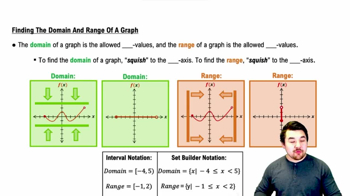
The domain of a function refers to the set of all possible input values (x-values) for which the function is defined. For the tangent function, it is important to identify values that would make the function undefined, such as where the argument of the tangent function equals ฯ€/2 + kฯ€, where k is any integer. In this case, the domain of y = tan(2x - ฯ€) can be determined by solving for x in the equation 2x - ฯ€ = ฯ€/2 + kฯ€.
์ถ”์ฒœ ์˜์ƒ:
5:10
Finding the Domain and Range of a Graph

Range of a Function

The range of a function is the set of all possible output values (y-values) that the function can produce. For the tangent function, the range is all real numbers, as it can take any value from negative to positive infinity. Therefore, regardless of the specific transformations applied to the tangent function, such as the horizontal shift in y = tan(2x - ฯ€), the range remains the same.
์ถ”์ฒœ ์˜์ƒ:
5:10
Finding the Domain and Range of a Graph

Transformation of Functions

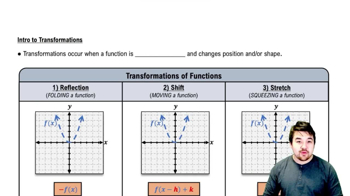
Transformations of functions involve shifting, stretching, or compressing the graph of a function. In the case of y = tan(2x - ฯ€), the '2' indicates a horizontal compression by a factor of 1/2, while the '-ฯ€' indicates a horizontal shift to the right by ฯ€/2. Understanding these transformations is crucial for accurately determining the domain and range of the function.
์ถ”์ฒœ ์˜์ƒ:
5:25
Intro to Transformations