Skip to main content
Cell Biology
나의 코스
배우기
시험 준비
AI 튜터
학습 가이드
플래시카드
탐험해 보세요
앱을 사용해 보세요
나의 코스
배우기
시험 준비
AI 튜터
학습 가이드
플래시카드
탐험해 보세요
앱을 사용해 보세요
뒤로
Cancer Treatment definitions
카드를 뒤집기 위해 탭할 수 있습니다.
Surgery
카드를 뒤집기 위해 탭할 수 있습니다.
👆
Surgery
Physical removal of a tumor mass from the body, aiming to eliminate cancerous tissue directly.
진행 상황 추적
컨트롤 버튼이 '내비게이션' 모드로 변경되었습니다.
1/13
관련 플래시카드
관련 실천
추천 영상
Cancer Treatment quiz
Cancer Treatment
15 용어
Cancer Treatment
20. Cancer
7 문제점
주제
Metastasis and Cancer Spread
20. Cancer
7 문제점
주제
20. Cancer - Part 1 of 2
3 주제
9 문제점
장
20. Cancer - Part 2 of 2
3 주제
9 문제점
장
VideoThumbView.guidedCourse
04:05
Cancer Treatment
300
views
2
rank
이 집합의 용어 (13)
하이드의 정의
Surgery
Physical removal of a tumor mass from the body, aiming to eliminate cancerous tissue directly.
Radiation
Use of high-energy waves to damage DNA within cancer cells, leading to their death.
Chemotherapy
Administration of drugs that damage DNA or disrupt cell division to kill rapidly dividing cancer cells.
Immunotherapy
Treatment approach harnessing components of the immune system to target and destroy cancer cells.
Passive Immunotherapy
Introduction of externally produced antibodies to target and kill tumor cells directly.
Active Immunotherapy
Stimulation of a patient's own immune system to recognize and attack cancer cells.
Anti-angiogenic Therapy
Strategy focused on destroying blood vessels that supply nutrients and oxygen to tumors.
Molecular Targeting
Use of drugs designed to specifically interact with cancer-causing genes or mutations.
Personalized Medicine
Tailoring of treatments based on the unique genetic mutations present in an individual's tumor.
Multi-drug Resistance
Cancer cell trait allowing insensitivity to multiple treatments, even those not previously encountered.
MDR1 Gene
Genetic sequence encoding a transporter protein that exports anticancer drugs out of cells.
ABC Transporter
Membrane protein responsible for moving substances, including drugs, across cellular membranes.
Tumor Antibodies
Proteins designed to specifically bind to and mark cancer cells for destruction by the immune system.
 뒤로뒤로
뒤로뒤로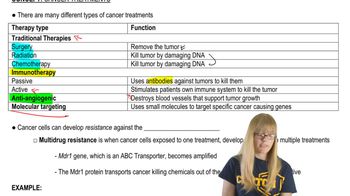
 04:05
04:05