 뒤로
뒤로Foundations of Cell Biology: Cell Theory, Microscopy, and Cell Types
스터디 가이드 - 스마트 노트
 자료에 맞춘 맞춤형 노트, 핵심 정의, 예시, 맥락을 확장해 제공합니다.
Cell and Molecular Biology: The Cell Theory
Introduction to Cell Theory
The Cell Theory is a fundamental concept in biology that describes the properties of cells, the basic unit of life. It was developed in the 19th century and remains a cornerstone of modern cell biology.
All organisms consist of one or more cells (Schwann, 1839).
The cell is the basic unit of structure for all organisms (Schwann, 1839).
All cells arise from preexisting cells (Virchow, 1855): "Omnis cellula e cellula".
These principles highlight the universality and continuity of life at the cellular level.
Microscopy and the Study of Cells
Resolution and Limitations of Light Microscopy
Microscopy is essential for studying cells, as most are too small to be seen with the naked eye. Resolution is defined as the shortest distance between two points on a specimen that can still be distinguished as separate entities.
Resolution of light microscopes is about 0.2 microns (μm), limited by the wavelength of light ().
Only dark or stained objects are seen well; out-of-focus light reduces clarity.
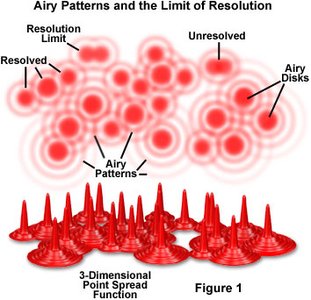
Improving Light Microscopy: Techniques such as phase contrast, fluorescence, and confocal microscopy enhance contrast and resolution, allowing for more detailed visualization of cellular structures.
Electron Microscopy
Electron microscopes provide much higher resolution than light microscopes, allowing visualization of subcellular structures.
Transmission Electron Microscopy (TEM): Resolution of 0.2–0.5 nm, suitable for viewing internal cell structures.
Scanning Electron Microscopy (SEM): Resolution of about 10 nm, used for detailed surface imaging.
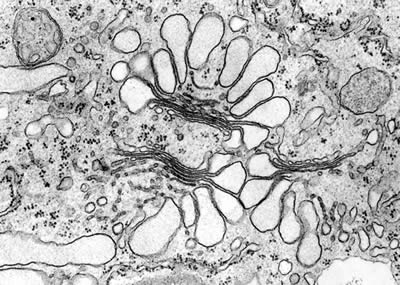
Electron microscopy has enabled the discovery of many organelles and fine cellular details.
Scale of Biological Structures
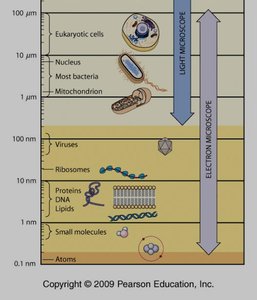
Cells and their components vary greatly in size, from atoms and small molecules to entire cells visible to the naked eye.
Micrometers (μm) and nanometers (nm) are common units for measuring cells and organelles.
Most bacteria are 1–10 μm; eukaryotic cells are typically 10–100 μm.
Types of Cells: Prokaryotes and Eukaryotes
Prokaryotic Cells
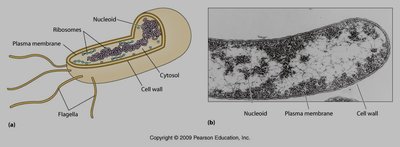
Prokaryotes include Bacteria and Archaea. They lack a membrane-bound nucleus and other organelles.
Nucleoid: Region where DNA is located, not enclosed by a membrane.
Cell wall: Provides structural support and protection.
Plasma membrane: Encloses the cytoplasm.
Ribosomes: Sites of protein synthesis.
Eukaryotic Cells
Eukaryotes include plants, animals, fungi, and protists. Their cells have a true nucleus and membrane-bound organelles.
Nucleus: Contains DNA enclosed by a nuclear envelope.
Organelles: Specialized structures such as mitochondria, endoplasmic reticulum, Golgi apparatus, and (in plants) chloroplasts.
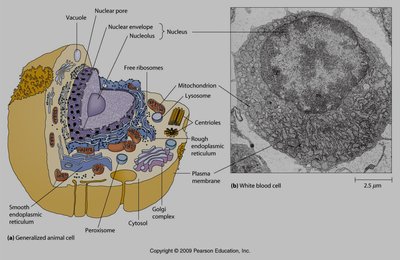
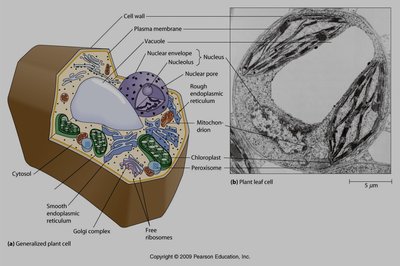
Comparison of Plant and Animal Cells
Plant and animal cells share many features but also have distinct differences.
Feature | Plant Cell | Animal Cell |
|---|---|---|
Shape | Fixed | Round or irregular, can change |
Cilia, flagella | Very rare | Present |
Chloroplasts and other plastids | Yes | No |
Cell wall | Yes | No |
Lysosomes | Not found | Present in cytoplasm |
Vacuoles | One large | Small in cytoplasm |
Centrioles | Only in lower plants | Yes |
Summary Table: Metric Prefixes
Understanding metric prefixes is essential for interpreting cell sizes and microscopy measurements.
Prefix | Symbol | Meaning |
|---|---|---|
yotta | Y | 1024 |
zetta | Z | 1021 |
exa | E | 1018 |
peta | P | 1015 |
tera | T | 1012 |
giga | G | 109 |
mega | M | 106 |
kilo | k | 103 |
hecto | h | 102 |
deka | da | 101 |
deci | d | 10-1 |
centi | c | 10-2 |
milli | m | 10-3 |
micro | μ | 10-6 |
nano | n | 10-9 |
pico | p | 10-12 |
femto | f | 10-15 |
atto | a | 10-18 |
zepto | z | 10-21 |
yocto | y | 10-24 |
Conclusion
The cell theory, advances in microscopy, and the classification of cells into prokaryotes and eukaryotes form the foundation of cell biology. Understanding these concepts is essential for further study of cellular processes and the molecular mechanisms of life.
