In Exercises 23–34, find each product using either a horizontal or a vertical format.
(x−1)(x²+x+1)
검증된 단계별 안내
1
Start by distributing each term in the first polynomial, \((x - 1)\), to each term in the second polynomial, \((x^2 + x + 1)\).
First, distribute \(x\) from \((x - 1)\) to each term in \((x^2 + x + 1)\):
Calculate \(x \cdot x^2 = x^3\).
Calculate \(x \cdot x = x^2\).
Calculate \(x \cdot 1 = x\).
비슷한 문제에 대한 검증된 영상 답변:
이 영상 해법은 위 문제에 도움이 된다고 튜터들이 추천한 것입니다.
영상 길이:
6m
영상 재생:
0 댓글
주요 개념
질문에 올바르게 답하기 위해 반드시 이해해야 하는 핵심 개념들은 다음과 같습니다.
Polynomial Multiplication
Polynomial multiplication involves distributing each term of one polynomial to every term of another polynomial. This process can be visualized using the distributive property, where each term in the first polynomial is multiplied by each term in the second. The results are then combined by adding like terms to simplify the expression.
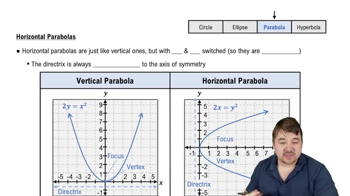
Horizontal and vertical formats refer to different methods of organizing polynomial multiplication. The horizontal format lays out the polynomials in a single line, while the vertical format stacks them like traditional multiplication. Both methods ultimately yield the same result, but the choice of format can affect clarity and ease of calculation.
Combining like terms is a crucial step in simplifying polynomial expressions after multiplication. Like terms are those that have the same variable raised to the same power. By adding or subtracting the coefficients of these terms, one can simplify the polynomial to its most concise form, making it easier to interpret and use in further calculations.

 6:46분
6:46분 검증된 단계별 안내
 03:42
03:42