 뒤로
뒤로College Algebra: Power, Polynomial, and Rational Functions – Study Notes
스터디 가이드 - 스마트 노트
 자료에 맞춘 맞춤형 노트, 핵심 정의, 예시, 맥락을 확장해 제공합니다.
Power Functions
Definition and General Form
A power function is a function of the form , where k and p are real numbers. The behavior of the graph depends on the values of k (the coefficient) and p (the power).
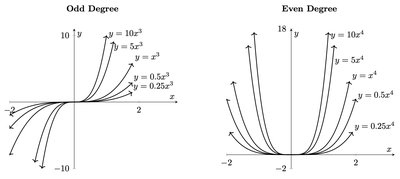
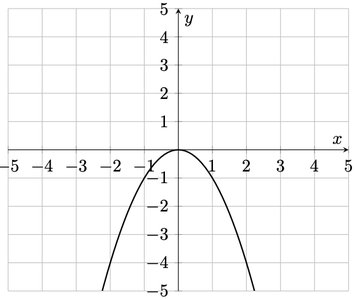
Even powers (e.g., , ): Graphs are symmetric about the y-axis and are U-shaped.
Odd powers (e.g., , ): Graphs are symmetric about the origin and have an S-shape.
The coefficient k stretches or compresses the graph vertically and reflects it across the x-axis if negative.
Positive Integer Powers
For even , the graph opens upward if and downward if .
For odd , the graph passes through the origin and increases or decreases without bound as increases or decreases.
Negative Integer Powers
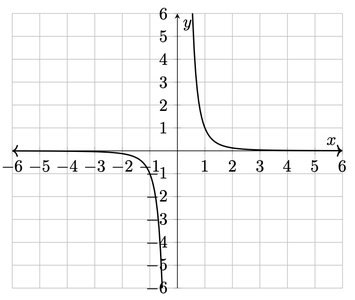
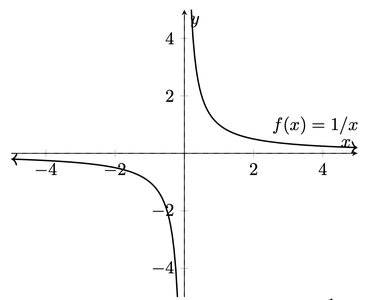
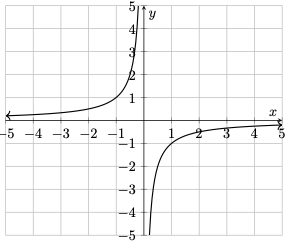
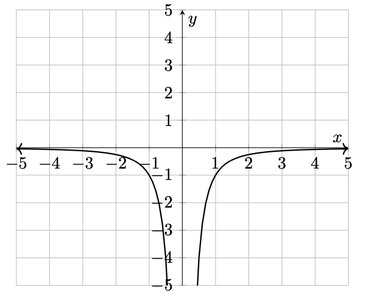
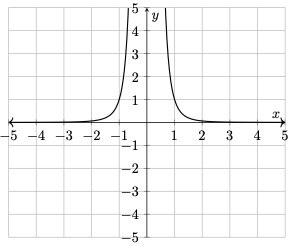
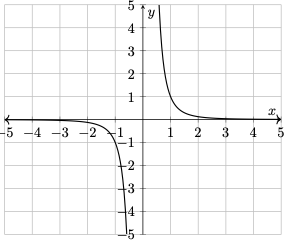
Power functions with negative integer exponents have the form , where is a positive integer. These functions are undefined at and have vertical and horizontal asymptotes.
For even negative powers, the graph is symmetric about the y-axis.
For odd negative powers, the graph is symmetric about the origin.
As approaches 0, increases or decreases without bound.
Quadratic Functions
Standard and Vertex Form
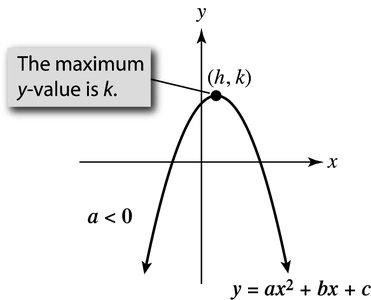
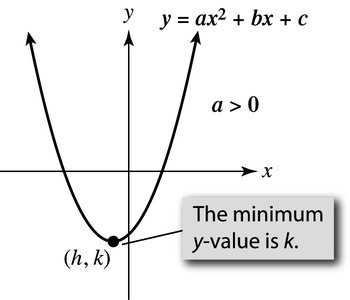
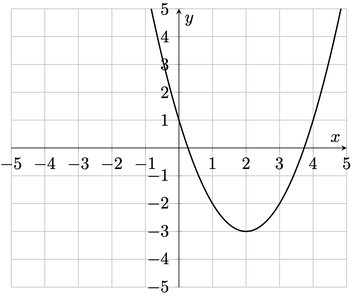
A quadratic function is a polynomial of degree 2, generally written as (standard form) or (vertex form), where is the vertex.
If , the parabola opens upward and the vertex is a minimum point.
If , the parabola opens downward and the vertex is a maximum point.
The axis of symmetry is .
Finding the Vertex
The vertex is found by .
Substitute into the function to find .
Graphing Quadratic Functions
Identify the vertex, axis of symmetry, and direction of opening.
Find the y-intercept by evaluating .
Find the x-intercepts (if any) by solving .
Rational Functions
Definition and Domain
A rational function is a function of the form , where and are polynomials and . The domain is all real numbers except where .
Asymptotes
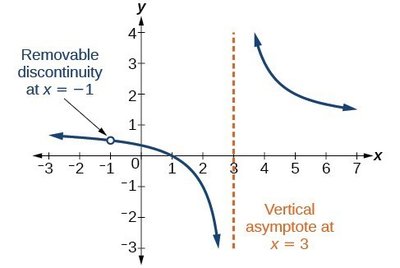
Vertical asymptotes occur at values of where the denominator is zero and the factor does not cancel with the numerator.
Horizontal asymptotes depend on the degrees of the numerator and denominator:
If degree of denominator > numerator: is the horizontal asymptote.
If degrees are equal: Horizontal asymptote is .
If degree of numerator > denominator: No horizontal asymptote.
Removable discontinuities (holes) occur where a factor cancels from numerator and denominator.
Graphing Rational Functions
Find intercepts by setting numerator or denominator to zero as appropriate.
Identify asymptotes and holes.
Sketch the graph, showing behavior near asymptotes and intercepts.
Applications and Examples
Projectile Motion (Quadratic Application)
The height of a projectile at time is often modeled by a quadratic function, such as , where is the initial velocity and is the initial height.
To find the maximum height, use the vertex formula.
To find when the projectile hits the ground, solve .

Summary Table: Key Features of Power and Rational Functions
Function Type | General Form | Symmetry | Asymptotes | End Behavior |
|---|---|---|---|---|
Even Power | y-axis | None | Both ends up (if ) | |
Odd Power | Origin | None | Left down, right up (if ) | |
Negative Even Power | y-axis | Vertical at , Horizontal at | Approaches 0 as | |
Negative Odd Power | Origin | Vertical at , Horizontal at | Approaches 0 as | |
Rational | Depends | Vertical: Horizontal: degree comparison | Depends on degrees |
Additional info: This guide covers core concepts from College Algebra, including power, quadratic, and rational functions, their graphs, and key properties such as symmetry, intercepts, and asymptotes. The included images reinforce the visual understanding of these concepts.
