Ch. 1 - Equations and Inequalities
Blitzer - College Algebra 8th Edition
Blitzer8th EditionCollege AlgebraISBN: 9780136970514당신이 사용하는 게 아니라요?교과서 변경
2장, 문제 16

Solve each radical equation in Exercises 11–30. Check all proposed solutions. √(6x + 1) = x - 1

검증된 단계별 안내
1
Start by isolating the radical expression on one side of the equation, which is already done: \(\sqrt{6x + 1} = x - 1\).
To eliminate the square root, square both sides of the equation: \(\left(\sqrt{6x + 1}\right)^2 = (x - 1)^2\).
Simplify both sides: \(6x + 1 = (x - 1)^2\).
Expand the right side using the formula \((a - b)^2 = a^2 - 2ab + b^2\): \(6x + 1 = x^2 - 2x + 1\).
Rearrange the equation to set it equal to zero by moving all terms to one side: \(0 = x^2 - 2x + 1 - 6x - 1\), then simplify the right side.

비슷한 문제에 대한 검증된 영상 답변:

이 영상 해법은 위 문제에 도움이 된다고 튜터들이 추천한 것입니다.
영상 길이:
5m
도움이 되었나요?

주요 개념

질문에 올바르게 답하기 위해 반드시 이해해야 하는 핵심 개념들은 다음과 같습니다.

Radical Equations

Radical equations involve variables inside a root, such as a square root. To solve them, isolate the radical expression and then eliminate the root by raising both sides to the power that corresponds to the root, typically squaring for square roots.
추천 영상:
05:20
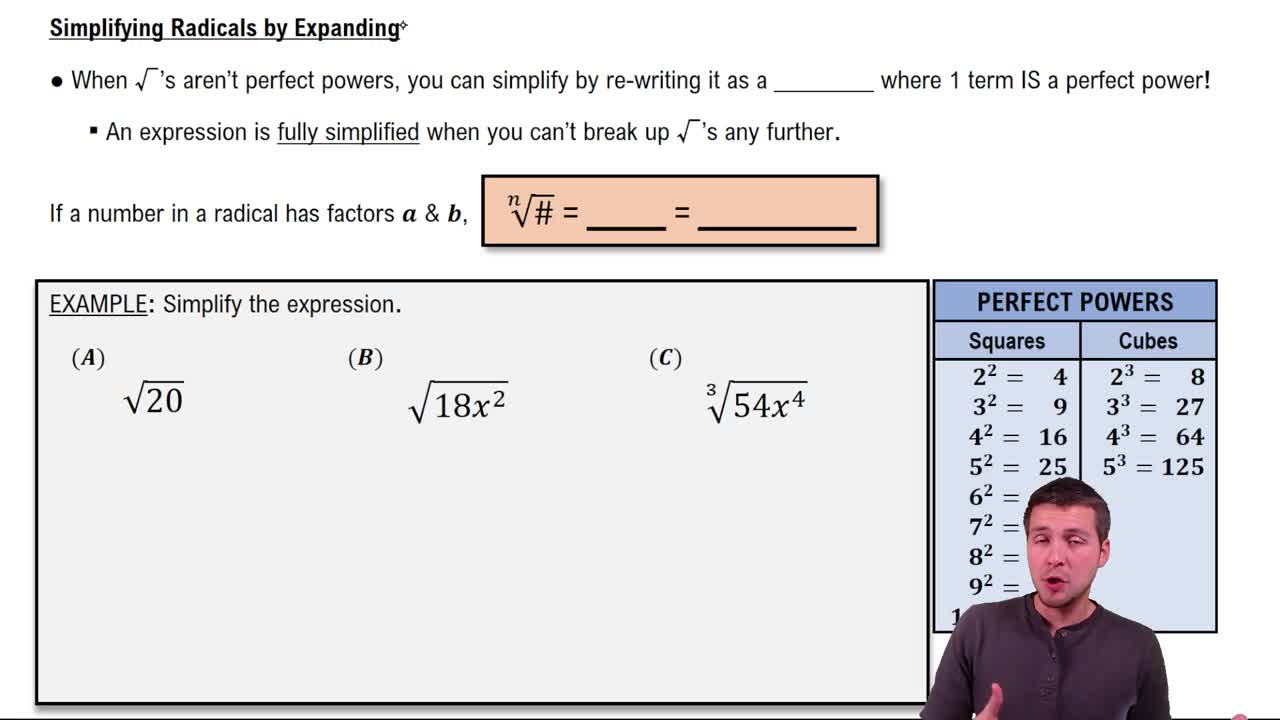
Expanding Radicals

Extraneous Solutions

When solving radical equations, squaring both sides can introduce solutions that do not satisfy the original equation. These are called extraneous solutions and must be checked by substituting back into the original equation to verify their validity.
추천 영상:
06:00
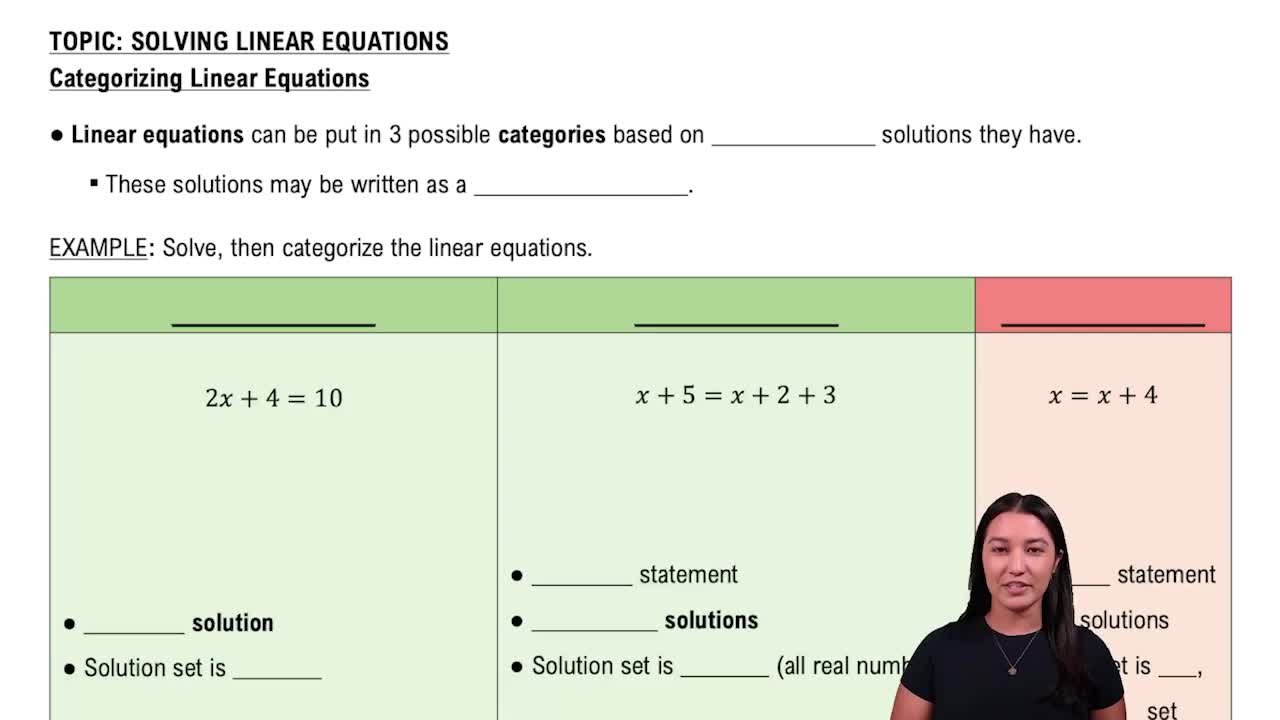
Categorizing Linear Equations

Domain Restrictions

The expression inside a square root must be non-negative to produce real number solutions. Additionally, the right side of the equation must be consistent with the domain, such as ensuring the expression equals or exceeds zero when isolated, to avoid invalid solutions.
추천 영상:
3:51
Domain Restrictions of Composed Functions