In Exercises 33–40, use the Intermediate Value Theorem to show that each polynomial has a real zero between the given integers. f(x)=x4+6x3−18x2; between 2 and 3
Ch. 3 - Polynomial and Rational Functions

4장, 문제 36
Solve each polynomial inequality in Exercises 1–42 and graph the solution set on a real number line. Express each solution set in interval notation.
검증된 단계별 안내1
First, write down the inequality clearly: \(x^3 + 2x^2 - 4x - 8 \geq 0\).
Next, factor the cubic polynomial on the left side. Start by looking for rational roots using the Rational Root Theorem, which suggests possible roots among the factors of the constant term (±1, ±2, ±4, ±8).
Once a root is found, use polynomial division or synthetic division to factor the cubic polynomial into a product of a linear factor and a quadratic factor.
After factoring completely, set each factor greater than or equal to zero to find critical points and determine intervals to test for the inequality.
Test values from each interval in the original inequality to determine where the expression is greater than or equal to zero, then express the solution set in interval notation and graph it on the real number line.

비슷한 문제에 대한 검증된 영상 답변:
이 영상 해법은 위 문제에 도움이 된다고 튜터들이 추천한 것입니다.
영상 길이:
8m도움이 되었나요?
주요 개념
질문에 올바르게 답하기 위해 반드시 이해해야 하는 핵심 개념들은 다음과 같습니다.
Polynomial Inequalities
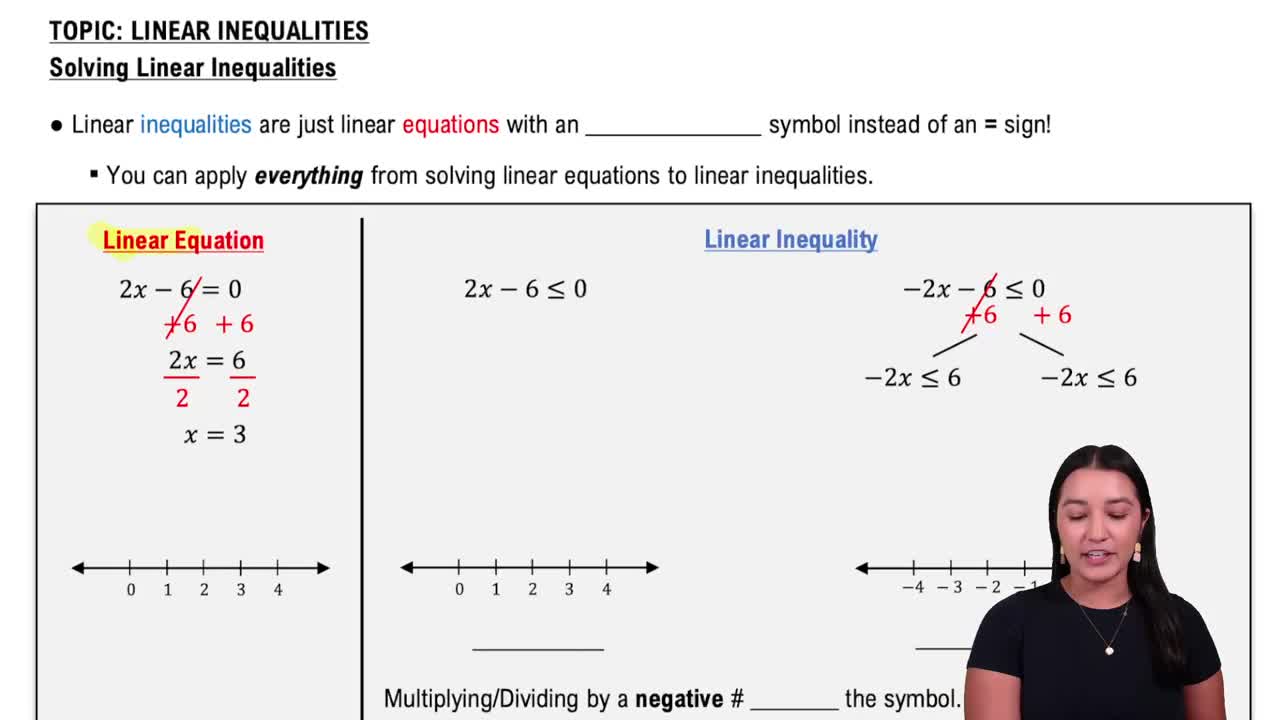
Polynomial inequalities involve expressions where a polynomial is compared to zero or another value using inequality symbols (>, <, ≥, ≤). Solving them requires finding the values of the variable that make the inequality true, often by analyzing the sign of the polynomial over different intervals.
추천 영상:
Linear Inequalities
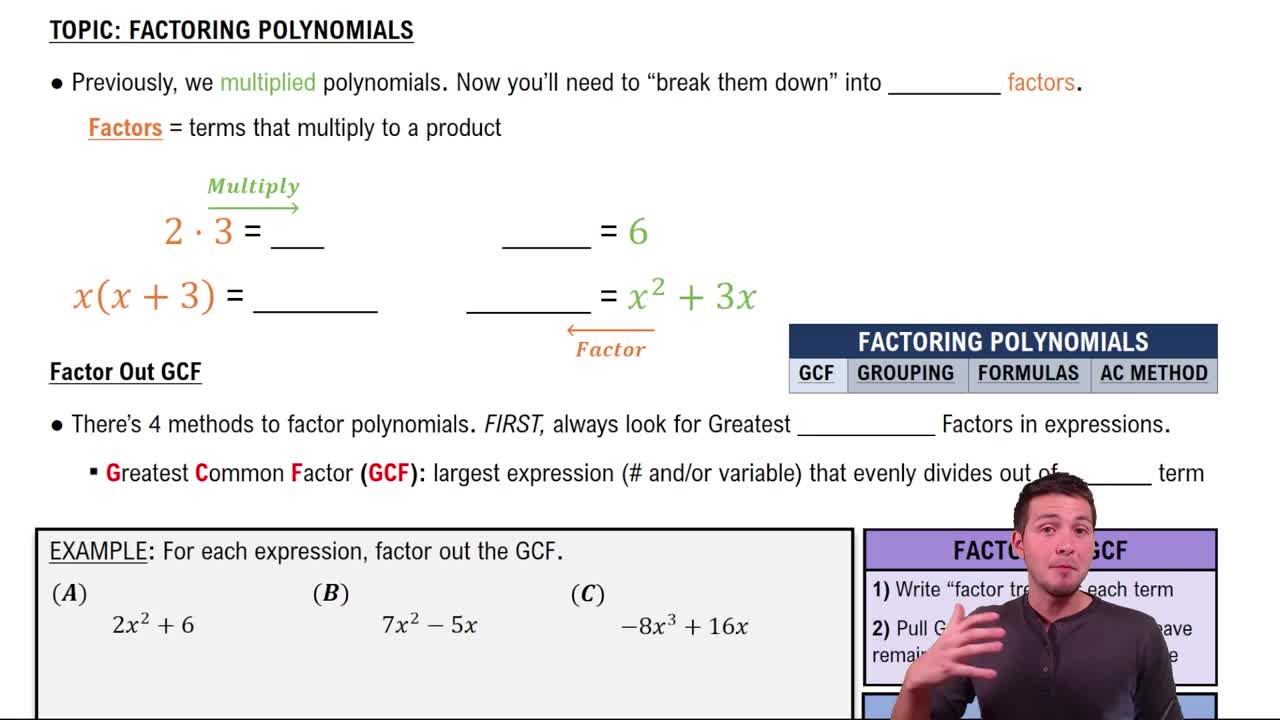
Factoring Polynomials
Factoring is the process of breaking down a polynomial into simpler polynomials (factors) that multiply to give the original. It helps identify the roots or zeros of the polynomial, which are critical points for determining where the polynomial changes sign in inequalities.
추천 영상:
Introduction to Factoring Polynomials
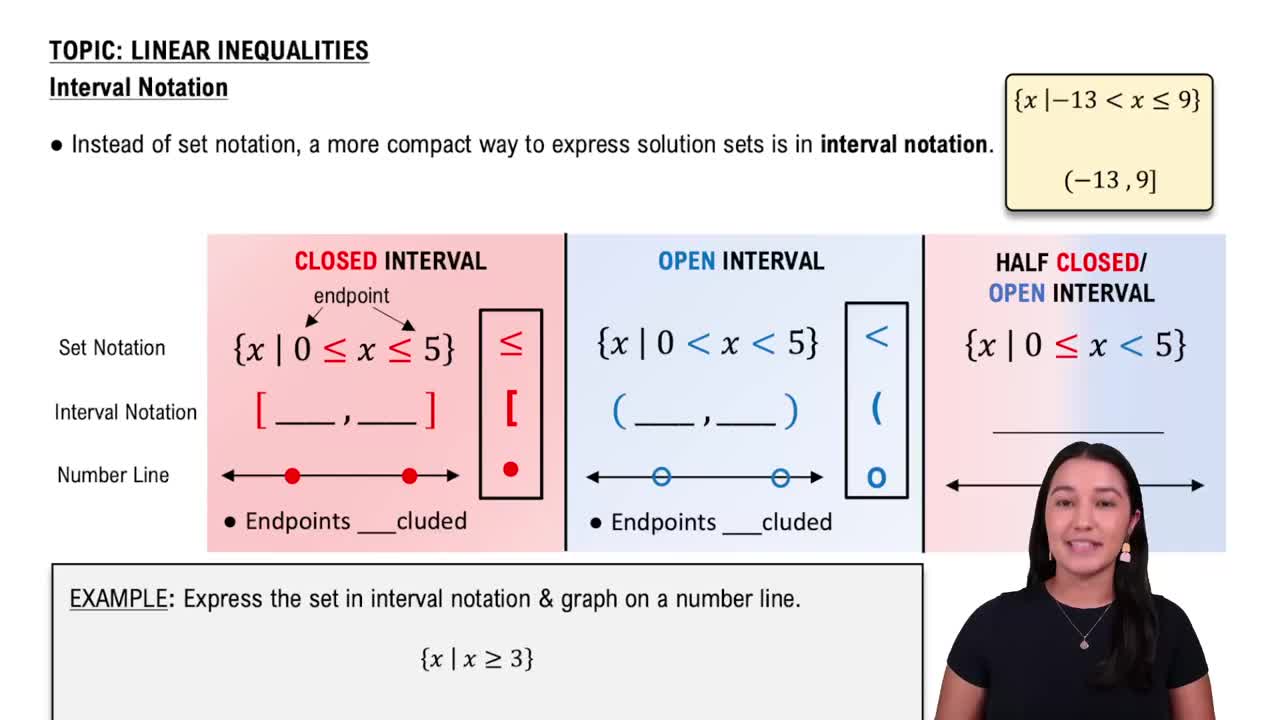
Interval Notation and Number Line Graphing
Interval notation is a concise way to represent sets of real numbers, especially solution sets of inequalities. Graphing on a number line visually shows where the polynomial satisfies the inequality, using open or closed dots to indicate whether endpoints are included.
추천 영상:
Interval Notation
관련 실천
교과서 질문
1187
views
교과서 질문
Use synthetic division and the Remainder Theorem to find the indicated function value. f(x)=x4+5x3+5x2−5x−6;f(3)
517
views
교과서 질문
Use the Intermediate Value Theorem to show that each polynomial has a real zero between the given integers. f(x)=x3+x2−2x+1; between -3 and -2
863
views
교과서 질문
Solve each polynomial inequality in Exercises 1–42 and graph the solution set on a real number line. Express each solution set in interval notation.
521
views
교과서 질문
Use synthetic division and the Remainder Theorem to find the indicated function value. f(x)=3x3−7x2−2x+5;f(−3)
451
views
교과서 질문
Use Descartes's Rule of Signs to determine the possible number of positive and negative real zeros for each given function.
568
views