In Exercises 39–52, find all zeros of the polynomial function or solve the given polynomial equation. Use the Rational Zero Theorem, Descartes's Rule of Signs, and possibly the graph of the polynomial function shown by a graphing utility as an aid in obtaining the first zero or the first root. 2x3−x2−9x−4=0

Solve each polynomial inequality in Exercises 1–42 and graph the solution set on a real number line. Express each solution set in interval notation. x3≤4x2
검증된 단계별 안내
비슷한 문제에 대한 검증된 영상 답변:
주요 개념
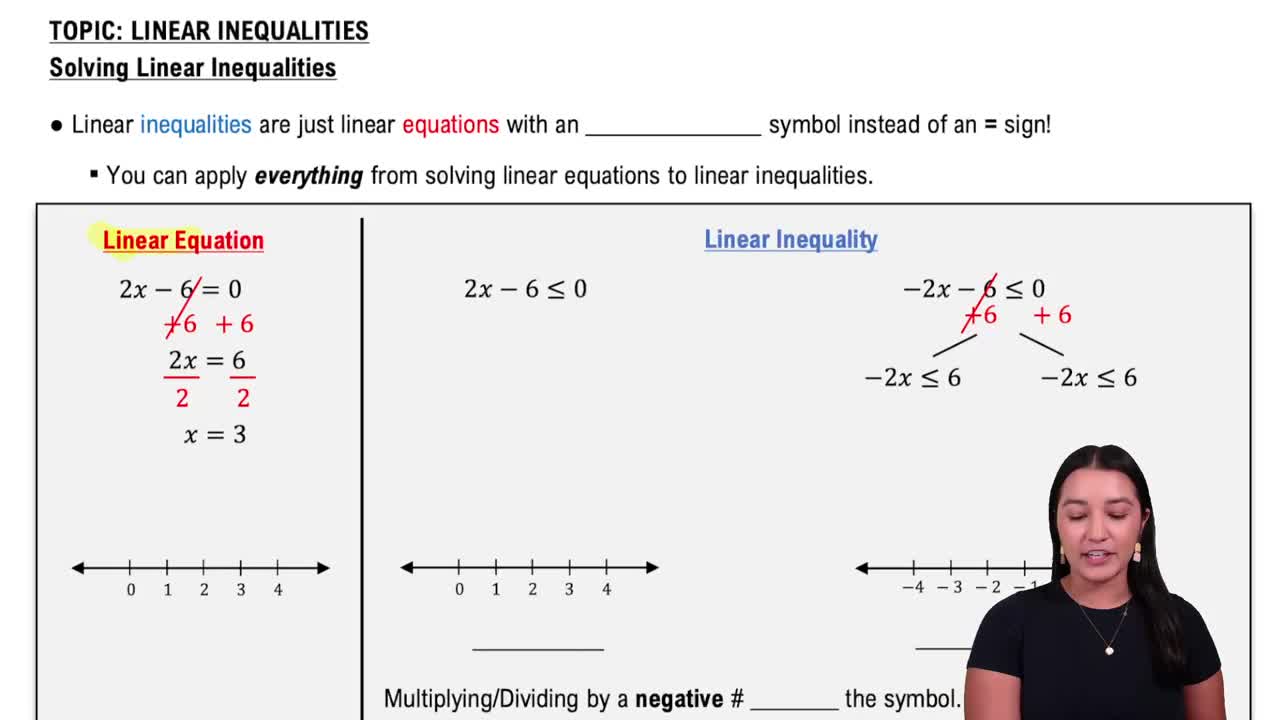
Polynomial Inequalities
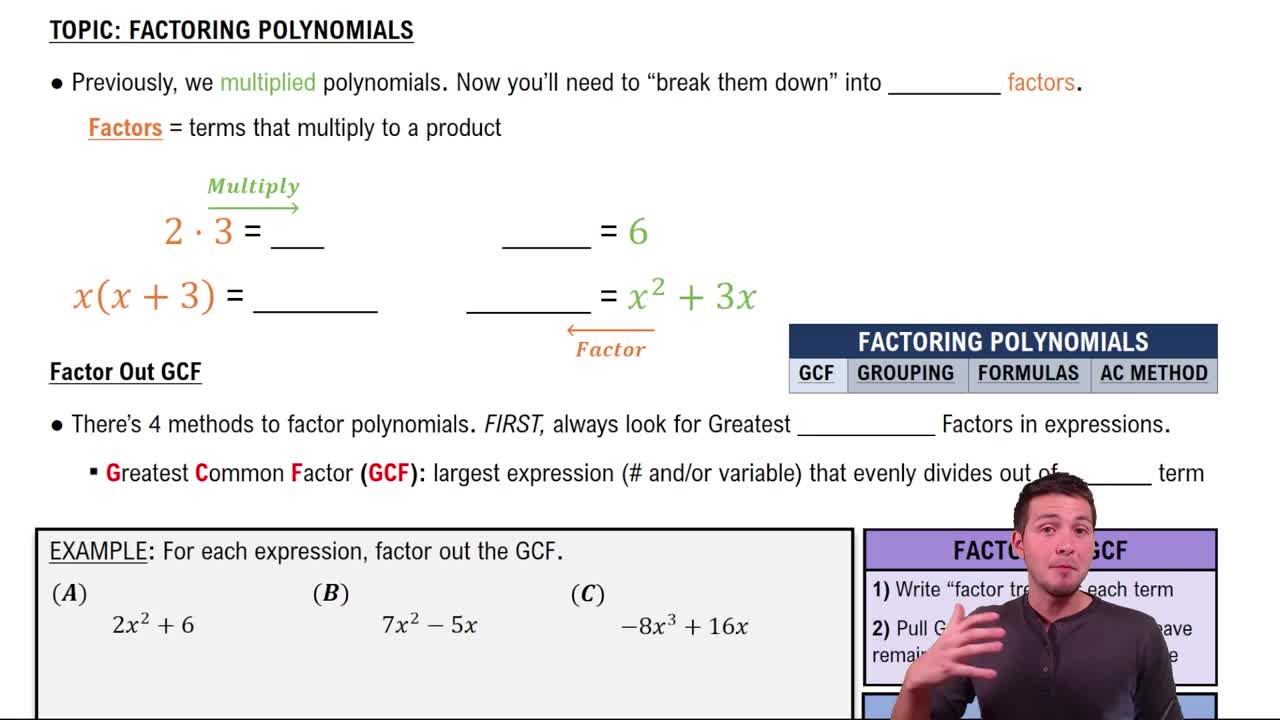
Factoring Polynomials
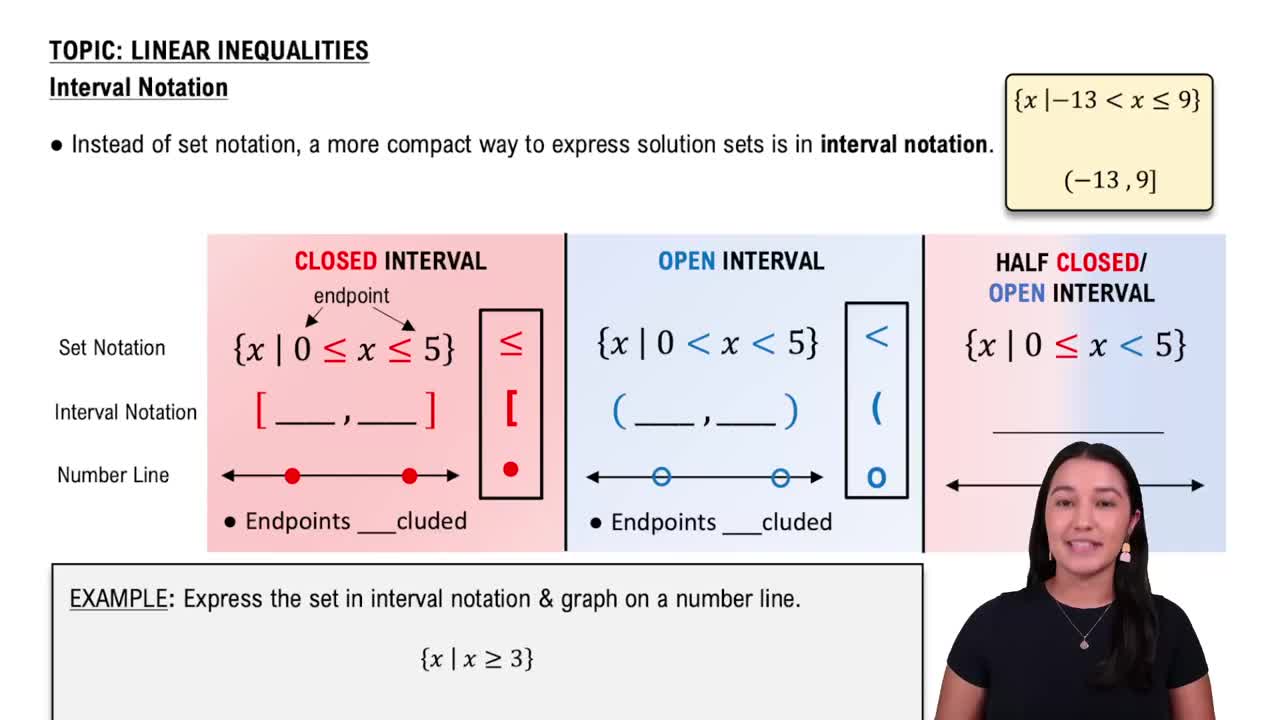
Interval Notation and Number Line Graphing
In Exercises 39–52, find all zeros of the polynomial function or solve the given polynomial equation. Use the Rational Zero Theorem, Descartes's Rule of Signs, and possibly the graph of the polynomial function shown by a graphing utility as an aid in obtaining the first zero or the first root. f(x)=x4−2x3+x2+12x+8
Solve each polynomial inequality in Exercises 1–42 and graph the solution set on a real number line. Express each solution set in interval notation.
An equation of a quadratic function is given. a) Determine, without graphing, whether the function has a minimum value or a maximum value. b) Find the minimum or maximum value and determine where it occurs. c) Identify the function's domain and its range. f(x)=5x2−5x
Solve each rational inequality in Exercises 43–60 and graph the solution set on a real number line. Express each solution set in interval notation. (x−4)/(x+3) > 0
Use synthetic division to divide f(x)=x3−4x2+x+6 by x+1. Use the result to find all zeros of f.
