Ch. P - Fundamental Concepts of Algebra
Blitzer - College Algebra 8th Edition
Blitzer8th EditionCollege AlgebraISBN: 9780136970514당신이 사용하는 게 아니라요?교과서 변경
1장, 문제 115

In Exercises 111–120, use the order of operations to simplify each expression. 8−3[−2(2−5)−4(8−6)]

검증된 단계별 안내
1
Step 1: Begin by simplifying the innermost parentheses. For the expression inside the first set of parentheses, calculate (2−5) and (8−6). This simplifies to −3 and 2, respectively.
Step 2: Substitute the simplified values back into the expression. The expression now becomes 8−3[−2(−3)−4(2)].
Step 3: Perform the multiplication inside the brackets. Multiply −2 by −3 to get 6, and multiply −4 by 2 to get −8. The expression now becomes 8−3[6−8].
Step 4: Simplify the subtraction inside the brackets. Calculate 6−8, which equals −2. The expression now becomes 8−3[−2].
Step 5: Perform the multiplication and subtraction outside the brackets. Multiply −3 by −2 to get 6, and then subtract this value from 8. The final simplified expression is obtained.

비슷한 문제에 대한 검증된 영상 답변:

이 영상 해법은 위 문제에 도움이 된다고 튜터들이 추천한 것입니다.
영상 길이:
5m
도움이 되었나요?

주요 개념

질문에 올바르게 답하기 위해 반드시 이해해야 하는 핵심 개념들은 다음과 같습니다.

Order of Operations

The order of operations is a set of rules that dictates the sequence in which mathematical operations should be performed to ensure consistent results. The acronym PEMDAS (Parentheses, Exponents, Multiplication and Division, Addition and Subtraction) helps remember this order. Following these rules is crucial for simplifying expressions correctly.
추천 영상:
8:38
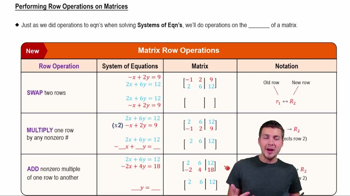
Performing Row Operations on Matrices

Parentheses

Parentheses are used in mathematical expressions to indicate which operations should be performed first. When simplifying expressions, any calculations within parentheses must be completed before moving on to other operations. This ensures that the intended order of operations is respected and that the expression is simplified accurately.
추천 영상:
03:11
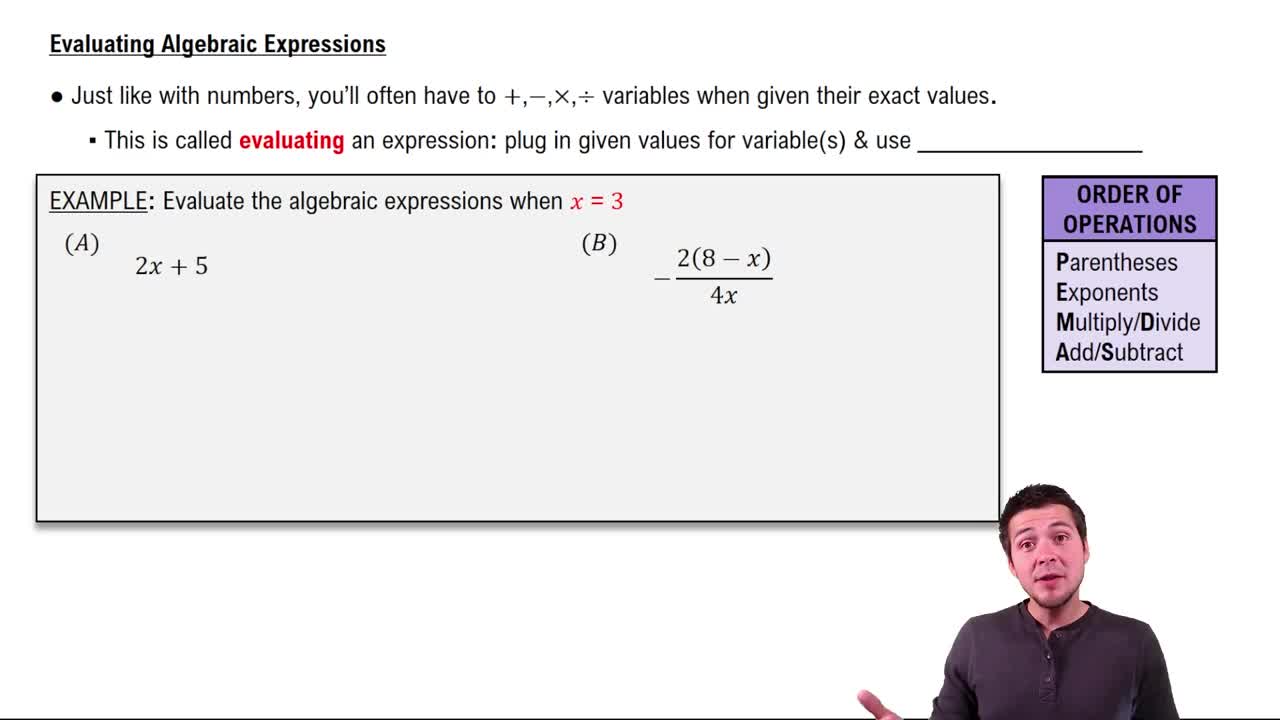
Evaluating Algebraic Expressions

Distributive Property

The distributive property is a fundamental algebraic principle that states a(b + c) = ab + ac. It allows for the multiplication of a single term by each term within a set of parentheses. This property is essential when simplifying expressions that involve multiplication and addition or subtraction, as it helps break down complex expressions into simpler parts.
추천 영상:
04:15
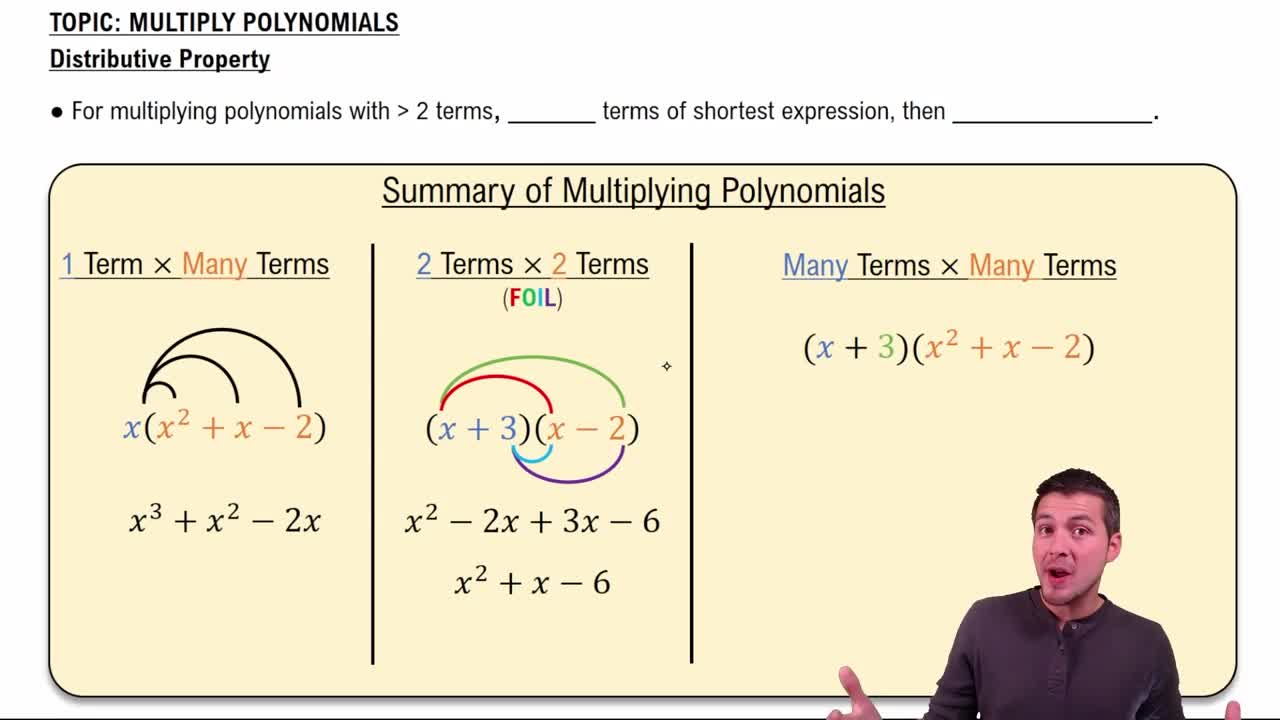
Multiply Polynomials Using the Distributive Property