Ch. P - Fundamental Concepts of Algebra
Blitzer - College Algebra 8th Edition
Blitzer8th EditionCollege AlgebraISBN: 9780136970514당신이 사용하는 게 아니라요?교과서 변경
1장, 문제 17

The formula C=5/9(F-32) expresses the relationship between Fahrenheit temperature, F, and Celsius temperature, C. In Exercises 17–18, use the formula to convert the given Fahrenheit temperature to its equivalent temperature on the Celsius scale. 50 °F

검증된 단계별 안내
1
Identify the given Fahrenheit temperature, which is \(F = 50\) degrees.
Recall the formula that relates Fahrenheit and Celsius temperatures: \(C = \frac{5}{9}(F - 32)\).
Substitute the given Fahrenheit value into the formula: \(C = \frac{5}{9}(50 - 32)\).
Simplify the expression inside the parentheses: calculate \(50 - 32\).
Multiply the result by \(\frac{5}{9}\) to find the Celsius temperature.

비슷한 문제에 대한 검증된 영상 답변:

이 영상 해법은 위 문제에 도움이 된다고 튜터들이 추천한 것입니다.
영상 길이:
2m

주요 개념

질문에 올바르게 답하기 위해 반드시 이해해야 하는 핵심 개념들은 다음과 같습니다.

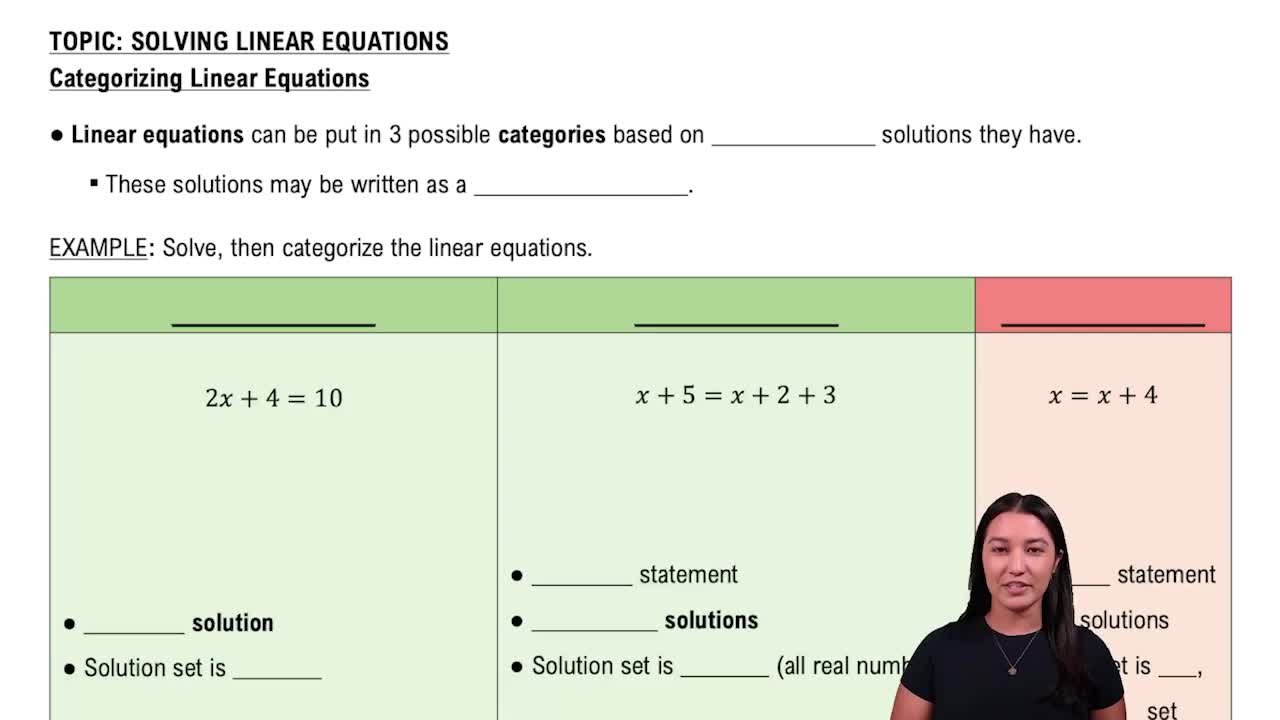
Linear Equations

A linear equation represents a straight-line relationship between variables, often in the form y = mx + b. In this problem, the formula C = (5/9)(F - 32) is a linear equation relating Fahrenheit (F) and Celsius (C) temperatures, where the conversion involves scaling and shifting values.
추천 영상:
06:00
Categorizing Linear Equations

Temperature Conversion Formula

The temperature conversion formula converts Fahrenheit to Celsius by adjusting for the difference in zero points and scaling the degree size. Specifically, subtracting 32 from Fahrenheit accounts for the offset, and multiplying by 5/9 scales the temperature to the Celsius degree size.
추천 영상:
06:36
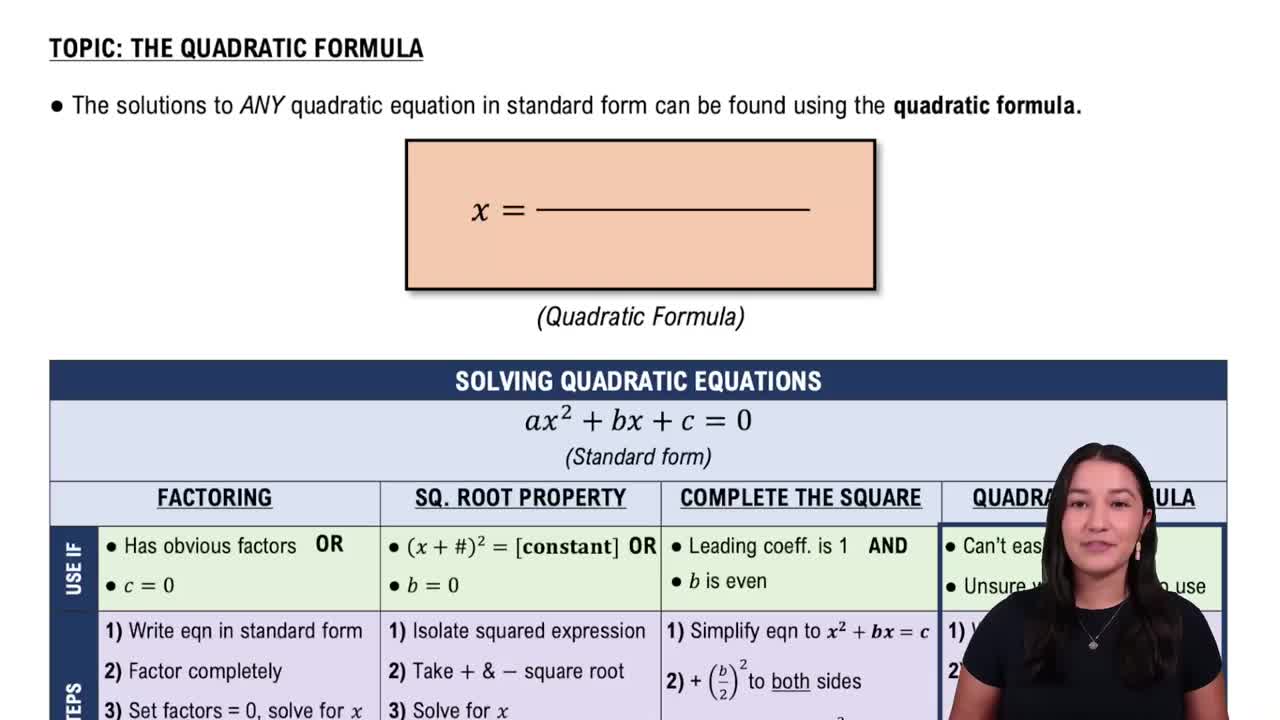
Solving Quadratic Equations Using The Quadratic Formula

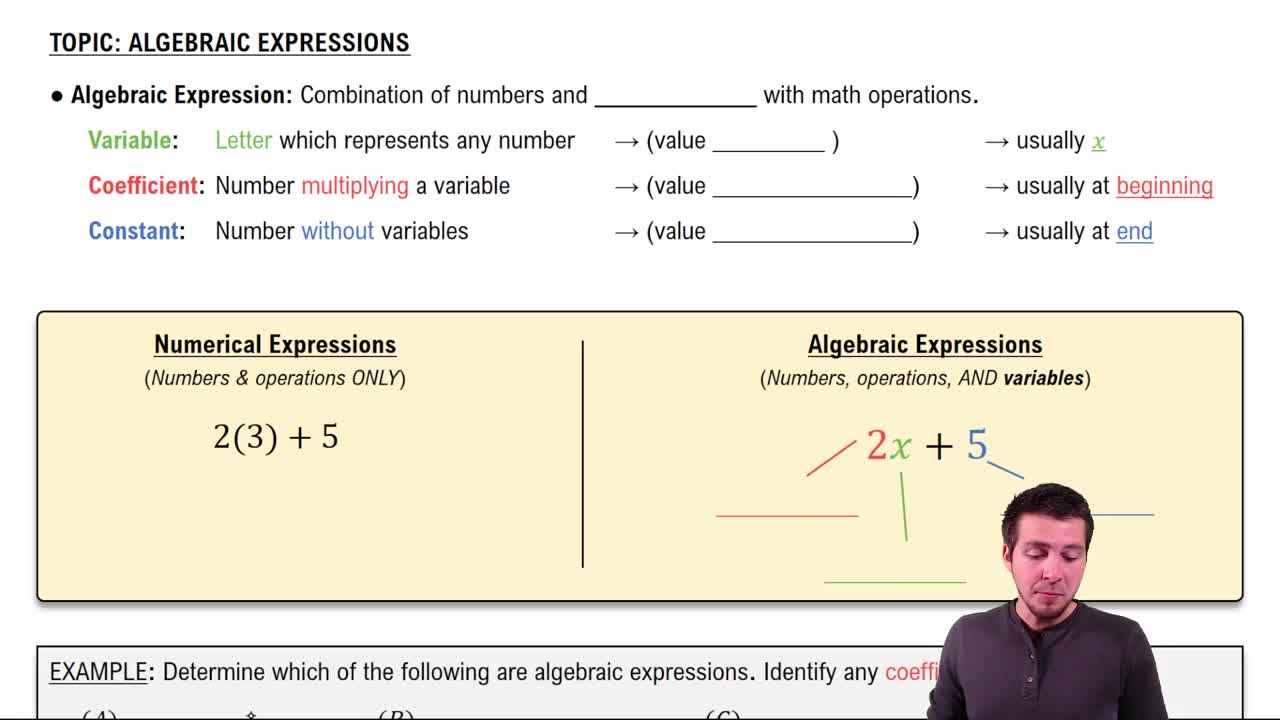
Substitution in Algebraic Expressions

Substitution involves replacing a variable in an expression with a given value to evaluate it. Here, substituting F = 50 into the formula allows calculation of the corresponding Celsius temperature by performing arithmetic operations on the expression.
추천 영상:
05:09
Introduction to Algebraic Expressions