Ch. 2 - Graphs and Functions
Lial - College Algebra 13th Edition
Lial13th EditionCollege AlgebraISBN: 9780136881063당신이 사용하는 게 아니라요?교과서 변경
3장, 문제 33a

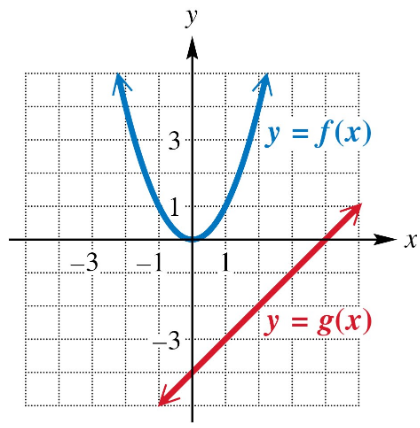
Use the graph to evaluate each expression. See Example 3(a).
(ƒ+g)(2)
Graph showing two functions: a blue parabola y = f(x) opening upward and a red line y = g(x) with positive slope.

검증된 단계별 안내
1
Identify the value of x for which you need to evaluate the expression. Here, it is x = 2.
Locate x = 2 on the horizontal axis (x-axis) of the graph.
Find the corresponding y-values for both functions f(x) and g(x) at x = 2 by looking at the points on the orange curve (f) and the blue line (g).
Write down the values: f(2) and g(2) from the graph.
Add the two values together to find (f + g)(2) using the formula: \[(f + g)(2) = f(2) + g(2)\].

비슷한 문제에 대한 검증된 영상 답변:

이 영상 해법은 위 문제에 도움이 된다고 튜터들이 추천한 것입니다.
영상 길이:
2m
도움이 되었나요?

주요 개념

질문에 올바르게 답하기 위해 반드시 이해해야 하는 핵심 개념들은 다음과 같습니다.

Function Notation and Evaluation

Function notation, such as f(x) and g(x), represents the output of a function for a given input x. Evaluating a function at a specific value means finding the corresponding y-value on the graph or from the function's equation. For example, f(2) is the y-value of function f when x = 2.
추천 영상:
4:26
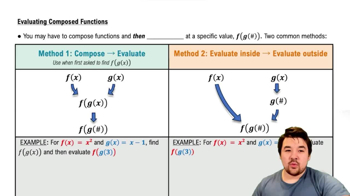
Evaluating Composed Functions

Function Addition (ƒ + g)(x)

The sum of two functions, (ƒ + g)(x), is found by adding their outputs for the same input x. This means (ƒ + g)(2) = f(2) + g(2). Understanding this concept allows you to combine values from two different functions at a specific point.
추천 영상:
4:46
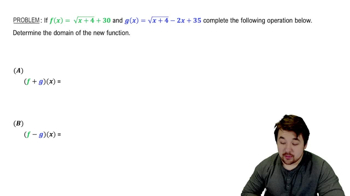
Adding & Subtracting Functions Example 1

Reading Values from a Graph

To evaluate functions using a graph, locate the input value on the x-axis, then find the corresponding y-values on each function's curve. Accurate reading of these points is essential for correctly evaluating expressions like (ƒ + g)(2) by summing the y-values of f and g at x = 2.
추천 영상:
가이드 코스
05:10
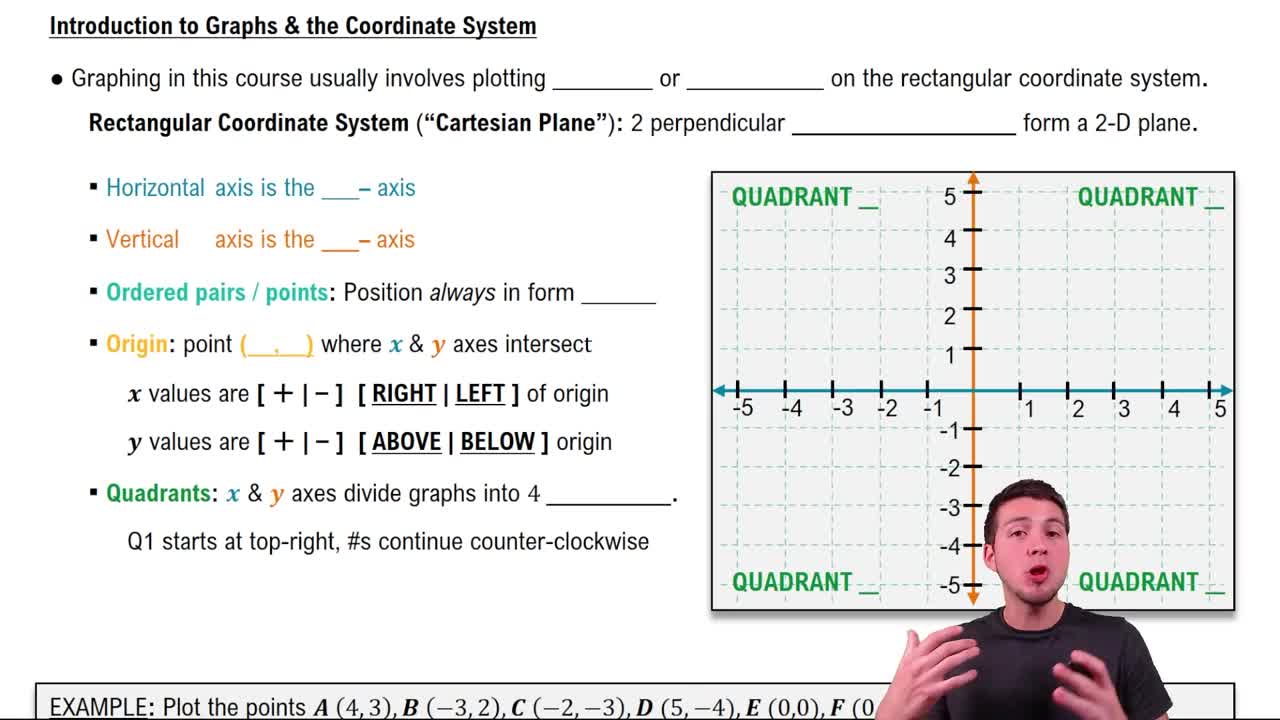
Graphs & the Rectangular Coordinate System