
교과서 질문
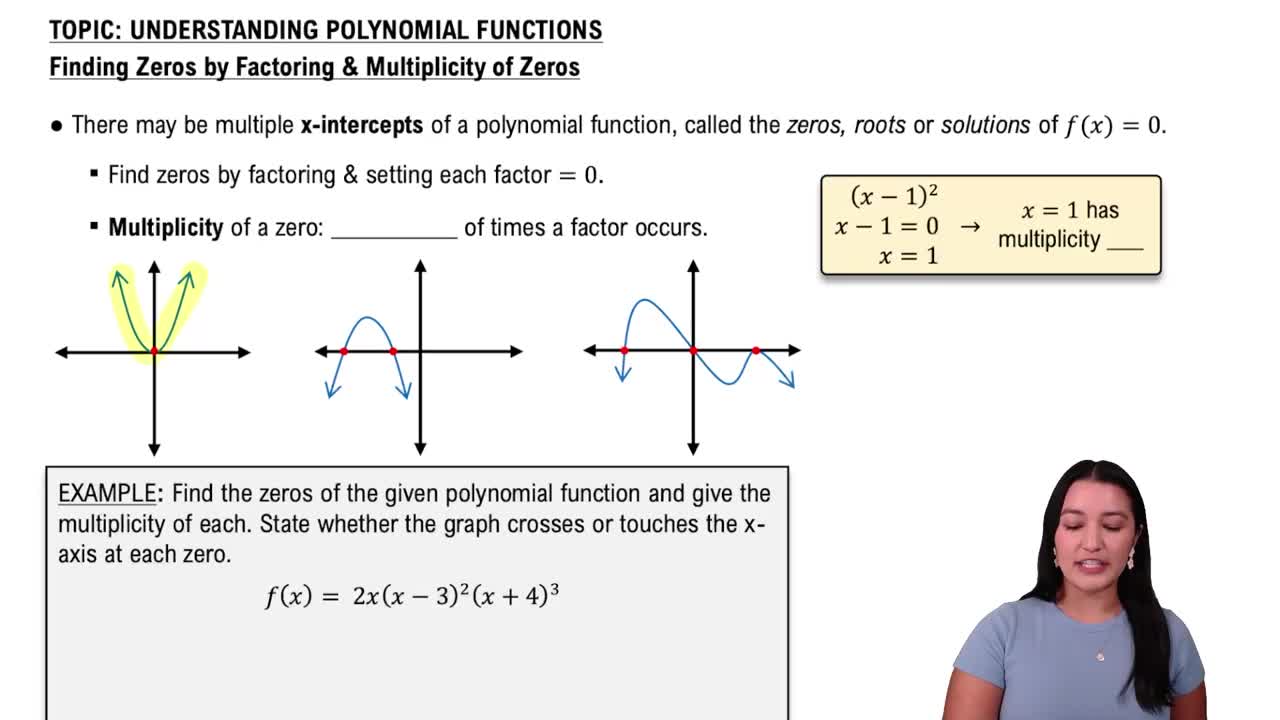
For each polynomial function, find all zeros and their multiplicities. ƒ(x)=5x2(x2-16)(x+5)
632
views

 검증된 단계별 안내
 03:42
03:42 03:42
03:42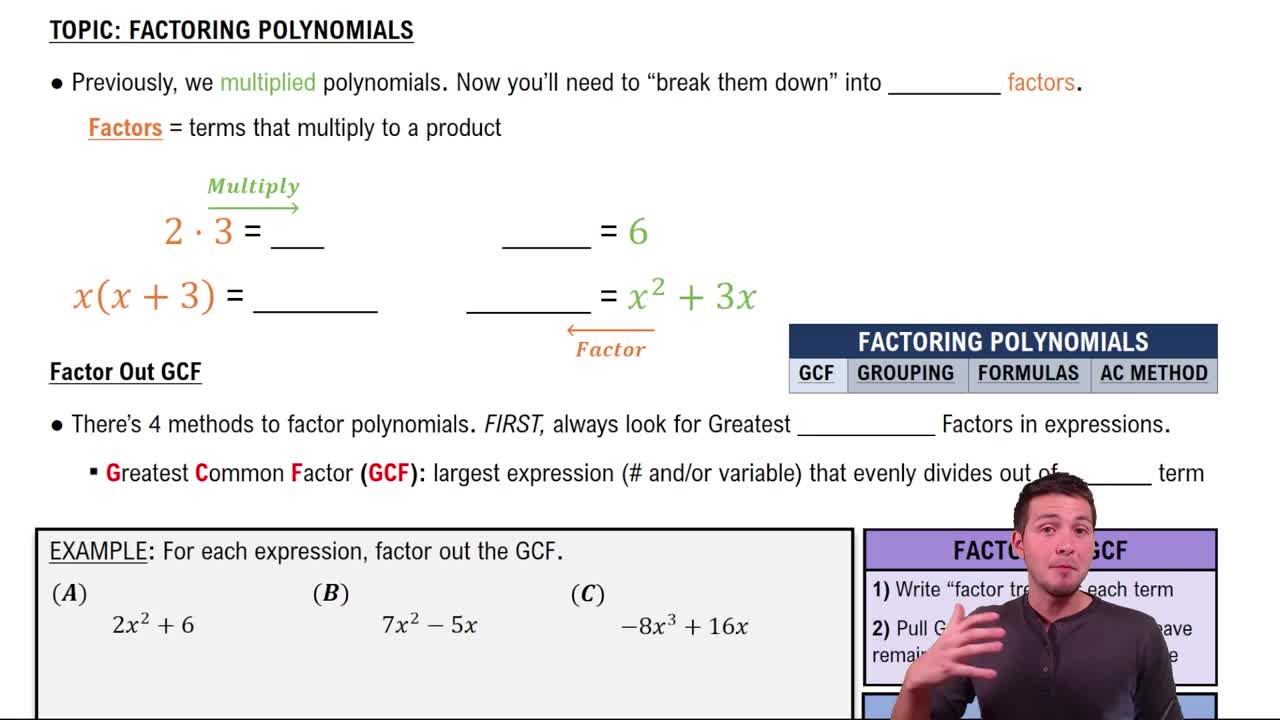 07:30
07:30For each polynomial function, find all zeros and their multiplicities. ƒ(x)=5x2(x2-16)(x+5)
Nuclear Bomb Detonation Suppose the effects of detonating a nuclear bomb will be felt over a distance from the point of detonation that is directly proportional to the cube root of the yield of the bomb. Suppose a 100-kiloton bomb has certain effects to a radius of 3 km from the point of detonation. Find, to the nearest tenth, the distance over which the effects would be felt for a 1500-kiloton bomb.
Several graphs of the quadratic function ƒ(x) = ax2 + bx + c are shown below. For the given restrictions on a, b, and c, select the corresponding graph from choices A–F. (Hint: Use the discriminant.) A > 0; b2 - 4ac > 0
Graph each polynomial function. ƒ(x)=2x3+x2-x
Use the intermediate value theorem to show that each polynomial function has a real zero between the numbers given. ƒ(x)=-2x3+5x2+5x-7; 0 and 1
Use synthetic division to determine whether the given number k is a zero of the polynomial function. If it is not, give the value of ƒ(k). ƒ(x) = x3 - 3x2 + 4x -4; k=2