 뒤로
뒤로Activity-Based Costing, Lean Operations, and the Costs of Quality: Study Notes
스터디 가이드 - 스마트 노트
 자료에 맞춘 맞춤형 노트, 핵심 정의, 예시, 맥락을 확장해 제공합니다.
Activity-Based Costing, Lean Operations, and the Costs of Quality
Introduction
This chapter explores advanced cost allocation methods, focusing on Activity-Based Costing (ABC), lean operations, and the costs of quality. These concepts are essential for managerial accountants seeking to improve cost accuracy, operational efficiency, and product quality in modern organizations.
Refining Cost Allocation Systems
Why Refine Cost Allocation?
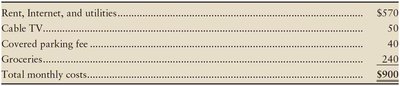
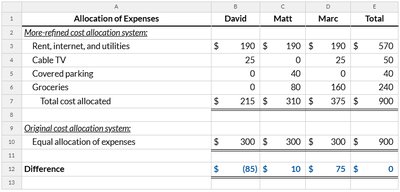
Traditional cost allocation systems often lack accuracy, leading to cost distortion—where products are over- or under-costed.
Refined systems benefit manufacturing, service, and governmental organizations by providing more precise cost information for decision-making.
Cost Distortion in Simple Systems
Simple, plantwide allocation systems can distort costs, especially when products consume resources differently across departments.
Plantwide Overhead Rate
Uses a single overhead rate for the entire plant.
Calculated as:

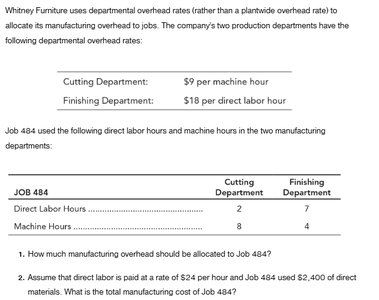
Departmental Overhead Rates
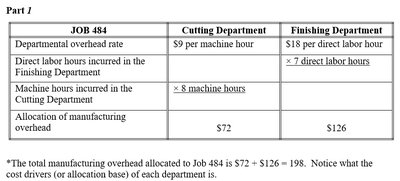
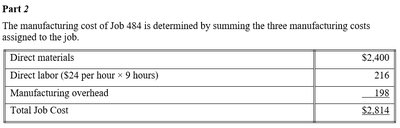
Departmental rates increase accuracy when departments have different overhead costs and products use departments to varying extents.
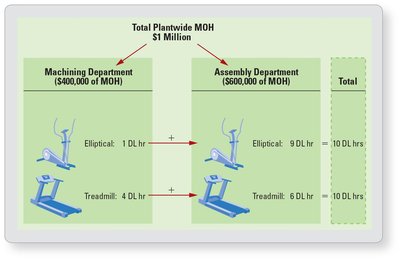
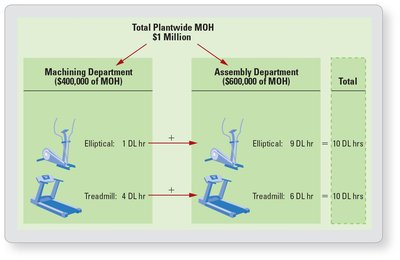
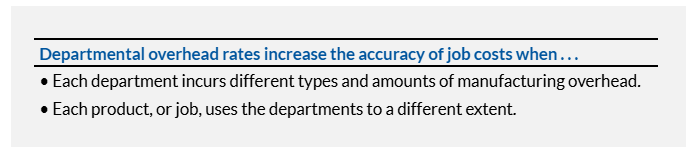
Departmental overhead rates increase the accuracy of job costs when:
Each department incurs different types and amounts of manufacturing overhead.
Each product or job uses the departments to a different extent.
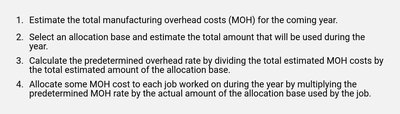
Steps for Allocating Manufacturing Overhead
Estimate total manufacturing overhead costs for the year.
Select an allocation base and estimate its total usage.
Calculate the predetermined overhead rate:
Allocate overhead to jobs based on actual usage of the allocation base.
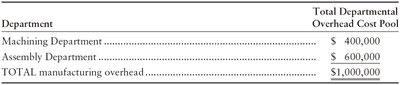

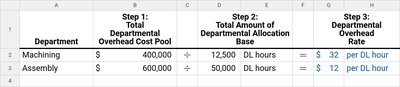
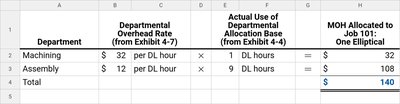
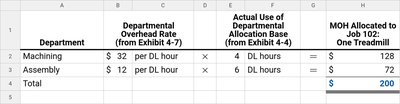
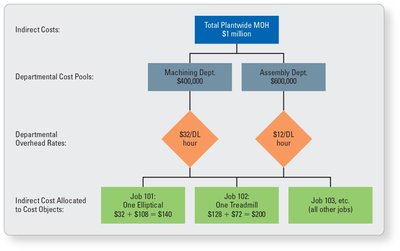
Cost Distortion and Comparison
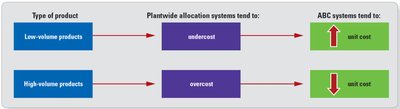
Plantwide rates can overcost or undercost jobs compared to departmental rates.
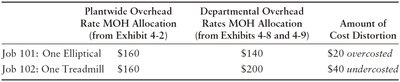
Job | Plantwide Overhead Rate MOH Allocation | Departmental Overhead Rates MOH Allocation | Amount of Cost Distortion |
|---|---|---|---|
Job 101: One Elliptical | $160 | $140 | $20 overcosted |
Job 102: One Treadmill | $160 | $200 | $40 undercosted |
Activity-Based Costing (ABC)
Overview of ABC
ABC is a refined costing system that allocates indirect costs based on activities and their usage by products.
Reduces cost distortion by focusing on activities as cost objects.
Steps in ABC
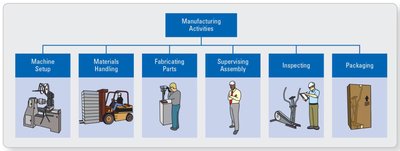
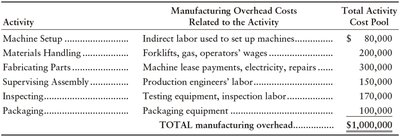
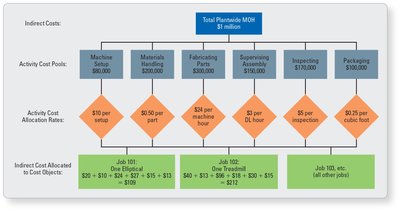
Identify activities and group them into cost pools.
Assign overhead costs to each activity cost pool.
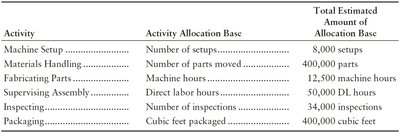
Select allocation bases for each activity and estimate their total usage.
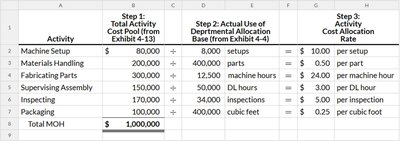
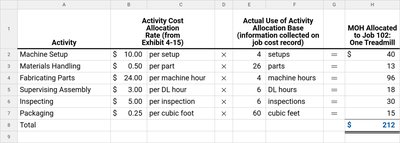
Calculate activity cost allocation rates:
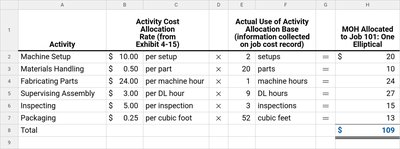
Allocate overhead to jobs based on actual usage of each activity.
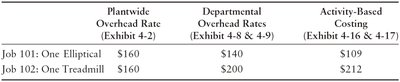
Job | Plantwide Overhead Rate | Departmental Overhead Rates | Activity-Based Costing |
|---|---|---|---|
Job 101: One Elliptical | $160 | $140 | $109 |
Job 102: One Treadmill | $160 | $200 | $212 |
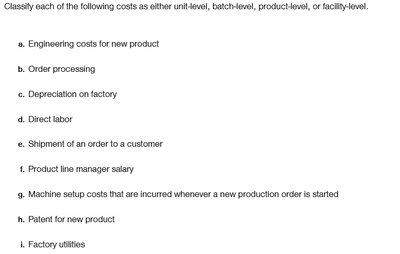
The Cost Hierarchy
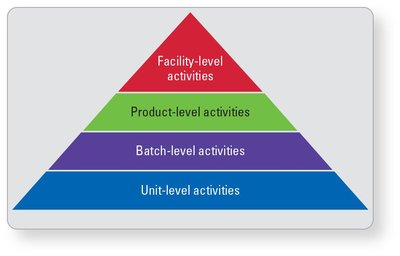
Unit-level activities: Incurred for every unit produced.
Batch-level activities: Incurred for every batch produced.
Product-level activities: Incurred for specific products.
Facility-level activities: Incurred regardless of production volume.
Benefits and Limitations of ABC/ABM Systems
Activity-Based Management (ABM)
Uses ABC information for decision-making to increase profits and satisfy customer needs.
Applications include pricing, product mix, cost-cutting, and routine planning/control.
Cost-Benefit Analysis of ABC
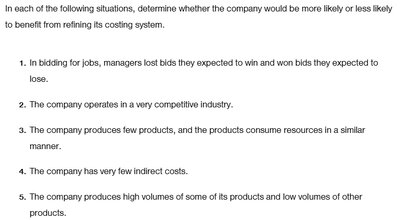
ABC is most beneficial when cost distortion risk is high, indirect costs are significant, and products use resources differently.
Costs are lower when IT systems support data collection and analysis.
Signs of Outdated Cost Systems
Managers misunderstand costs and profits.
Competitors price lower but remain profitable.
Employees distrust cost numbers.
Company has diversified products or reengineered processes.
Lean Operations
Lean Thinking
Focuses on creating customer value by eliminating waste ("Kaizen").
Emphasizes short customer response times and continuous improvement.
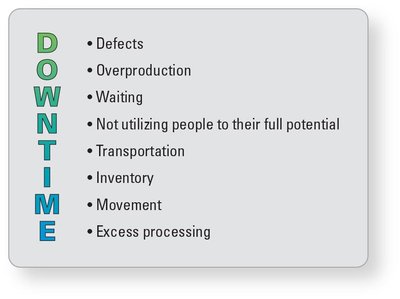
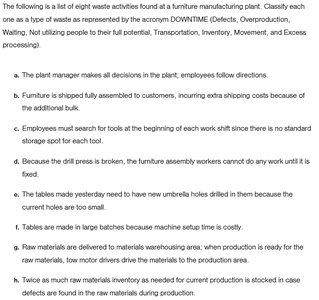
The Eight Wastes (DOWNTIME)
Defects
Overproduction
Waiting
Not utilizing people to their full potential
Transportation
Inventory
Movement
Excess processing
Characteristics of Lean Operations
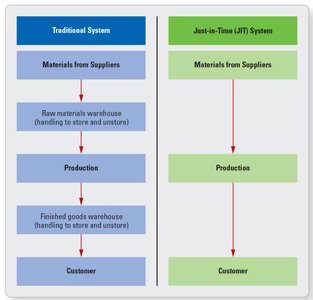
Eliminates waste of time and money from large inventories.
Just-in-Time (JIT): Purchases and produces only as needed.
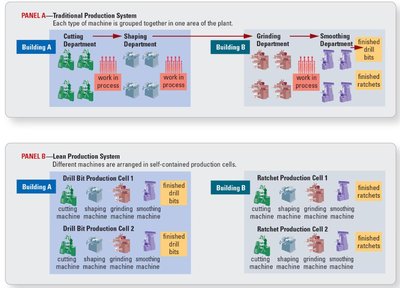
Value stream mapping, production in self-contained cells, employee empowerment, and 5S workplace organization (Sort, Set in order, Shine, Standardize, Sustain).
Continuous flow, pull system, shorter cycle times, smaller batches, reduced setup times, point-of-use storage, and supply-chain management.
Drawbacks to Lean Production
Vulnerability to supply chain disruptions (e.g., natural disasters, man-made events).
Sustainability and Lean Thinking
Both aim to reduce waste, but sustainability also considers environmental and social impacts.
"Lean and green" approaches combine economic and environmental goals.
Costs of Quality (COQ)
Total Quality Management (TQM)
Management philosophy focused on consistently generating high-quality products and services.
Involves all business functions in improving quality and eliminating defects.
Types of Quality Costs
Prevention costs: Incurred to avoid producing poor-quality goods/services (e.g., training, process improvement).
Appraisal costs: Incurred to detect poor-quality goods/services (e.g., inspections, testing).
Internal failure costs: Incurred on defective units before delivery to customers (e.g., rework, scrap).
External failure costs: Incurred after defective goods/services reach customers (e.g., returns, warranties).
Data Cleaning for Activity Cost Pools
5-Step Data Cleaning Process
Remove irrelevant data.
Remove duplicate records.
Standardize data (e.g., consistent capitalization).
Deal with missing data (e.g., fill blanks, address missing records).
Filter out data outliers (unusual records).
Summary Table: Comparison of Cost Allocation Methods
Method | Basis | Advantages | Disadvantages |
|---|---|---|---|
Plantwide Rate | Single allocation base for entire plant | Simple, easy to apply | Can distort costs if products use resources differently |
Departmental Rates | Separate rate for each department | More accurate than plantwide | Still may not capture all cost drivers |
Activity-Based Costing | Multiple activity cost pools and drivers | Most accurate, reduces distortion | More complex and costly to implement |
